
Yesterday, I explained the methodology behind the formula involved in ranking every quarterback season in football history. Today, I’m going to present the career results. Converting season value to career value isn’t as simple as it might seem. Generally, we don’t want a player who was very good for 12 years to rank ahead of a quarterback who was elite for ten. Additionally, we don’t want to give significant penalties to players who struggled as rookies or hung around too long; we’re mostly concerned with the peak value of the player.
What I’ve historically done — and done here — is to give each quarterback 100% of his value or score from his best season, 95% of his score in his second best season, 90% of his score in his third best season, and so on. This rewards quarterbacks who played really well for a long time and doesn’t kill players with really poor rookie years or seasons late in their career. It also helps to prevent the quarterbacks who were compilers from dominating the top of the list. The table below shows the top 150 regular season QBs in NFL history using that formula, along with the first and last years of their careers, their number of career attempts (including sacks and rushing touchdowns), and their career records and winning percentages (each since 1950). For visibility reasons, I’ve shown the top 30 quarterbacks below, but you can change that number in the filter or click on the right arrow to see the remaining quarterbacks.
| Rk | name | Value | First Yr | Last Yr | Att | Rec | Win% |
|---|---|---|---|---|---|---|---|
| 1 | Peyton Manning | 11344 | 1998 | 2011 | 7441 | 141-67-0 | 0.678 |
| 2 | Dan Marino | 10242 | 1983 | 1999 | 8628 | 147-93-0 | 0.613 |
| 3 | Steve Young | 8733 | 1985 | 1999 | 4507 | 94-49-0 | 0.657 |
| 4 | Joe Montana | 8315 | 1979 | 1994 | 5704 | 117-47-0 | 0.713 |
| 5 | Tom Brady | 7897 | 2000 | 2011 | 5597 | 124-35-0 | 0.78 |
| 6 | Fran Tarkenton | 7680 | 1961 | 1978 | 7067 | 124-109-6 | 0.531 |
| 7 | Johnny Unitas | 7300 | 1956 | 1973 | 5587 | 118-64-4 | 0.645 |
| 8 | Dan Fouts | 7166 | 1973 | 1987 | 5923 | 86-84-1 | 0.506 |
| 9 | Brett Favre | 7030 | 1991 | 2010 | 10694 | 186-112-0 | 0.624 |
| 10 | Drew Brees | 6794 | 2001 | 2011 | 5687 | 92-61-0 | 0.601 |
| 11 | Norm Van Brocklin | 6680 | 1949 | 1960 | 3036 | 61-36-4 | 0.624 |
| 12 | Ken Anderson | 6664 | 1971 | 1986 | 4873 | 91-81-0 | 0.529 |
| 13 | Otto Graham | 6500 | 1946 | 1955 | 2817 | 57-13-1 | 0.81 |
| 14 | Sonny Jurgensen | 6274 | 1957 | 1974 | 4579 | 69-73-7 | 0.487 |
| 15 | Roger Staubach | 5983 | 1969 | 1979 | 3271 | 85-29-0 | 0.746 |
| 16 | Sammy Baugh | 5632 | 1937 | 1952 | 3040 | 11-10-0 | 0.524 |
| 17 | Sid Luckman | 5430 | 1939 | 1950 | 1748 | 0-0-0 | --- |
| 18 | Y.A. Tittle | 5134 | 1948 | 1964 | 4763 | 78-52-5 | 0.596 |
| 19 | Len Dawson | 4797 | 1957 | 1975 | 4119 | 94-57-8 | 0.616 |
| 20 | Kurt Warner | 4791 | 1998 | 2009 | 4330 | 67-49-0 | 0.578 |
| 21 | Aaron Rodgers | 4697 | 2005 | 2011 | 2273 | 41-21-0 | 0.661 |
| 22 | Joe Namath | 4683 | 1965 | 1977 | 3934 | 62-63-4 | 0.496 |
| 23 | Philip Rivers | 4624 | 2004 | 2011 | 3207 | 63-33-0 | 0.656 |
| 24 | Daryle Lamonica | 4455 | 1963 | 1974 | 2760 | 66-16-6 | 0.784 |
| 25 | John Hadl | 4442 | 1962 | 1977 | 4979 | 82-76-9 | 0.518 |
| 26 | John Elway | 4291 | 1983 | 1998 | 7766 | 148-82-1 | 0.643 |
| 27 | John Brodie | 4261 | 1957 | 1973 | 4772 | 74-77-8 | 0.491 |
| 28 | Jeff Garcia | 4254 | 1999 | 2011 | 3857 | 58-58-0 | 0.5 |
| 29 | Boomer Esiason | 4248 | 1984 | 1997 | 5523 | 80-93-0 | 0.462 |
| 30 | Tony Romo | 4152 | 2004 | 2011 | 2734 | 47-30-0 | 0.61 |
| 31 | Jim Hart | 4031 | 1966 | 1984 | 5361 | 87-88-5 | 0.497 |
| 32 | Trent Green | 3916 | 1997 | 2008 | 3999 | 56-57-0 | 0.496 |
| 33 | Warren Moon | 3874 | 1984 | 2000 | 7281 | 102-101-0 | 0.502 |
| 34 | Donovan McNabb | 3842 | 1999 | 2011 | 5784 | 98-62-1 | 0.612 |
| 35 | Roman Gabriel | 3750 | 1962 | 1977 | 4862 | 86-64-7 | 0.57 |
| 36 | Bert Jones | 3714 | 1973 | 1982 | 2783 | 47-49-0 | 0.49 |
| 37 | Steve McNair | 3691 | 1995 | 2007 | 4798 | 91-62-0 | 0.595 |
| 38 | Bart Starr | 3676 | 1956 | 1971 | 3487 | 94-57-6 | 0.618 |
| 39 | Jim Kelly | 3580 | 1986 | 1996 | 5102 | 101-59-0 | 0.631 |
| 40 | Rich Gannon | 3457 | 1987 | 2004 | 4508 | 76-56-0 | 0.576 |
| 41 | Cecil Isbell | 3349 | 1938 | 1942 | 818 | 0-0-0 | --- |
| 42 | Troy Aikman | 3344 | 1989 | 2000 | 4974 | 94-71-0 | 0.57 |
| 43 | Bob Griese | 3175 | 1967 | 1980 | 3768 | 92-56-3 | 0.619 |
| 44 | Charlie Conerly | 3147 | 1948 | 1961 | 3029 | 58-31-1 | 0.65 |
| 45 | Bobby Layne | 3138 | 1948 | 1962 | 3987 | 80-51-4 | 0.607 |
| 46 | Ben Roethlisberger | 3113 | 2004 | 2011 | 3627 | 80-33-0 | 0.708 |
| 47 | Mark Brunell | 2992 | 1994 | 2011 | 5030 | 78-73-0 | 0.517 |
| 48 | Terry Bradshaw | 2940 | 1970 | 1983 | 4208 | 107-51-0 | 0.677 |
| 49 | Jim Everett | 2876 | 1986 | 1997 | 5180 | 64-89-0 | 0.418 |
| 50 | Matt Schaub | 2874 | 2004 | 2011 | 2403 | 32-34-0 | 0.485 |
| 51 | Craig Morton | 2790 | 1965 | 1982 | 4188 | 81-62-1 | 0.566 |
| 52 | Steve Grogan | 2709 | 1975 | 1990 | 3840 | 75-60-0 | 0.556 |
| 53 | Randall Cunningham | 2702 | 1985 | 2001 | 4773 | 82-52-1 | 0.611 |
| 54 | Earl Morrall | 2698 | 1956 | 1976 | 2958 | 63-37-3 | 0.626 |
| 55 | Arnie Herber | 2690 | 1930 | 1945 | 1175 | 0-0-0 | --- |
| 56 | Daunte Culpepper | 2690 | 1999 | 2009 | 3497 | 41-59-0 | 0.41 |
| 57 | Tommy Thompson | 2653 | 1940 | 1950 | 1449 | 6-6-0 | 0.5 |
| 58 | Billy Kilmer | 2647 | 1961 | 1978 | 3143 | 61-52-1 | 0.539 |
| 59 | Vinny Testaverde | 2641 | 1987 | 2007 | 7118 | 90-123-1 | 0.423 |
| 60 | Ken Stabler | 2624 | 1970 | 1984 | 4074 | 96-49-1 | 0.661 |
| 61 | Joe Theismann | 2592 | 1974 | 1985 | 3942 | 77-47-0 | 0.621 |
| 62 | Mark Rypien | 2399 | 1988 | 2001 | 2710 | 47-31-0 | 0.603 |
| 63 | Johnny Lujack | 2375 | 1948 | 1951 | 856 | 13-6-0 | 0.684 |
| 64 | Bernie Kosar | 2295 | 1985 | 1996 | 3638 | 53-54-1 | 0.495 |
| 65 | Brad Johnson | 2192 | 1994 | 2008 | 4577 | 72-53-0 | 0.576 |
| 66 | Bob Waterfield | 2173 | 1945 | 1952 | 1654 | 14-8-0 | 0.636 |
| 67 | Milt Plum | 2166 | 1957 | 1969 | 2629 | 56-40-6 | 0.578 |
| 68 | Carson Palmer | 2119 | 2004 | 2011 | 3722 | 50-56-0 | 0.472 |
| 69 | Chad Pennington | 2111 | 2000 | 2010 | 2633 | 44-37-0 | 0.543 |
| 70 | Frank Ryan | 2107 | 1958 | 1970 | 2333 | 57-27-3 | 0.672 |
| 71 | George Blanda | 2062 | 1949 | 1975 | 4204 | 53-50-1 | 0.514 |
| 72 | Michael Vick | 2028 | 2001 | 2011 | 2782 | 53-37-1 | 0.588 |
| 73 | Greg Landry | 1916 | 1968 | 1984 | 2616 | 44-51-3 | 0.464 |
| 74 | Brian Sipe | 1911 | 1974 | 1983 | 3663 | 57-55-0 | 0.509 |
| 75 | Matt Hasselbeck | 1905 | 1999 | 2011 | 5125 | 78-69-0 | 0.531 |
| 76 | Doug Williams | 1883 | 1978 | 1989 | 2591 | 38-42-1 | 0.475 |
| 77 | Charley Johnson | 1842 | 1961 | 1975 | 3661 | 59-57-8 | 0.508 |
| 78 | Joe Ferguson | 1785 | 1973 | 1990 | 4831 | 79-92-0 | 0.462 |
| 79 | Jim McMahon | 1755 | 1982 | 1996 | 2799 | 67-30-0 | 0.691 |
| 80 | Phil Simms | 1749 | 1979 | 1993 | 5124 | 95-64-0 | 0.597 |
| 81 | Ed Danowski | 1684 | 1934 | 1941 | 637 | 0-0-0 | --- |
| 82 | Matt Ryan | 1648 | 2008 | 2011 | 2107 | 43-19-0 | 0.694 |
| 83 | Ron Jaworski | 1645 | 1974 | 1989 | 4480 | 73-69-1 | 0.514 |
| 84 | Don Meredith | 1641 | 1960 | 1968 | 2569 | 48-33-4 | 0.588 |
| 85 | Doug Flutie | 1624 | 1986 | 2005 | 2258 | 38-28-0 | 0.576 |
| 86 | Neil Lomax | 1610 | 1981 | 1988 | 3515 | 47-52-2 | 0.475 |
| 87 | Bernie Masterson | 1608 | 1934 | 1940 | 409 | 0-0-0 | --- |
| 88 | Dave Krieg | 1552 | 1980 | 1998 | 5805 | 98-77-0 | 0.56 |
| 89 | Danny White | 1551 | 1976 | 1988 | 3191 | 62-30-0 | 0.674 |
| 90 | Bill Nelsen | 1531 | 1963 | 1972 | 2056 | 40-31-3 | 0.561 |
| 91 | Steve DeBerg | 1487 | 1978 | 1998 | 5320 | 53-86-1 | 0.382 |
| 92 | Jeff Hostetler | 1407 | 1985 | 1997 | 2545 | 51-32-0 | 0.614 |
| 93 | Bill Kenney | 1394 | 1980 | 1988 | 2625 | 34-43-0 | 0.442 |
| 94 | Billy Wade | 1384 | 1954 | 1966 | 2720 | 40-43-2 | 0.482 |
| 95 | Neil O'Donnell | 1382 | 1991 | 2003 | 3488 | 55-45-0 | 0.55 |
| 96 | Chris Chandler | 1373 | 1988 | 2004 | 4385 | 67-85-0 | 0.441 |
| 97 | Wade Wilson | 1335 | 1981 | 1998 | 2645 | 36-33-0 | 0.522 |
| 98 | Norm Snead | 1320 | 1961 | 1976 | 4695 | 52-99-7 | 0.351 |
| 99 | Elvis Grbac | 1291 | 1994 | 2001 | 2574 | 40-30-0 | 0.571 |
| 100 | Jeff George | 1286 | 1990 | 2001 | 4325 | 46-78-0 | 0.371 |
| 101 | Tom Flores | 1252 | 1960 | 1969 | 1877 | 31-32-4 | 0.493 |
| 102 | Marc Bulger | 1210 | 2002 | 2009 | 3425 | 41-54-0 | 0.432 |
| 103 | Bob Monnett | 1202 | 1933 | 1938 | 290 | 0-0-0 | --- |
| 104 | Bobby Hebert | 1183 | 1985 | 1996 | 3299 | 56-44-0 | 0.56 |
| 105 | George Ratterman | 1131 | 1947 | 1956 | 1450 | 9-8-1 | 0.528 |
| 106 | Bobby Thomason | 1119 | 1949 | 1957 | 1477 | 19-22-1 | 0.464 |
| 107 | Eli Manning | 1119 | 2004 | 2011 | 4115 | 69-50-0 | 0.58 |
| 108 | Jim Zorn | 1090 | 1976 | 1987 | 3362 | 44-62-0 | 0.415 |
| 109 | Jake Delhomme | 1023 | 1999 | 2011 | 3100 | 56-40-0 | 0.583 |
| 110 | Ed Brown | 1019 | 1954 | 1965 | 2181 | 55-38-5 | 0.587 |
| 111 | Keith Molesworth | 1006 | 1931 | 1937 | 220 | 0-0-0 | --- |
| 112 | Ace Parker | 999 | 1937 | 1946 | 718 | 0-0-0 | --- |
| 113 | Tommy Kramer | 978 | 1977 | 1990 | 3900 | 54-56-0 | 0.491 |
| 114 | Bill Munson | 973 | 1964 | 1979 | 2168 | 27-34-5 | 0.447 |
| 115 | Steve Beuerlein | 965 | 1988 | 2003 | 3660 | 47-55-0 | 0.461 |
| 116 | Steve Bartkowski | 963 | 1975 | 1986 | 3812 | 59-68-0 | 0.465 |
| 117 | Ray Mallouf | 913 | 1941 | 1949 | 326 | 0-0-0 | --- |
| 118 | James Harris | 904 | 1969 | 1979 | 1250 | 25-16-0 | 0.61 |
| 119 | David Garrard | 879 | 2002 | 2010 | 2460 | 39-37-0 | 0.513 |
| 120 | Frankie Albert | 848 | 1946 | 1952 | 1644 | 13-16-1 | 0.45 |
| 121 | Babe Parilli | 846 | 1952 | 1969 | 3598 | 49-46-7 | 0.515 |
| 122 | Ken O'Brien | 837 | 1984 | 1993 | 3955 | 50-59-1 | 0.459 |
| 123 | Jake Plummer | 798 | 1997 | 2006 | 4634 | 69-67-0 | 0.507 |
| 124 | Jim Harbaugh | 796 | 1987 | 2000 | 4279 | 66-74-0 | 0.471 |
| 125 | Erik Kramer | 776 | 1987 | 1999 | 2421 | 31-36-0 | 0.463 |
| 126 | Virgil Carter | 766 | 1968 | 1976 | 838 | 16-14-0 | 0.533 |
| 127 | Pat Haden | 763 | 1976 | 1981 | 1478 | 35-19-1 | 0.645 |
| 128 | Stan Humphries | 724 | 1989 | 1997 | 2660 | 50-31-0 | 0.617 |
| 129 | Gary Danielson | 724 | 1976 | 1988 | 2115 | 28-31-1 | 0.475 |
| 130 | Brian Griese | 718 | 1998 | 2008 | 2989 | 45-38-0 | 0.542 |
| 131 | Bob Berry | 708 | 1965 | 1975 | 1342 | 20-29-3 | 0.413 |
| 132 | Cam Newton | 705 | 2011 | 2011 | 552 | 6-10-0 | 0.375 |
| 133 | Gus Frerotte | 691 | 1994 | 2008 | 3313 | 45-47-1 | 0.489 |
| 134 | Drew Bledsoe | 688 | 1993 | 2006 | 7184 | 98-95-0 | 0.508 |
| 135 | Jay Cutler | 661 | 2006 | 2011 | 2682 | 41-37-0 | 0.526 |
| 136 | Jeff Blake | 652 | 1992 | 2005 | 3489 | 39-61-0 | 0.39 |
| 137 | Tobin Rote | 633 | 1950 | 1966 | 3166 | 48-63-4 | 0.435 |
| 138 | Tuffy Leemans | 632 | 1936 | 1943 | 222 | 0-0-0 | --- |
| 139 | Lynn Dickey | 630 | 1971 | 1985 | 3422 | 45-63-3 | 0.419 |
| 140 | Jay Schroeder | 619 | 1985 | 1994 | 3016 | 61-38-0 | 0.616 |
| 141 | Dutch Clark | 599 | 1931 | 1938 | 122 | 0-0-0 | --- |
| 142 | Frank Filchock | 580 | 1938 | 1950 | 677 | 0-0-0 | --- |
| 143 | Edd Hargett | 576 | 1969 | 1973 | 459 | 1-5-1 | 0.214 |
| 144 | Paul Governali | 564 | 1946 | 1948 | 500 | 0-0-0 | --- |
| 145 | Tony Eason | 511 | 1983 | 1990 | 1741 | 28-23-0 | 0.549 |
| 146 | Scott Mitchell | 496 | 1991 | 2001 | 2501 | 32-39-0 | 0.451 |
| 147 | Glenn Presnell | 492 | 1931 | 1936 | 309 | 0-0-0 | --- |
| 148 | Vince Ferragamo | 469 | 1977 | 1986 | 1709 | 27-26-0 | 0.509 |
| 149 | Harry Newman | 467 | 1933 | 1935 | 229 | 0-0-0 | --- |
| 150 | Don Strock | 454 | 1974 | 1988 | 816 | 16-6-0 | 0.727 |
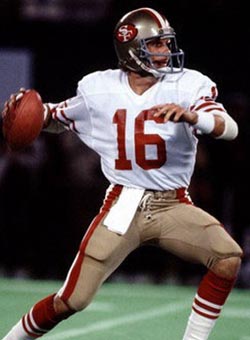
A great regular season quarterback/stats star.
For a long time, I was probably the leader of the “Tom Brady is overrated” crowd. But that wagon has long been without wheels. Even ignoring the postseason, Brady’s statistically the fifth best quarterback of all time. He has a top-five season, two of the top-ten seasons, three of the top thirty seasons and four of the top 100 seasons — all in his last four full seasons. There’s little reason to think another monster season isn’t on the horizon in 2012, either. Thanks largely to his 2007 season, he cracked my top 20 regular season list in 2008, but his run the last half-decade has been remarkable.
Ken Anderson is the highest ranking quarterback not eligible and not in the Hall of Fame; his case has been a thorn in the side of football statisticians for years. Conversely, Troy Aikman, Bob Griese, Bobby Layne and Terry Bradshaw all rank outside of the top 40 on this regular-season only list. Layne is an interesting character worthy of a much longer post. He retired as the career leader in passing touchdowns, passing yards, completions — and attempts. But he didn’t have any historically great seasons in Detroit; if you line up all the Hall of Fame quarterbacks in the modern era by their best couple of years, Layne would probably come in at the very end. The best stretch of his career statistically was his 10-game season with the Steelers in 1958, when he set career highs in yards per game, yards per attempt, and adjusted yards per attempt.
One note as you scan the list: remember that this system is designed to pick the best quarterbacks in football history; as such, the formula is much better for analyzing the quarterbacks at the top than in the middle. If you want to compare Brady to Manning, you would want to use this formula, but if you want to compare two lesser quarterbacks, the more appropriate baseline would be to replacement level, not league average.
I’ll close with one last list. I looked at all QBs on a year-to-year and five-year basis. Who was the best QB in 1980? Who was the best QB from 1950 to 1954? The table below shows the yearly leader in converted yards over average (including post-season) and the five-year leader.
I love this table, especially the five-year column. This snapshot of NFL history takes us from Arnie Herber and Cecil Isbell in Green Bay to Sid Luckman in Chicago; we see him pass the baton to Sammy Baugh, who in turns hands it off to Otto Graham. Him and Norm Van Brocklin were the stars of their era, but then Johnny Unitas became America’s quarterback. By the late ’60s, the AFL’s three star quarterbacks had become the top passers in pro football, and then Fran Tarkenton, Ken Anderson and Roger Staubach battled it out in the ’70s. Despite the presence of Joe Montana, Dan Fouts and Dan Marino take the cake in the ’80s, and then Steve Young began his remarkably efficient run in the ’90s. Brett Favre wasn’t consistent enough to become the game’s top quarterback for a long stretch, and we saw Kurt Warner and Rich Gannon have great, but short, runs as elite quarterbacks. Peyton Manning dominated the start of this decade, and now Brady has claimed the last five year run. My guess has Brady on here for a couple more seasons, and then Aaron Rodgers taking over.