
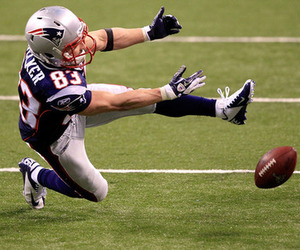
Welker won't have any more 'rare' drops in New England.
In some ways, it’s hard to find a comparable receiver to Welker. He’s been so productive for so long that it’s easy to be unimpressed with the 118 catches, 1,354 yards, and six touchdowns he had last year, but no receiver had ever switched teams after catching more than 101 catches in a season. Only two receivers — Muhsin Muhammad and Yancey Thigpen — gained more receiving yards in a season than Welker did in 2012 and then played for a new team the next year.
But Welker’s amazingly unique numbers are a product of playing in a very pass-friendly environment on a team that threw 641 passes last year. To compare players across systems and eras, I came up with a wide receiver ranking system last month. That will allow us to look at the best receivers to switch teams and not just the ones from the last couple of decades. For some perspective, Welker ranked 8th among wide receivers last season, although that’s without any Tom Brady-adjustment.
The table below contains a lot of information. It shows receivers who added over 200 yards of value over average in Year N and then played for a new team in Year N+1. For each player, I’ve listed his old team, his age in Year N, some traditional statistics, the amount of value added by the receiver, and his rank among wide receivers. Then starting in the “N+1 tm” category, we see his new team, his statistics in the new season, how much value he added in Year N+1 and his rank in that season.
| Name | Yr | Tm | Age | G | Rec | Yd | TD | Val | Rk | N+1 tm | G | Rec | Yd | TD | Val | Rk |
|---|---|---|---|---|---|---|---|---|---|---|---|---|---|---|---|---|
| Yancey Thigpen | 1997 | pit | 28 | 16 | 79 | 1398 | 7 | 842 | 1 | oti | 9 | 38 | 493 | 3 | -58 | 36 |
| Muhsin Muhammad | 2004 | car | 31 | 16 | 93 | 1405 | 16 | 748 | 3 | chi | 15 | 64 | 750 | 4 | 168 | 23 |
| Buddy Dial | 1963 | pit | 26 | 14 | 60 | 1295 | 9 | 703 | 1 | dal | 10 | 11 | 178 | 0 | -722 | 33 |
| John Jefferson | 1980 | sdg | 24 | 16 | 82 | 1340 | 13 | 666 | 1 | gnb | 13 | 39 | 632 | 4 | 0 | 29 |
| Harold Jackson | 1972 | phi | 26 | 14 | 62 | 1048 | 4 | 658 | 3 | ram | 14 | 40 | 874 | 13 | 911 | 1 |
| Roy Jefferson | 1969 | pit | 26 | 14 | 67 | 1079 | 9 | 641 | 1 | clt | 14 | 44 | 749 | 7 | 223 | 19 |
| Jeff Graham | 1995 | chi | 26 | 16 | 82 | 1301 | 4 | 634 | 10 | nyj | 11 | 50 | 788 | 6 | 44 | 28 |
| Laveranues Coles | 2002 | nyj | 25 | 16 | 89 | 1264 | 5 | 590 | 5 | was | 16 | 82 | 1204 | 6 | 472 | 12 |
| Brandon Marshall | 2009 | den | 25 | 15 | 101 | 1120 | 10 | 567 | 6 | mia | 14 | 86 | 1014 | 3 | 272 | 12 |
| Terrell Owens | 2003 | sfo | 30 | 15 | 80 | 1102 | 9 | 563 | 10 | phi | 14 | 77 | 1200 | 14 | 570 | 5 |
| Keyshawn Johnson | 1999 | nyj | 27 | 16 | 89 | 1170 | 8 | 558 | 7 | tam | 16 | 71 | 874 | 8 | 355 | 19 |
| Don Looney | 1940 | phi | 23 | 11 | 58 | 707 | 4 | 520 | 2 | pit | 9 | 10 | 186 | 1 | 67 | 8 |
| Wes Welker | 2012 | nwe | 31 | 16 | 118 | 1354 | 6 | 484 | 8 | den | ||||||
| Art Powell | 1966 | rai | 29 | 14 | 53 | 1026 | 11 | 479 | 4 | buf | 6 | 20 | 346 | 4 | 90 | 8 |
| R.C. Owens | 1961 | sfo | 28 | 14 | 55 | 1032 | 5 | 474 | 6 | clt | 14 | 25 | 307 | 2 | -951 | 37 |
| Ron Jessie | 1974 | det | 26 | 12 | 54 | 761 | 3 | 469 | 3 | ram | 14 | 41 | 547 | 3 | 55 | 23 |
| Brandon Marshall | 2011 | mia | 27 | 16 | 81 | 1214 | 6 | 468 | 6 | chi | 16 | 118 | 1508 | 11 | 1067 | 1 |
| Anthony Miller | 1993 | sdg | 28 | 16 | 84 | 1162 | 7 | 467 | 6 | den | 16 | 60 | 1107 | 5 | -67 | 30 |
| Bob Mann | 1949 | det | 25 | 12 | 66 | 1014 | 4 | 457 | 2 | gnb | 3 | 6 | 89 | 1 | -153 | 17 |
| Terrell Owens | 2005 | phi | 32 | 7 | 47 | 763 | 6 | 442 | 11 | dal | 16 | 85 | 1180 | 13 | 609 | 4 |
| Paul Warfield | 1969 | cle | 27 | 14 | 42 | 886 | 10 | 420 | 8 | mia | 11 | 28 | 703 | 6 | 488 | 8 |
| Darrell Jackson | 2006 | sea | 28 | 13 | 63 | 956 | 10 | 417 | 11 | sfo | 15 | 46 | 497 | 3 | -436 | 105 |
| Santonio Holmes | 2009 | pit | 25 | 16 | 79 | 1248 | 5 | 415 | 14 | nyj | 12 | 52 | 746 | 6 | 144 | 22 |
| Bill Hewitt | 1936 | chi | 27 | 12 | 15 | 358 | 6 | 409 | 2 | phi | 11 | 16 | 197 | 5 | 0 | 10 |
| Tony Martin | 1998 | atl | 33 | 16 | 66 | 1181 | 6 | 405 | 8 | mia | 16 | 67 | 1037 | 5 | -13 | 33 |
| Keenan McCardell | 2003 | tam | 33 | 16 | 84 | 1174 | 8 | 393 | 15 | sdg | 7 | 31 | 393 | 1 | 46 | 28 |
| Percy Harvin | 2012 | min | 24 | 9 | 62 | 677 | 3 | 362 | 14 | sea | ||||||
| Quinn Early | 1995 | nor | 30 | 16 | 81 | 1087 | 8 | 359 | 17 | buf | 16 | 50 | 798 | 4 | -156 | 46 |
| Harold Jackson | 1977 | ram | 31 | 14 | 48 | 666 | 6 | 358 | 10 | nwe | 16 | 37 | 743 | 6 | 207 | 14 |
| Willard Dewveall | 1960 | chi | 24 | 12 | 43 | 804 | 5 | 351 | 10 | oti | 7 | 12 | 200 | 3 | -227 | 16 |
| Peerless Price | 2002 | buf | 26 | 16 | 94 | 1252 | 9 | 332 | 14 | atl | 16 | 64 | 838 | 3 | 122 | 25 |
| Otto Stowe | 1973 | dal | 24 | 7 | 23 | 389 | 6 | 325 | 12 | den | 8 | 2 | 9 | 1 | -428 | 73 |
| Bob Grim | 1971 | min | 26 | 14 | 45 | 691 | 7 | 321 | 8 | nyg | 13 | 5 | 67 | 1 | -629 | 92 |
| Al Baldwin | 1949 | bba | 26 | 12 | 53 | 719 | 7 | 306 | 2 | gnb | 12 | 28 | 555 | 3 | -348 | 23 |
| Lance Rentzel | 1970 | dal | 27 | 11 | 28 | 556 | 5 | 296 | 13 | ram | 14 | 38 | 534 | 5 | -27 | 28 |
| Art Powell | 1962 | nyj | 25 | 14 | 64 | 1130 | 8 | 288 | 3 | rai | 14 | 73 | 1304 | 16 | 632 | 2 |
| Bert Emanuel | 1997 | atl | 27 | 16 | 65 | 991 | 9 | 288 | 18 | tam | 11 | 41 | 636 | 2 | 38 | 28 |
| Plaxico Burress | 2004 | pit | 27 | 11 | 35 | 698 | 5 | 287 | 17 | nyg | 16 | 76 | 1214 | 7 | 367 | 13 |
| John Gilliam | 1971 | crd | 26 | 14 | 42 | 837 | 3 | 277 | 12 | min | 14 | 47 | 1035 | 7 | 665 | 1 |
| Clyde Goodnight | 1948 | gnb | 24 | 8 | 28 | 448 | 3 | 274 | 4 | was | 10 | 11 | 150 | 0 | -898 | 39 |
| Keenan McCardell | 2001 | jax | 31 | 16 | 93 | 1110 | 6 | 263 | 19 | tam | 14 | 61 | 670 | 6 | -159 | 48 |
| Bill Schroeder | 2001 | gnb | 30 | 14 | 53 | 918 | 9 | 246 | 20 | det | 14 | 36 | 595 | 5 | -357 | 73 |
| Gary Clark | 1992 | was | 30 | 16 | 64 | 912 | 5 | 242 | 10 | crd | 14 | 63 | 818 | 4 | 188 | 18 |
| Eric Martin | 1993 | nor | 32 | 16 | 66 | 950 | 3 | 241 | 11 | kan | 10 | 21 | 307 | 1 | -484 | 80 |
| Terrell Owens | 2008 | dal | 35 | 16 | 69 | 1052 | 10 | 233 | 17 | buf | 16 | 55 | 829 | 5 | 100 | 26 |
| Henry Ellard | 1993 | ram | 32 | 16 | 61 | 945 | 2 | 227 | 12 | was | 16 | 74 | 1397 | 6 | 576 | 5 |
| J.D. Hill | 1975 | buf | 27 | 14 | 36 | 667 | 7 | 226 | 11 | det | 1 | 1 | 2 | 0 | -58 | 38 |
| Roy Jefferson | 1970 | clt | 27 | 14 | 44 | 749 | 7 | 223 | 19 | was | 14 | 47 | 701 | 4 | 302 | 9 |
| Eggs Manske | 1936 | phi | 24 | 12 | 17 | 325 | 0 | 218 | 4 | chi | 11 | 9 | 225 | 3 | 91 | 7 |
| Tony Bova | 1943 | phi | 26 | 10 | 17 | 419 | 5 | 214 | 2 | crd | 9 | 19 | 287 | 2 | -73 | 15 |
| Jim Benton | 1942 | ram | 26 | 9 | 23 | 345 | 1 | 212 | 3 | chi | 9 | 13 | 235 | 3 | -85 | 10 |
| Andre Rison | 1994 | atl | 27 | 15 | 81 | 1088 | 8 | 210 | 13 | cle | 16 | 47 | 701 | 3 | -267 | 59 |
| Rob Moore | 1994 | nyj | 26 | 16 | 78 | 1010 | 6 | 209 | 14 | crd | 15 | 63 | 907 | 5 | 82 | 26 |
| Anquan Boldin | 2009 | crd | 29 | 15 | 84 | 1024 | 4 | 207 | 20 | rav | 16 | 64 | 837 | 7 | 40 | 30 |
| Eric Moulds | 2005 | buf | 32 | 15 | 81 | 816 | 4 | 203 | 22 | htx | 16 | 57 | 557 | 1 | -350 | 85 |
| Derrick Alexander | 1997 | rav | 26 | 15 | 65 | 1009 | 9 | 202 | 21 | kan | 15 | 54 | 992 | 4 | -54 | 35 |
| Billy Parks | 1971 | sdg | 23 | 10 | 41 | 609 | 4 | 202 | 14 | dal | 12 | 18 | 298 | 1 | -319 | 69 |
The gold standard was set by Harold Jackson, who ranked as the #3 receiver in 1972 with the Eagles and then as the top receiver in the league with the Rams in ’73. Then last year, Brandon Marshall had a dominant season in his first year in Chicago. While Marshall (who had an easier transition because he was reunited with Jay Cutler) and Terrell Owens (a couple of times) had immediate success after switching teams, that’s still more the exception than the rule (of course, this ignores players like Randy Moss in 2006-07, because he was too unproductive in Oakland to make the cut-off). There’s no reason to think Welker will bust like Muhammad and Thigpen, but it’s risky to expect business as usual when receivers switch teams. Few positions are as heavily dependent on the players around them as wide receiver, and there is a learning curve involved when dealing with a new team, new coach, new system, and new quarterback. Making matters worse, these types of wide receivers are usually acquired by a poor passing team that expects the new receiver to be the savior. On the other side of the coin, generally speaking, the team letting the receiver move on usually has a reason for doing so.
Of course, few of those factors apply when talking about Welker in Denver. He’ll be playing with Peyton Manning and can take over the role filled by Brandon Stokley last year. Manning loves throwing to his inside receiver and a player that runs precise routes and can dominate the short and intermediate areas of the field fits Manning’s game well. I doubt Welker comes close to the numbers he produced in New England simply because there are too many talented mouths to feed (Eric Decker and Demaryius Thomas aren’t going anywhere) in Denver. But Welker doesn’t need to put up monster numbers in 2013 to make the move pay off for the Broncos. As Mike Tanier noted, the signing will only slightly upgrade the Denver offense, but should significantly hinder the Patriots. In an AFC that appears to feature just two heavyweights, that’s more than enough to make Denver the clear frontrunner to represent the AFC in Super Bowl XLVIII. Then the Broncos capped off the day by adding Dominque Rodgers-Cromartie. It’s early on, but it’s been a good week for Denver so far.