≡ Menu

Is Quarterback Stability on the Rise?

This time last year:

Brady will be the Patriots week 1 starting quarterback for the 13th year in a row.

Brady will be the Patriots week 1 starting quarterback for the 13th year in a row.

It’s easy to remember those times and think “man, life moves pretty fast.” But I’m going to take the opposite approach.

Twenty-five teams — twenty-five teams! — are bringing back the same week 1 starting quarterback from week 1, 2013. That, of course, doesn’t include Foles or Henne, who ended last year as starters. Last year, twenty-six teams had the same week one starter as they did in 2012. As it turns out, the past two seasons have seen the highest week 1 starting QB retention rate of any seasons since the merger. [continue reading…]

{ 2 comments }

Not Tim Couch

Not Tim Couch.

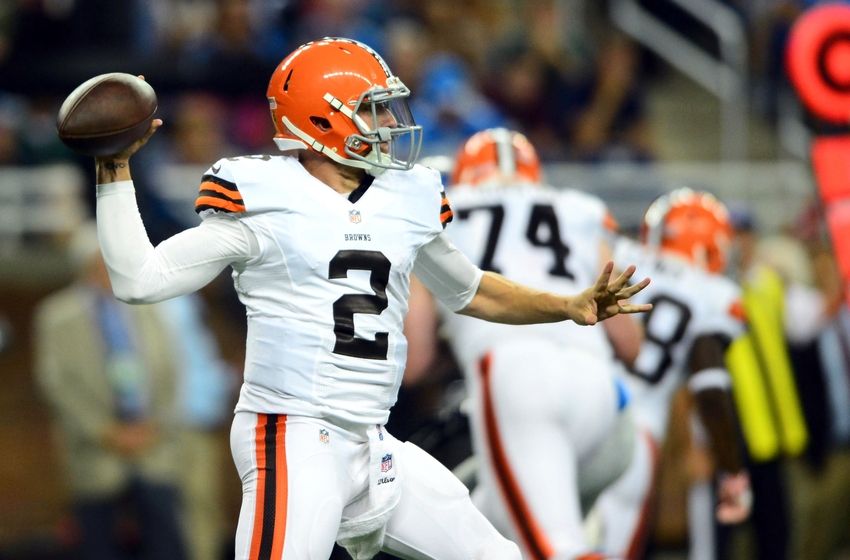
The preseason is meaningless, right? Well, as it turns out, it might give us a window into quarterback development, despite what you might think. The threshold for whether the preseason is useful is whether including that information tells us anything about a quarterback’s potential that we don’t already know from his draft position (or perhaps certain analytics). I have been putting together data from preseason box scores going back to 1997. The data show that, for some quarterbacks, the preseason is not quite meaningless.

Neil Paine showed some interesting evidence relating to this idea on Friday. Looking at team performance since 2009 for teams with new quarterbacks, Neil showed that preseason passing efficiency helps predict regular season passing efficiency. It’s important to note that part of this result may have been pretty predictable even before we watched those preseason games. The 2012 Redskins replaced Rex Grossman and John Beck with the #2 pick in the draft who would have been #1 in an average year. So we would expect a big improvement to come just by way of moving from Grossman to a healthy RGIII. [continue reading…]

{ 12 comments }

Updated: Vegas Futures Wins Totals

Some background links:

Today I want to look at the latest odds from Vegas on NFL futures, this time courtesy of Bovada.  While we often focus on the number of wins a team is projected to have, the payouts associated with each bet are also key sources of information. Consider the Bears and the Panthers, two teams Bovada has pegged at 8.5 wins. You might think Chicago projects as a better team than Carolina this year; as it turns out, so does Bovada.

If you want to bet on Chicago winning more than 8.5 games this year, Bovada is requiring you bet $155 just to win $100 in the event the Bears win nine games. Of course, if you’re brave enough to suggest that the Bears will win eight or fewer games, Bovada would pay you $125 for your $100 bet. While Chicago is at -155(o)/+125(u), the Panthers are at +145(o), -175(u). So if you think the Panthers are overvalued at 8.5 wins, well, you need to bet $175 on the under just to win $100 if Carolina falls short of that number. On the other hand, Bovada would pay you $145 if you want to take the Panthers winning nine or more games.

Based on those numbers, we can conclude that Vegas thinks Chicago has a 58.2% chance of going over 8.5 wins [1]The -155 implies a 60.8% chance of going over 8.5 wins (155/255), while the +125 on the under implies a 55.5% chance of going over 8.5 wins (1 – [100/225]).  The average of 0.555 and 0.608 is … Continue reading, while Carolina has just a 38.6% chance of going over 8.5 wins. [2]An over line of +145 implies a 40.8% chance of going over (100/245), while an under of -175 implies just a 36.4% chance of going over (1 – [175/275] The table below shows the number of projected wins for each team in the NFL this year, along with the lines associated with their over and under bets. The final column shows the implied likelihood (by the over/under lines) of the team going over their win total; that column was used to break ties between teams with the same number of projected wins.

[continue reading…]

References

References
1 The -155 implies a 60.8% chance of going over 8.5 wins (155/255), while the +125 on the under implies a 55.5% chance of going over 8.5 wins (1 – [100/225]).  The average of 0.555 and 0.608 is .582.
2 An over line of +145 implies a 40.8% chance of going over (100/245), while an under of -175 implies just a 36.4% chance of going over (1 – [175/275]
{ 12 comments }

The Rams and First Round Linemen

Robert Quinn finds out who the team's offensive coordinator is

Robert Quinn finds out who the team's offensive coordinator is.

Bill Barnwell and Robert Mays do a great job on their NFL podcasts. Yesterday, I listened to their NFC West preview, and it’s just stunning the amount of highly drafted talent the Rams have on both lines. We already know that the Rams have four former first rounders on the team’s starting defensive line, making them the first team since the 2012 Saints to pull off that feat. With Robert Quinn, Chris Long, Michael Brockers, and Aaron Donald, St. Louis has the best defensive line (at least on paper) in the NFL.

But the Rams also have two former first round picks on the offensive line, too, with Jake Long and Greg Robinson, the team’s first overall pick this year.  In fact, consider:

  • St. Louis has three linemen who were first or second overall picks: Long, Long, and Robinson. (Imagine if the Jason Smith pick worked out?)
  • The Rams also have three other linemen drafted in the top fourteen in Quinn, Brockers, and Donald.
  • Add in Rodger Saffold, and seven of the Rams’ starting nine linemen were drafted in the top 33. The exceptions: Scott Wells and Joe Barksdale.

[continue reading…]

{ 6 comments }

Site News: Call For Help

As regular readers know, this website has been experiencing some significant issues over the past couple of days. For long stretches, the website was down, and certain pages have been unavailable throughout this period.

Why? That’s the tricky part. I’m not a tech guy, but as best I can tell, there were two issues:

1) Server trouble

The site is run on HostGator, and their customer support has been as effective as the Cowboys defense. I was informed that HG had temporarily restricted access to MySQL, which turned into several long stretches of temporary restrictions. I was also told that HG could not tell me what the problem was.

Initially, I was told that I had too many active plugins. I was using 20 plugins, and all seemed pretty useful, but I deactivated a few in hopes of fixing this problem. It did not. It may have been because traffic has been spiking (good news/bad news!), or it could be because I was using too many resources. I was basically told to go figure it out myself.

One solution would be to move the account to a dedicated server. A cheaper option would be to figure out how to optimize MySQL resource usage. I’ve also been told by some friends that there are even “simpler” solutions, including using a caching plugin. So I’ve tried doing that now, too, although that of course involves using another plugin.

Right now, the site is working just fine. And I’ve got a caching plugin going, which hopefully works. I also have tried to deactivate some other plugins. Will this fix the problem? I have no idea.

How you can help

I have no tech experience. When I started this site a little over two years ago, my biggest concern was the tech side of things. I’ve been able to survive with only a few bumps along the way, but I could really use a few helping hands. If you know are a developer, or understand what MySQL resource usage means, or have thoughts on how to fix things, they would be greatly appreciated. And if you can provide help with issue #2, that would be great, too.

2) Spammers

One IP address in Turkey tried to access the site 1210 times in one hour. This was the cause of the most recent restriction imposed by HG, and I think HG for actually telling me the reason this time. They also went ahead and banned that IP address.

Has this been happening before? Are other IP addresses trying to spam the site? As I understand it, certain countries are notorious for this, so some similar sites have been any IP address from those countries. To the extent you guys could help me figure out how to do this, or if this is an issue for my site, that would be great, too (I think you can do this in Cpanel, although again, this is not my area of expertise).

Summary

I could use some tech help. I’m doing my best to keep things running, but I have a day job that demands a significant amount of my time. As you can imagine, writing takes up quite a bit of time, too. As a result, there’s no time left over for me to handle tech issues. What’s the solution? I’m working on a couple, but a great short-term solution would be if any Football Perspective fans could offer some tech guidance.

Thanks, and I apologize for the intermittent site issues over the past few days.

Chase

{ 10 comments }

Over the last three seasons, Calvin Johnson has caught 5,137 yards of passes. That’s an incredible amount, and the most by a player over any three-year span in NFL history. That stat by itself isn’t proof of Johnson’s greatness – after all, Detroit has thrown 2,040 passes over the last three years, also the most in any three-year span in football history. But records are not just about greatness: records are a function of era, teammates, and many more elements than pure ability.

So can Calvin Johnson break Jerry Rice’s career receiving yards record? The odds are very long that Johnson will go down in history as a better receiver than Rice, but his odds at breaking his receiving yards record – almost by definition – are a little higher. The man known as Megatron has 9,328 career receiving yards, the third most of any player through his age 28 season. That gives him a 1,462-yard lead on Rice at this age, although Johnson will have to keep up his outstanding pace for a very long time if he wants to capture the record. As the graph below shows, Johnson has had an edge on Rice in career receiving yards through every age of his career to date, but it was Rice’s work in his thirties that separated the GOAT from the pack: [continue reading…]

{ 18 comments }
Gronk can catch, block, and spike. But can he do all that without getting injured?

Gronk can catch, block, and spike. But can he do all that without getting injured?

In the 2011 AFC Championship Game against the Ravens, Bernard Pollard happened to Rob Gronkowski. And the Patriots offense ground to a halt for the rest of the game before being held to just 17 points in the Super Bowl. [1]Yes, a very limited Gronk played in SB XLVI, but he had only two catches and jumped like me when battling Chase Blackburn on Brady’s underthrown fourth quarter pick. In 2012, it was a freak injury on an extra point and then a reinjury in the divisional playoffs against the Texans. After that, the Patriots offense put up only 14 against the Ravens in the 2012 AFC Championship Game. Last year against the Browns, he took one of those horrible hits that make you cringe and want to keep him away from running seam routes in any regular season game. [2]The link is of Gronk shopping for groceries instead of the hit, because who wants to see that again? And the Pats put up 16 points against a mediocre and banged-up Broncos defense in the AFC Championship game. [3]The only two games all season where the Broncos gave up fewer points were against Houston and Oakland.

The Gronkowski injuries provide a tantalizing set of what-ifs. The Patriots have been within two games of a title the last three years. A healthy Gronkowski could have made the difference in any of those years. The Football Outsiders’ Almanac shows that the Pats’ offense was actually pretty good late in the season without Gronk, but they were terrible early in the year―they actually had a negative DVOA without him. Over the last two regular seasons, the Pats have averaged 34 PPG with Gronkowski, but six points fewer in New England’s 14 Gronk-less games.

And as much as I believe in stats, I’m not sure we really need them to tell us that Gronkowski is one of the most important non-quarterbacks in football. If he’s healthy through the playoffs, the Patriots seem likely to be neck-and-neck with the Broncos. With a defense that may be one of the best in football, I’d argue that the Pats should be a little better than the Broncos, even. [4]Unless Manning is just much better than Brady, I guess. I’m not seeing that. Denver’s only other big advantage is at receiver. Fine, but a healthy Gronkowski seems to even up a fair bit of that. … Continue reading Regardless, the Pats offense has been uniformly excellent with a healthy Gronkowski since 2010. Taking just the games where Gronk played, the Pats have ranked 1st, 3rd, 1st, and 2nd in offensive DVOA over the last four years.

That means one of the most important questions in the NFL in 2014 is whether we’ll see a healthy Gronkowski through the end of the season and into the playoffs. At this point, I think the reflexive answer is to assume that the answer is “no.” It certainly doesn’t feel like he’s going to be healthy. But previous examples of players getting hurt can provide some insight into Gronkowski’s actual chances.

Recovery for Injured Young-and-Excellent Players

In his second year, Gronkowski had an Approximate Value (AV) of 14. He then played only parts of the next two seasons due to injury. Considering players who started their careers since 1970, there have been 34 who had an AV season of at least 13 in their first two years and who then did not start at least 25% of the games in the following two years. This is a reasonable list of young-and-excellent players who then missed significant time in years 3 & 4. Most of these players missed time due to injuries, although some of those cases were a bit debatable. [5]In addition, I omitted two players who were obviously benched for other reasons: Shaun King and Derek Anderson. And Joe Cribbs, who went to the USFL for the fifth year of his pro career. Regardless, the conclusions are pretty much the same if we drop some of those cases. [continue reading…]

References

References
1 Yes, a very limited Gronk played in SB XLVI, but he had only two catches and jumped like me when battling Chase Blackburn on Brady’s underthrown fourth quarter pick.
2 The link is of Gronk shopping for groceries instead of the hit, because who wants to see that again?
3 The only two games all season where the Broncos gave up fewer points were against Houston and Oakland.
4 Unless Manning is just much better than Brady, I guess. I’m not seeing that. Denver’s only other big advantage is at receiver. Fine, but a healthy Gronkowski seems to even up a fair bit of that. And then there’s Brandon LaFell’s impending record-breaking season. I’m about to get shouted down. [Chase note: I don’t know how much longer I can stomach Andrew writing for Football Perspective.]
5 In addition, I omitted two players who were obviously benched for other reasons: Shaun King and Derek Anderson. And Joe Cribbs, who went to the USFL for the fifth year of his pro career.
{ 6 comments }

Yesterday, I looked at how long it took the best quarterbacks to break out. Today, I want to apply what we learned from that post to 15 current NFL quarterbacks with fewer than 50 starts, all of whom were 26 years old or younger during the 2013 season.
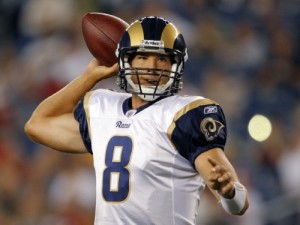
Bradford looks to check down

Bradford looks to check down.

Sam Bradford (49 career starts): Career Relative Adjusted Net Yards per Attempt of -0.68.

Bradford was overrated after he put up good counting stats but weak efficiency numbers as a rookie; he posted a -1.0 RANY/A in 2010, a -1.4 average in 10 starts in 2011, was at -0.3 in 16 starts in 2012, and then +0.2 in seven starts last year. Yesterday, we noted that great quarterbacks who came to terrible teams (Warren Moon and Drew Brees, in addition to former number one picks like Troy Aikman, Terry Bradshaw, Vinny Testaverde, and Steve Young) struggled initially. Bradford would seem to fit that mold, although he’s now 49 starts into his career. Are there other reasons to give him a pass?

St. Louis had the third-youngest offense in the NFL last year, and the man who has gained the most yards from Bradford over the last four years is Brandon Gibson. The former first overall pick has received very little help, and been saddled with a revolving door of mediocre receivers.

On the other hand, Kellen Clemens posted better numbers than Bradford last year, at least when you adjust for strength of schedule. As Bill Barnwell pointed out last week, Bradford’s big problem is his inability to throw the ball down the field, which jives with some of the work I’ve done Bradford’s historically low yards per completion averages.  If not for Bradford’s first season of above-average work last year, I’d say his odds of ever being a franchise quarterback are very low.  But there has been some progression, and he does fit the mold of number one pick being saddled with bad teammates.  Of course, the presence of Brian Schottenheimer is enough to make me skeptical of Bradford’s ability to put it all together this year.  Perhaps the best case scenario is a Testaverde-like revival with another team years from now.

Cam Newton (48 career starts): Career RANY/A of +0.30.

Not much to see here. Newton’s RANY/A has moved from +0.3 as a rookie to +0.7 in 2012 to -0.2 last year; it went under the radar because #QBWINZ, but Newton did have a down season in 2013.  It’s hard to find any reasons for optimism for the Panthers this year after a mass exodus in the offseason, but that doesn’t say much about Newton’s long-term prospects.   Add in his rushing ability, and Newton has shown enough to say that he’s still in contention (if he’s not already there) to go down as a franchise quarterback.

Andy Dalton (48 career starts): Career RANY/A of -0.01.

Look at that, Dalton is almost perfectly average! Bill Barnwell did a nice job profiling Dalton last week, and it does seem like what you see is what you will get from Dalton.  After posting slightly below-average RANY/A numbers in 2011 and 2012, he was above-average (+0.4) last year.  But the Bengals have one of the most talented offenses in the NFL if you exclude the quarterback position; at this point, you’d be hard-pressed to find many folks who believe Dalton will turn into a future star.

Of the 42 quarterbacks I looked at yesterday, 13 failed to be significantly above-average during any of their first three 16-game samples.  Dalton doesn’t really resemble any of them: Bradshaw/Testaverde/Elway/Vick were former number one picks; Brady/Favre/Krieg/Kelly were on the border of being good enough on to not make the list, and were certainly ahead of where Dalton is now; McNabb and Cunningham were running quarterbacks.  Moon played for a terrible team, and Gannon and Theismann sat for long stretches.  That’s the full thirteen. The best case scenario may be that Dalton turns into a Krieg or a poor man’s Jim Kelly.  Of course, he could also win a Super Bowl by riding the coattails of one of the more talented (and youngest) rosters in the league.

Christian Ponder (35 career starts): Career RANY/A of -1.19.

There are always excuses to be made for bad quarterbacks, and I’m sure that there are still some Vikings fans who believe in Ponder.  He produced a -1.7 RANY/A as a rookie, improved to -0.9 in 2012, but was back at -1.1 in nine starts last year.  Minnesota may not have a ton of talent at wide receiver, but Ponder’s failure to produce even with Greg Jennings is yet another strike against him. The Vikings drafted Teddy Bridgewater at the end of the first round in the 2014 draft, which seems like the beginning of the end for the former Florida State star.
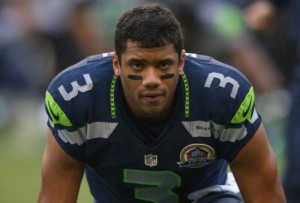
Wilson is watching game tape right now.

Wilson is watching game tape right now.

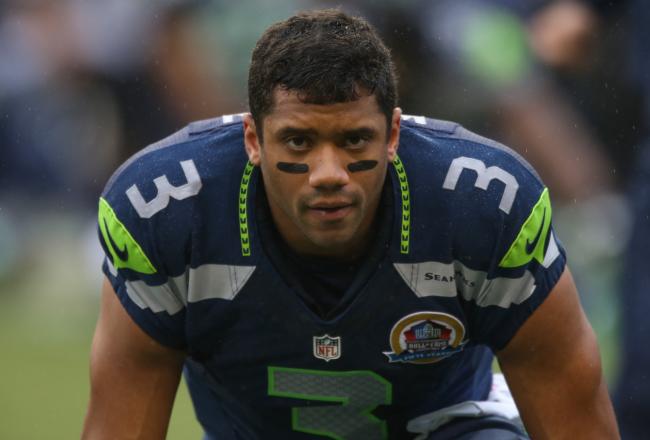
Russell Wilson (32 career starts): Career RANY/A of +1.15.

Franchise quarterback achievement badge mode: unlocked.

Ryan Tannehill (32 career starts): Career RANY/A of -0.80.

Tannehill was at -0.7 RANY/A in 2012 and at -0.9 RANY/A last year; neither of those numbers put his future prospects in a positive light.  There are excuses, to be sure: he was a raw prospect, the Dolphins offensive line was the worst in the NFL, he and Mike Wallace have the chemistry of a pair of tomatoes, etc., but the numbers are bleak enough to cast doubt on Tannehill’s future.  Unless the argument is that Tannehill landed on one of the very worst offenses in the league — which would allow you to lump him in with the Aikmans, Bradshaws, Breeses, and Testaverdes of the world — there is simply no precedent for a quarterback being this below average for this long and then turning into a franchise passer. [1]I suppose one could point to Phil Simms, but I’d object for a couple of reasons. For one, Simms didn’t crack my initial list, checking in at #86 in my GQBOAT series.  Then again, … Continue reading Barnwell is a little (and only a little) more bullish on Tannehill than I am, but 2014 would appear to be Tannehill’s last chance to convince the Dolphins that he was not a wasted pick.  There are a couple of mitigating factors here — the running game has been terrible, and as an immediate starter, Tannehill is at a disadvantage relative to other quarterbacks on this list — but I’m not going to lose sleep over whether this prediction will look bad in a few years.

Andrew Luck (32 career starts): Career RANY/A of -0.06.

Since starting this site, Luck has been one of the quarterbacks I’ve profiled the most.  He wins without much help and is an ESPN QBR star, but he’s below average in ANY/A.  I’m inclined to grade Luck on a curve — after all, the Colts team he inherited didn’t look any better than the ’70 Steelers or ’89 Cowboys or ’87 Bucs.  On the other hand, Reggie Wayne and T.Y. Hilton have given Luck some excellent targets, which has probably been enough to boost his ANY/A to league-average proportions.

Perhaps the best comparison will be to another quarterback drafted first overall by the Colts who had a magical history of producing comebacks: John Elway.  In any event, Luck’s already a franchise quarterback.
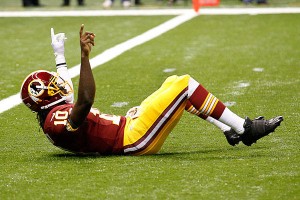
Can RG3 get up from a disastrous 2013?

Can RG3 get up from a disastrous 2013?

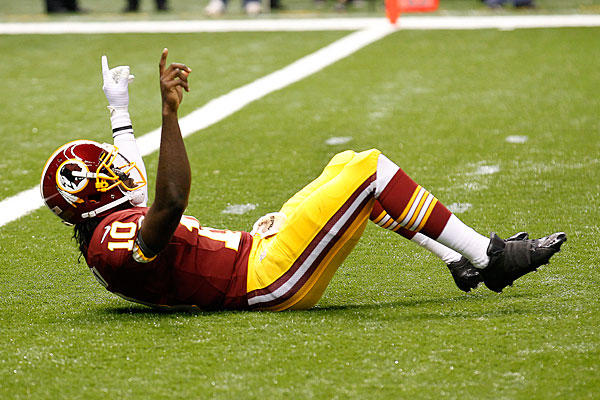
Robert Griffin III (29 career starts): Career RANY/A of +0.5.

Griffin’s career RANY/A is like measuring the temperature of a person with a foot in the freezer and a foot in a frying pan.  As a rookie, he had a RANY/A of +1.5; last year, it was -0.4, and that number doesn’t begin to explain how ugly things were in D.C.  The simplest explanation is that Griffin is a franchise quarterback who struggled last year as he recovered from ACL surgery and dealt with an ego-maniacal head coach.  But it’s hard to just assume Griffin is a franchise quarterback after 2013.  If Griffin one day turns into a Hall of Famer, we’ll remember that it was obvious from the start, as he had one of the greatest rookie seasons ever.  If he flames out, the first chapter of that book has already been written, too.

Blaine Gabbert (27 career starts): Career RANY/A of -2.15.

Spoiler alert: Gabbert is not a franchise quarterback.  He started at -2.2 RANY/A as a rookie on a team not dissimilar from the ’89 Cowboys; he’s followed that up, however, with a -1.2 RANY/A in 2012 and a -4.7 RANY/A over three starts last year. Suffice it to say if Gabbert turns into a franchise quarterback, it will have taken the greatest reclamation project in NFL history.

Colin Kaepernick (23 career starts): Career RANY/A of +1.06.

Kaepernick was mind-bogglingly efficient in 2012, producing a +1.6 RANY/A over 13 games and seven starts.  That number dropped to +0.8 RANY/A last year, but much of that is due to the loss of Michael Crabtree.  With an all-star crew of receivers set to take the field in 2014, I expect another very strong year out of Kaepernick. He may not be a finished product, but he already has the label (and contract) of a franchise quarterback.

Jake Locker (18 career starts): Career RANY/A of -0.25.

Maybe it’s because I’m a college football guy, too, but doesn’t it feel like Locker has already been around forever? I can’t believe he only has 18 career starts. And his RANY/A is nearly league-average, even if it doesn’t feel like Locker has been even that good.  I was not a fan of him as a prospect, but he has been better than I feared.  While we shouldn’t compare Locker’s first 18 starts to those of a quarterback who started immediately, I think Locker has shown enough that you can’t just write him off just yet.  On the other hand, his numbers last year were a bit inflated by one of the NFL’s easiest schedules. Like Tannehill, this is the crucial season for Locker, who also carries with him the injury prone label. But if Locker can stay healthy and produce strong numbers, Ken Whisenhunt may prove that he really is a quarterback whisperer (to the extent he’s not whispering to someone named Skelton, or Kolb, or Anderson, or Leinart, or Lindley, or Hall….)

Nick Foles (16 career starts): Career RANY/A of +1.45

Foles had a rookie RANY/A of -0.8 before posting an absurd +3.3 RANY/A in 2013. Even the bigger Eagles homer would admit that much of Foles’ success was due to good fortune, the presence of Chip Kelly, or both.  Foles may not have arrived just yet as a franchise quarterback, but if he turns into one, nobody will ever question when we first saw a glimpse of that ability.

Geno Smith (16 career starts): Career RANY/A of -1.70.

Smith was bad — really bad — for long stretches as a rookie.  But he finished the season well, and terrible rookie numbers on a talent-deficient offense are not the death knell for a quarterback’s career.  The Jets need to see a lot more from him this year, though, and he’ll need to produce roughly league-average numbers to make the Jets think he’s not just another Mark Sanchez.

Mike Glennon (13 career starts): Career RANY/A of -0.9.

Glennon had a very different rookie campaign than Smith, but the acquisition of Josh McCown sends Glennon to the bench, at least for now.  We don’t know how he’ll fare in (or when he’ll see) his next three starts, but Glennon’s performance through 16 starts likely won’t be enough to write him off.

EJ Manuel (10 career starts): Career RANY/A of -1.0.

Manuel had a rough rookie year, especially when you consider how much worse he looked than Thaddeus Lewis. On the other hand, ten starts of bad (but not horrendous) play certainly isn’t enough to write off Manuel, not when Smith was worse for a longer stretch.  Still, as with Smith, this is a big year for Manuel, especially after the team went out and acquired Clemson’s Sammy Watkins.

References

References
1 I suppose one could point to Phil Simms, but I’d object for a couple of reasons. For one, Simms didn’t crack my initial list, checking in at #86 in my GQBOAT series.  Then again, I’ve made the argument that Simms’ numbers underrate him because of his terrible receivers, so I would morally classify Simms as a franchise quarterback. However, the Giants teams of the late ’70s and early ’80s were so terrible that he really has more in common with the Aikmans of the world than someone like Tannehill. Here is how Simms fared compared to the other Giants quarterbacks during Simms’ first three years and 1978, the year before he came to New York. That’s U-G-L-Y. But if Dolphins fans want to point to Simms as a pro-Tannehill example, so be it.
{ 9 comments }

A couple of years ago, I asked how long it should have taken the Jaguars to move on from Blaine Gabbert. Today I want to revisit that general idea, but look at how long it takes the best quarterbacks to identify themselves as top-tier players. A couple of months ago, I looked at the greatest quarterbacks of all time. Using the top 75 quarterbacks from that list, I removed any player whose career began before the merger; that left me with 42 passers.

First, I looked at how each quarterback fared in relative Adjusted Net Yards per Attempt — i.e., ANY/A relative to league average — through their first 16 starts. Just over two-thirds of these passers were above average during their first 16 starts, with 1/3 of those quarterbacks being at least 1 ANY/A better than league average.  That group of fourteen quarterbacks — which Aaron Rodgers just falls shy of joining — can be categorized as above-average quarterbacks from the beginning. They are Kurt Warner, Dan Marino, Daunte Culpepper, Chad Pennington, Tony Romo, Mark Rypien, Jeff Garcia, Boomer Esiason, Ben Roethlisberger, Philip Rivers, Matt Ryan, Joe Montana, Steve McNair, and Ken Stabler. Obviously a number of those quarterbacks were not immediate starters in the NFL, but they did excel as soon as they became starters.

The graph below shows each of the 42 quarterbacks’ Relative ANY/A through their first 16 starts. The X-Axis represents the quarterback’s first year, and the Y-Axis shows their RANY/A value through 16 starts.

QB breakout 1

Now, let’s remove the 14 quarterbacks who had a RANY/A of at least +1.0 through their first sixteen starts. How did the other 28 quarterbacks fare in starts 17 through 32 in RANY/A? Eleven of them produced a RANY/A of at least +1.0 in their next sixteen starts: Bert Jones, Matt Schaub, Ken Anderson, Peyton Manning, Aaron Rodgers, Brad Johnson, Carson Palmer, Jim Everett, Steve Young, Dan Fouts, and Steve Grogan.

[continue reading…]

{ 24 comments }

Super Bowl Champions and Top-Heavy Divisions

The NFL realigned its divisions in 2002, placing four divisions of four teams each in each conference. Some divisions have been top-heavy, with the most obvious example being the 2007 AFC East. The Patriots won 16 games, while the Jets, Dolphins, and Bills combined to win just twelve games (with six of those twelve wins by the Bills or Jets against the Dolphins or Jets). That means New England was responsible for 57% of all wins by AFC East teams in 2007, easily the highest percentage of any team in a division since realignment.

Having an easy division brings some advantages: being the best team in a bad division makes it easier to get the best record in the conference, which leads to a bye week and home field advantage.  It also could allow a team to rest its starters at the end of the year.  Conversely, there’s the notion that teams in tough divisions “beat up on each other,” so presumably that’s another benefit to being the best team in a bad division.

But New England, of course, didn’t win the Super Bowl in ’07.  That year, the title went to the NFC East, which was not a top-heavy division; the Cowboys had just 33% of NFC East wins that year, placing it as the 3rd least top-heavy division in the NFL.  The last three years, things have been even more stark:

  • The NFC West was one of the strongest divisions in NFL history last year; but while the Seahawks may have been beaten up by the 49ers, Cardinals, and Rams, that didn’t stop Seattle from winning the Super Bowl.  Seattle won “just” 31% of the games won by the NFC West last year — only the NFC North (Green Bay, 29%) was less top-heavy.
  • The least top-heavy division in football in 2012 was the AFC North. Baltimore won 10 games, but so did Cincinnati, and the Steelers (8) and Browns (5) were not pushovers, either. The Ravens won just 30% of all games won by AFC North teams in 2012, but finished the year by hoisting the Lombardi Trophy.
  • In 2011, the Giants won a competitive NFC East with a 9-7 record; Philadelphia and Dallas were just one game behind, and New York won only 30% of all games won by NFC East teams that year. Only the Tim Tebow-infected AFC West was less top-heavy (Denver won 26% of all AFC West games, just barely above the minimum threshold for a division champ) that year.

The graph below displays all eight divisions for each year since 2002.  The Y-axis shows the percentage of games won by the top team in the division as a percentage of the total wins by that division.  The X-axis represents the year; the red dot represents the division with the eventual Super Bowl champ, with the blue dot for all other divisions. [continue reading…]

{ 8 comments }

Jerome Bettis is a polarizing Hall of Fame candidate. I’m on the fence with the Bus; I don’t think he’s as deserving as Steelers fans think, but he’s a more deserving candidate than those who mostly remember end-of-career-Bus remember. One thing I’ve heard from time to time about Bus is that he was the greatest “big” back of all time. That’s undoubtedly true, assuming you set the weight [1]Try the veal. high enough. Bettis had an official playing weight of 252 pounds, and no running near that weight can match his resume. Cookie Gilchrist, Pete Johnson, Marion Butts, Christian Okoye, Natrone Means, and Mike Alstott had short bursts of success, but they can’t match Bettis’ longevity. Players like Jamal Lewis, Michael Turner, Larry Csonka, Eddie George, Jim Brown, Franco Harris, John Riggins, and Earl Campbell carried the “big back” label, but all were 10-25 pounds lighter than the Bus.

I looked at every running back in history, and calculated his number of rushing yards over 500 in each season (to avoid giving undue weight to compilers). After adjusting for season length, I then calculated career grades in this statistic. In the graph below, the Y-Axis shows this career rushing grade, while the X-axis displays weights. Bettis is represented on the far right with the code “BettJe00.”

[continue reading…]

References

References
1 Try the veal.
{ 28 comments }

Footballguys.com – Why You Should Subscribe

Regular readers know that I’m one of the writers at Footballguys.com. I think regular readers know that I’m not a very good salesman, either. But if you are a hardcore fantasy footballer, you probably already know that Footballguys.com is the single best source for fantasy football information. If you are a more casual fantasy football player, you’ll find that the tools available at Footballguys will make life much, much easier for you to win your league(s). Either way, I think a Footballguys.com subscription is a fantastic value for $29.95. Also fantastic values: the Footballguys Draft Dominator for mobile devices, which costs $4.99.

I don’t make extra money if more people sign up for Footballguys or buy an app, but I hope my readers subscribe because I think a subscription is a really good deal. If you play fantasy football and want to win your competitive league or save hours doing research for your local league, a Footballguys subscription is well worth it. For $29.95, you get:

  • Always up to date and informed projections and rankings, along with 50,000 + pages of Footballguys Insider content.
  • The Footballguys Draft Dominator (the single most valuable tool in all of fantasy football, IMO), along with the Lineup Dominator and Projections Dominator. Even if you don’t sign up for Footballguys, you can play around with Doug Drinen’s ultra-cool Rate My Team application for free.
  • The Footballguys Insiders contest, giving you a chance at over $35,000 in prizes — this is 100% free to subscribers.
  • During the season, My FBG is a fantastic customizable tool that makes roster management incredibly easy. If you’re in multiple fantasy leagues, this is a lifesaver, and can be fully integrated with certain league management systems.
  • I won’t list every reason to sign up, but you can check out the Why Subscribe? link or just play around on the FBG homepage.
  • In addition to everything else, a money-back guarantee. In the 11 years I’ve been at Footballguys, they’ve always offered this feature, and it’s almost never used. There’s a reason for that.

Anyway, I’m not very good at the salesman thing, so I’ll wrap things up.

{ 3 comments }

Some teams, like the Rams have done a good job of fielding a very young roster; others, like the Raiders, have made a conscious effort to head in the other direction. Overall, the Rams are more representative of the current trend. NFL teams have made a shift towards younger players in the last three years, although you might be surprised by just how dramatic and sudden the change has been. The drop in Approximate Value (AV)-weighted ages of NFL rosters in the last three years is more than 50% larger than in any other three-year period in NFL history.

healy 1

Looking at the graph, there are two seismic shifts that changed the age distribution of the NFL in the Super Bowl era: the increase that started in the late ‘80s and the decrease in the last five years. These changes tell us about how changes in the collective bargaining agreement can change the NFL landscape in both subtle and dramatic ways.

First, the increase in NFL roster age in the 1980s coincides pretty closely with the introduction of Plan B free agency in 1989. It looks like the increase maybe starts a year too early. Remember, though, that the 1987 age may be skewed a bit by the three games with replacement players. Taking that point in mind, the increase from 1988 through 1993 coincides exactly with the introduction of limited free agency. [continue reading…]

{ 15 comments }

Leading Receivers Trivia

The GOAT

The GOAT.

Roger Craig, 1985.

Terrell Owens, 1999.
Terrell Owens, 2000.
Tim Brown, 2001.

Neil Paine wrote a fantastic post today at 538 about wide receivers competing with their teammates for production. That inspired me to start crunching some numbers. From 1985 to 2003, Jerry Rice played in at least 8 games in 18 different seasons. In fourteen of those seasons — including every year from age 24 through age 36, inclusive — Rice led his team in receiving yards per game. In the other four years, Rice ranked 2nd on his team in receiving yards per game, and usually not far behind the number one man. [1]In ’85, Craig averaged 63.5 YPG, while Rice averaged 57.9. In 2000, Rice led the team in receiving yards, but Owens averaged 53.9 yards per game, Rice 51.9. Owens blew Rice out of the water … Continue reading Rice finished his career with a forgettable season in Seattle, where three more players — Darrell Jackson, Koren Robinson, and Bobby Engram — out-gained a 42-year-old Rice in receiving yards per game.

What about Marvin Harrison? He led the Colts in receiving yards per game in nine of his 12 seasons in which he played in at least eight games. In 1997, Sean Dawkins edged a Harrison by 3.3 yards per game. In 2004, Reggie Wayne bested Harrison by six yards per game. And in Harrison’s final year, both Wayne and Dallas Clark outgained Harrison. [continue reading…]

References

References
1 In ’85, Craig averaged 63.5 YPG, while Rice averaged 57.9. In 2000, Rice led the team in receiving yards, but Owens averaged 53.9 yards per game, Rice 51.9. Owens blew Rice out of the water in 2000; in 2001, Brown edged him, 72.8-71.2.
{ 10 comments }

According to Football Outsiders, over the last three years, 60% of all passes have gone to wide receivers, 21% to tight ends, and 19% to running backs. There are some players who are position hybrids, of course, but as a general rule, wide receiers catch about 56.3% of passes, tight ends have a 63.1% catch rate, and running backs record a reception on 72.4% of their targets. In theory, those numbers should help us figure out which teams (and passers) have completion percentages that are artificially high (or low) because of a high number of passes to running backs (or receivers).

Let’s use the 2013 Chiefs as an example. Last year, 57% of Kansas City passes went to wide receivers, 28% to running backs, and 15% to tight ends. If we use the league-average numbers on passes to players at each position, we would “expect” Kansas City to complete about 61.9% of their passes if the Chiefs were an average passing team. That’s a number that’s slightly higher than league-average rates because the Chiefs threw very often to running backs and not so often to wide receivers. [continue reading…]

{ 12 comments }

In the Super Bowl era, there has been just one team that was both the youngest in the league and one of the five best teams in football: the 2012 Seattle Seahawks. As friend of Football Perspective Neil Paine recently pointed out, being young and great has historically been a good predictor of teams that have become dynasties. Consider the table below. It captures every team since 1966 that ranked amongst the five youngest teams by Approximate Value (AV)-weighted age and had at least 12 Pythagenpat wins, adjusting everything to a 16-game schedule. [1]My AV-weighted age calculations are very similar to Chase’s, but not always exactly the same. For example, I have Seattle third in 2013, while he has them second. We both had Seattle at 26 years, … Continue reading

TeamYearPyth WinsAV-wtd ageAge Rank
PIT197213.525.65
DAL199212.626.42
DAL199312.426.74
STL199914.226.65
CHI200112.426.55
SDG200612.626.55
IND200712.826.74
SEA201212.625.81
SEA201313.1263

There are seven unique teams on this list, not counting the two repeaters. When trying to predict what’s going to happen with the Seahawks, there are two different ways to look at this list. The first looks good for their dynasty potential. The first two teams on the list, the ’72 Steelers and the ’92 Cowboys went on to win multiple Super Bowls. The closest comparison in terms of age also looks pretty good. Teams used to be younger, so the best comparison probably isn’t the ’72 Steelers, who were even younger by age but were only the fifth-youngest team in 1972, but the ’92-’93 Cowboys. They are the only other team on this list to be so young and so good.

Of course, even the Cowboys had a pretty short run. Their stay at the top was nothing like the ’70s Steelers or ’80s Niners, who were also quite young. [2]They were the third-youngest team in 1981, their first championship year. Free agency helped to minimize their time on top. The ’90s Cowboys were the first great team in the free agency era. Players gained full freedom of movement only in the year after their first Super Bowl. Plan B free agency allowed limited movement starting in 1989.

Free agency and the salary cap help to explain the path of the other four teams on the list. They point towards a more cautious prediction about the Seahawks’ dynasty hopes. Between them, the ’99 Rams, ’01 Bears, ’06 Chargers, and ’07 Colts won one Super Bowl and played in two others. Within three years of their great-and-young season, only the Chargers were significantly better than league-average.

These more recent examples may do a better job of predicting the Seahawks future success. Before the beginning of full free agency in 1993, good-and-relatively-young teams appear to have generally followed a clear and sustained upwards trajectory over the long term. Since then, however, success has generally been less sustainable. The table below looks at teams’ strengths over time according to PFR’s Simple Rating System. [3]I thank Bryan Frye for sharing his SRS dataset. Here I’ve made the cutoff any team that was in the five youngest teams in a given year and also had a SRS rating of at least 6. The table shows the trend in strength for the previous season and the following three seasons.

TeamYearSRS (t-1)SRS (t)SRS (t+1)SRS (t+2)SRS Wins (t+3)AV-wtd ageAge Rank
PIT1972-3.6108.26.814.225.65
BAL1975-8.78.69.85-8.825.95
SFO1981-6.26.2-2.48.712.725.83
NOR1987010.11.54.6-1.3264
DAL19924.49.99.610.19.726.42
Average-2.828.965.347.045.325.943.8
TeamYearSRS (t-1)SRS (t)SRS (t+1)SRS (t+2)SRS (t+3)AV-wtd ageAge Rank
DAL19939.99.610.19.72.426.74
IND1999-5.46.17.9-3.81.225.61
STL1999-2.311.93.113.4-3.326.65
IND20006.17.9-3.81.2726.33
CHI2001-6.37.9-5.3-3.5-8.226.55
BAL2003-2.16.36.1-1.89.326.43
IND20031.2711.410.85.926.54
SDG2004-6.89.19.910.28.826.52
BAL20046.36.1-1.89.3-6.726.73
SDG20059.19.910.28.8526.85
JAX20064.87.56.8-2.5-6.526.52
SDG20069.910.28.856.626.55
SDG200710.28.856.64.826.42
IND20075.9126.55.92.926.74
SEA20120.812.21325.81
SEA201312.213263
Average3.349.095.864.952.0926.413.25

One surprising pattern in these data is just how infrequently young teams won in the past. From 1966-1992, only five teams were among the five youngest and still had an SRS of at least 6. Since 1993, it’s happened 16 times. In the past, teams had more of an opportunity to gradually build strength. So it looks like there was a greater share of young teams building for something and old teams trying to stay on top. Since 1993, the standard deviation of team ages is about 20% smaller than it was before that. In the last ten years, the standard deviation is about 30% smaller than it was before 1993. The ages of rosters are more compressed than they used to be.

The other thing to take away from these tables is the dropoff in years 2 and 3 since full free agency. For the pre-1993 teams, the good-and-young teams held much of their value. After starting at an average SRS of 8.96, they were still at 7.04 two years later and then 5.3 three years later. Since 1993, teams have deteriorated more quickly. From an average of 9.09, the more recent high quality young teams fell to 4.95 two years later and all the way to 2.09 three years later.

Since there are only five teams in the pre-1993 group, we want to be careful with interpreting too much into the earlier data. It’s possible that the ’72 Steelers and ’81 Niners are anomalies. At the same time, the success three years later is skewed downwards by the ’75 Colts, who would have been much stronger in ’78 if they had a healthy Bert Jones.

With the bigger set of more recent teams, the clear takeaway is that in the current era, even very good and young teams are just slightly better than average than three years later. The Seahawks may buck this trend, but they probably won’t. With Russell Wilson to sign and long-term cap hits for players like Richard Sherman and Earl Thomas, they’re more likely to have a brief run than a long one.

Another alternative may be available, though. If Wilson makes the leap into the Brady-Manning class (he may) and Pete Carroll turns out to be a truly elite coach (also possible), they may be able to fashion a New England-kind of dynasty. That sort of dynasty is not really built on youth. Consider the aging patterns of the last five teams of the decade.

healy age

The ‘60s Packers, ‘70s Steelers, ’80s Niners, ‘90s Cowboys all showed the same pattern of being relatively young and then progressively aging during their runs. On the other hand, the Patriots show an entirely different pattern. They’re the only dynasty to actually not age as their run progressed. They started old and stayed old through their Super Bowl years. While the Seahawks are starting off younger than those Patriots teams, excellence at QB and coach still offers them their best hope of building a dynasty in the current NFL. The benefits of being young and good are much more fleeting than they used to be.

References

References
1 My AV-weighted age calculations are very similar to Chase’s, but not always exactly the same. For example, I have Seattle third in 2013, while he has them second. We both had Seattle at 26 years, but I have Cleveland also at 26, instead of 26.1.
2 They were the third-youngest team in 1981, their first championship year.
3 I thank Bryan Frye for sharing his SRS dataset.
{ 12 comments }

Touchdowns in Losses

A fun trivia question from Scott Kacsmar this week:

The most TD passes a QB threw in one season in games he LOST is 25. Name the QB, and if you can, the year.

Here’s the answer:

Click 'Show' for the Answer Show


Who is the career leader in touchdown passes in losses?

Click 'Show' for the Answer Show


Who is the single-season leader in rushing touchdowns in losses?

Click 'Show' for the Answer Show


What about the career leader in rushing touchdowns in losses?

Click 'Show' for the Answer Show


How about the single-season leader in receiving touchdowns in losses?

Click 'Show' for the Answer Show


Finally, what about the career leader? There’s a three-way tie in this category, with 46 touchdown receptions in losses.

Click 'Show' for the Answer Show


The trivia run ends tomorrow, as Andrew Healy has another fun post.

{ 3 comments }

The past couple of days, we looked at the players with the most receiving yards and rushing yards in their final 16 regular season games. Today, we get to the quarterbacks.

Only one non-active player threw for 4,000 yards in his final 16 games.

Trivia hint Show


Click 'Show' for the Answer Show

Three other players threw for 3900+ yards. That doesn’t include Dan Fouts (3,805) or Dan Marino (3,869), but it does include quarterbacks from the great, the good, and the ugly category.

Trivia hint 1 Show


Trivia hint 2 Show


Click 'Show' for the Answer Show

Trivia hint 1 Show


Trivia hint 2 Show


Click 'Show' for the Answer Show

Trivia hint 1 Show


Trivia hint 2 Show


Click 'Show' for the Answer Show

{ 4 comments }

I’m still short on time, so let’s keep the trivia train rolling.  Yesterday, I looked at the players with the most receiving yards in their last 16 regular season games. Today, the players with the most rushing yards in their last 16 games.

Excluding LeSean McCoy, Adrian Peterson, and Doug Martin, only five players have rushed for over 1,500 yards in their final sixteen games.  The record-holder rushed for 1,702 yards in his final sixteen games.  Do you know who it is?

Trivia hint Show


Click 'Show' for the Answer Show


One other player rushed for at least 1,600 yards in his last 16 games  Can you name him?

Trivia hint Show


Click 'Show' for the Answer Show


What about the other three players who rushed for 1,500 yards in their careers? All three retired early.

Trivia hint Show


Click 'Show' for the Answer Show


Trivia hint Show


Click 'Show' for the Answer Show


Trivia hint Show


Click 'Show' for the Answer Show

{ 3 comments }

I’m very short on time this week, so here’s a fun trivia question. Last week, I noted that Justin Blackmon gained 1,201 receiving yards in his last 16 games. As it turns out, if Blackmon never plays in another NFL game, that would set the record for most receiving yards in a player’s final sixteen games (this excludes all active players, of course).

Who holds that record now? Two players gained just over 1,100 yards in their final sixteen games. Can you name them?

Trivia hint 1 Show


Trivia hint 2 Show


Trivia hint 3 Show

Click 'Show' for the Answer Show

Rounding out the top five: Hart Lee Dykes caught 71 passes for 1,098 yards in his final sixteen games, as an off-the-field incident (which has nothing on this off-the-field incident) and repeated knee injuries ended his career. Finally, Terrell Owens gained 80 receptions, 1,087 yards, and 10 touchdowns in his last sixteen games.

{ 9 comments }

Quarterback Losses Trivia

Can you name the two quarterbacks with the most losses in a single season?

Trivia hint 1 Show


Trivia hint 2 Show


Trivia hint 3 Show

Click 'Show' for the Answer Show


What about the quarterback with the most losses during his rookie year?
Trivia hint 1 Show


Trivia hint 2 Show


Trivia hint 3 Show

[continue reading…]

{ 4 comments }

Bill Walsh and Joe Montana Must Change to Succeed

Lots of stats, but few wins have defined the Walsh/Montana era

Lots of stats, but few wins have defined the Walsh/Montana era.

The San Francisco Times
September 23rd, 1981

I’m not here to tell you that Bill Walsh is a bad coach.  And I’m not here to tell you that Joe Montana can’t possibly succeed in the NFL. It’s just that if they want to still be here in two years, some changes are in order.

Walsh comes from the great Paul Brown coaching tree, and like his mentor, Walsh likes to throw the ball. That strategy, while unconventional, can work well when you have a Hall of Famer like Otto Graham or even a great talent like Ken Anderson. It doesn’t work when you have a scrappy young player like Montana. And lest you forget, Brown never won anything without Graham, and Brown’s Bengals went 55-56-1 with zero playoff wins.

Undeterred by that evidence, Walsh went about bringing Basketball On Cleats to Candlestick Park. Was his first year a success? San Francisco finished third in passing yards, 4th in first downs, and 6th in total yards. Quarterback Steve DeBerg led the NFC in completion percentage, too. But while Walsh’s horizontal passing game led to lots of yards and first downs, the team won only two games.  Running backs Paul Hofer and Wilbur Jackson each caught 50 passes, but to what end?

They were two of only nine running backs to hit the 50-catch plateau in 1979, but what good is it passing to your running backs when you can’t attack a defense vertically? In a telling statistic, Baltimore was the only other team to have two running backs catch 50 passes, and the Colts went 5-11. The 49ers ranked 3rd from the bottom in rush attempts that season, but were above average in yards per carry.  Maybe somebody should tell The Genius that San Francisco could have benefited from more runs and fewer passes.

The man who thinks he’s the smartest person in every room surely was going to learn from his 1979 failures, right? In 1980, Montana was handed the reins.  How did he do? Walsh continued with his horizontal offense: Montana completed 64.5% of his passes, the 4th highest by a quarterback in NFL history (behind the great Ken Stabler and two Brown robots, Anderson and Graham). But the team went just 2-5 in Montana’s starts.

Fullback Earl Cooper was a nice player at Rice, but he was drastically overused by the 49ers last season.  In addition to a team-high 171 carries, he caught 83 passes — but for only 567 yards.  Cooper became the first player in NFL history to catch 80 balls and not get 700 yards, much less 567 yards. Cooper averaged an anemic 6.8 yards per reception, and prior to last year, no player with fewer than seven yards per catch had come within 20 passes of Cooper’s 83 grabs. In other words, the 49ers relied more heavily on a player doing so little more than any team in NFL history.  Sure, the 49ers ranked 5th in passing yards, but they ran just 415 times, the second fewest number in the league. The team led the NFL in pass attempts and went 6-10 with an eight-game losing streak in the middle of the season. Genius. [continue reading…]

{ 33 comments }
Rivers was outstanding in 2013, despite this throwing motion

Rivers was outstanding in 2013, despite this throwing motion.

The Denver Broncos set numerous offensive records last year. The Chip Kelly Eagles had a fascinating offense that was lethal for stretches. The Saints offense was its usual efficient self, and the Chicago Bears under Marc Trestman had one of the best offensive years in franchise history.

Yet all of those teams had at least 61 drives last year that ended in a punt. San Diego , meanwhile, punted just 56 times. The Chargers only had 21 turnovers, which means only 77 San Diego drives could be clearly labeled as failures, or “bad drives.” [1]The Chargers were 5/6 on fourth down attempts, so it’s not as though these numbers are skewed by failed fourth down attempts.

That’s pretty impressive; the 2013 Chargers were just the 36th team during the 16-game era to have fewer than 80 “bad drives” in a season. On the other hand, the Chargers were one of just five of those teams to score fewer than 400 points. San Diego’s offense was very efficient last year, but the 77 “bad drives” statistic is a bit misleading. That’s because the team had just 158 total drives last year according to Football Outsiders, while the average team had 186 drives.

Why did the Chargers have the fewest drives in the NFL? A bad defense certainly helped limit the team’s number of offensive drives: San Diego forced only 82 “bad drives” all year, too. But the main reason was that the offense was not just efficient, but uniquely efficient. According to Football Outsiders, San Diego averaged 3:22 per drive, a full 15 seconds more than the #2 team in that metric, Carolina. And the Panthers were the only other team to average at least three minutes per drive. One reason for the long time of possession is that the Chargers moved at a glacial pace between plays, rating as the 2nd slowest team according to Football Outsiders. The other teams in the bottom four in pace were all run-heavy — Carolina, Seattle, and San Francisco — which marks yet another way in which the Chargers were outliers. In several metrics — first downs per drive, yards per drive, and points per drive — San Diego and Denver were the top two teams in the NFL.  But in pace, Denver ranked 4th, making the Broncos offense look and feel much different than San Diego’s attack.

Another reason the team’s average drive took so long to complete: San Diego averaged 6.85 plays per drive, with New Orleans second in that statistic with 6.35 plays. That’s because the Chargers had a very horizontal passing attack. According to NFLGSIS, Philip Rivers ranked 6th from the bottom in average length of pass at 7.75; only Jason Campbell, Sam Bradford, Matt Ryan, Alex Smith, and Chad Henne threw shorter passes. With the exception of Ryan, none of those quarterbacks came close, however, to matching Rivers’ league-leading completion percentage. What we have here is your classic hyper-efficient, short-area passing game, and the Chargers executed it beautifully.

In fact, here’s another unique part of the San Diego offense: it rarely targeted wide receivers. San Diego was one of just three teams to throw more passes to non-wide receivers than to wide receivers. Here’s how to read the table below: the Chargers threw 25% of all pass attempts to running back, 47.1% to wide receivers, and 27.7% to tight ends. Based on those percentages, San Diego ranked 4th in percentage of pass attempts to running backs, 30th in percentage of pass attempts to wide receivers, and 2nd in percentage to tight ends. [continue reading…]

References

References
1 The Chargers were 5/6 on fourth down attempts, so it’s not as though these numbers are skewed by failed fourth down attempts.
{ 19 comments }

James Lofton is the Yards Per Catch King

Yesterday, we looked at which quarterbacks were the best at yards per completion after adjusting for league average. Today, we’ll do the same thing for wide receivers and yards per completion.

Lofton tries to hide from the creamsicle uniforms.

Lofton tries to hide from the creamsicle uniforms.

A small tweak is necessary to the formula. You can skip down to the results section if you don’t care about the math, but I suppose most of my readers want to know what goes in the sausage. We can’t just use league-wide yards per completion rates, since that average includes receptions by non-wide receivers. One way around this is to calculate the league average YPC for wide receivers only; that’s easy to do for 2013, but less easy to do for the earlier years of NFL history when the distinction among the positions was not so clear. So, after playing around with a few different methods, I’ve decided to instead use 120% of the league average YPC rate, and give wide receivers credit for their yards over expectation using that inflated number.

For example, in 1983, James Lofton caught 58 passes for 1,300 yards for the Packers, a 22.4 YPC average. That year, the average reception went for 12.63 yards; 120% of that average is 15.2, which means we would give Lofton credit only for his yards over the product of 15.2 and 58, or 879. Since Lofton actually had 1,300 yards, he gets credit for 421 yards over expectation.

The next year, Lofton caught 62 passes for 1,361 yards (22.0). Since the average reception went for 12.66 yards, Lofton gets credit for his yards over (120% * 12.66 * 62), or 942. Lofton therefore is credited with 419 yards over expectation, nearly identical to his performance in the prior year. In fact, those were the 10th and 11th best season in NFL history by this method. [continue reading…]

{ 10 comments }

In 2013, the average completion went for 11.63 yards. That’s a pretty low number historically, although it’s actually a bit higher than some of the recent NFL seasons. Take a look at how Yards per Completion has generally been declining throughout NFL history:

ypc

If you want to discuss the quarterbacks who excelled in this metric, controlling for era is crucial. One simple way to measure the best passers when it comes to YPC is to measure how they fare in this metric relative to league average, and multiply that difference by the player’s number of attempts. For example, Nick Foles averaged 14.2 YPC last year, which was 2.6 YPC above average. Over the course of his 317 pass attempts, we could say he provided 529 yards above the average completion. That was the highest in the NFL last year, while Matt Ryan produced the lowest average. [continue reading…]

{ 18 comments }

2014 Football Outsiders Almanac

If you’re reading this blog, chances are you already know all about our friends at Football Outsiders and the terrific analysis they provide every year. However, if by some chance you don’t know of them, or maybe you haven’t heard about their outstanding annual book, they now have copies of the 2014 Football Outsiders Almanac available for purchase. The book is jam-packed with FO’s signature data (including game-charting stats), plus the usual stat-geeky essays, team and player previews, and 2014 projections. And it’s not just the NFL, as Football Outsiders has some pretty sharp minds (Matt Hinton, Bill Connelly, Brian Fremeau) covering the college game, too.

For the second year in a row, I have contributed to the Almanac. I wrote team essays for the Giants  and Jets (only one of those teams has a great defense and a terrible offense!), along with player comments for both of those teams. If you enjoy my work here, you’ll probably enjoy reading what I wrote about those teams.

Football Outsiders has been a supporter of Chase Stuart for a while and Football Perspective from the beginning. But don’t confuse this for charity post: the FOA is a great guide, and I’m sure anyone who buys it will be very happy.

{ 5 comments }

Quarterback Wins: Outlier Seasons

Testaverde led the Jets to the AFCCG in 1998

Testaverde led the Jets to the AFCCG in 1998.

The 1998 season was one of my favorite years in NFL history. It was also a pretty weird one. We had Terrell Davis rushing for 2,000 yards, rookies Randy Moss and Fred Taylor making defenses look silly, and a quartet of old quarterbacks stun the football world. Doug Flutie came out of nowhere Canada to lead the Bills to a 7-3 record after being out of the NFL for nine years. Randall Cunningham, who had retired after the ’96 season, came off the bench in ’98 to produce one of the best backup seasons in NFL history. The other two quarterbacks are the stars of this post.

Vinny Testaverde had a very up-and-down career, although he was almost certainly a much better quarterback than you remember. Okay, Testaverde has lost more games than any other quarterback, but he played on some really bad teams throughout his career. Testaverde retired with a career winning percentage of 0.423. In 1998, he started 13 games for the Jets; based on that career winning percentage, we would have expected him to win 5.5 games in 1998. Instead, Testaverde went 12-1 in the regular season, giving him 6.5 more wins than we would expect. If that sounds remarkable to you, it should: that’s the 2nd largest discrepancy of any quarterback in NFL history in a single season (minimum 40 career wins). [continue reading…]

{ 18 comments }

Thoughts on Running Back Yards per Carry

The man in odd-numbered games

The man in odd-numbered games.

Regular readers know that I’m skeptical of using “yards per carry” to evaluate running backs. That’s because YPC is not very consistent from year to year. But it’s also not consistent even within the same year. For example, In 2013, Giovani Bernard rushed 92 times for 291 yards in even-numbered games last year, producing a weak 3.16 YPC average. But in odd-numbered games, Bernard averaged 5.18 YPC, rushing 78 times for 404 yards!

Jamaal Charles also showed a preference for odd-numbered games, averaging 5.80 YPC in games 1, 3, 5, etc., and only 3.96 YPC in even-numbered games. Buffalo’s C.J. Spiller had a reverse split, producing 5.57 YPC in even games and 3.61 YPC in odd games.

Okay, this stuff is meaningless, you say. Who cares about these random splits? Well, there are a couple of reasons to care. For starters, these splits serve as a great reminder that splits happen. If Spiller averaged 3.61 YPC in the first half of the year and 5.57 in the second half, the narrative would be that Spiller was finally healthy by the end of the year, and was set up for a monster 2014 campaign. Meanwhile, if Charles had seen his YPC fall from 5.8 YPC in the first eight games to 3.96 in the back eight, the narrative would be that he couldn’t handle a heavy workload, was breaking down, and could be a huge bust this year. Narratives are easy to invent, and remembering that “splits happen” is an important part of any analysis. [continue reading…]

{ 26 comments }
The core of the Manning era Colts

Presumably the picture that caused the NFL to consider eliminating the Pro Bowl.

Last week, I looked at the top receivers and the quarterbacks who threw it to them. Today, we flip that question around and look at which receivers the top quarterbacks threw to. I used the exact same methodology from the previous post, so please read that for the fine details.

For Peyton Manning, 20% of his career passing yards came via Marvin Harrison, and another 16% came from Reggie Wayne.  Both of those numbers will decline the longer Manning plays, of course, but for now, those players dominate his list (Dallas Clark is third at seven percent). That’s a pretty stark departure from other quarterbacks such as say, I dunno, Tom Brady.  For the Patriots signal caller, Wes Welker is his top man (13%), followed by Deion Branch (9%), Troy Brown (7%), Rob Gronkowski (7%), and then Randy Moss (5%).

The table below lists the top 7 receivers for each of the 200 quarterbacks with the most passing yards since 1960. The list is sorted by the quarterback’s career passing yards, and I have removed the percentage sign from the table to enable proper sorting.  For example, here’s how to read Brett Favre’s line.  He’s the career leader in passing yards, and played from 1992 to 2010.  His top receiver was Donald Driver (9%), followed by Antonio Freeman (9%), Robert Brooks (6%), Sterling Sharpe (5%), Bill Schroeder (5%), Ahman Green (4%), and William Henderson. [continue reading…]

{ 12 comments }

Johnson's target ratio is no joking matter

Johnson's target ratio is no joking matter.

Yards per Route Run, a metric tabulated by Pro Football Focus, is one of my favorite statistics to use to examine wide receiver performance.  To me, it’s the wide receiver version of yards per pass, as it takes production and divides that by opportunity.  However, there are some folks who prefer Yards per Target to YPRR, under the idea that a target is a better way to define an opportunity than a route.

Which view is correct?  Fortunately for our analysis, Yards per Route Run can be broken down into two metrics: Yards per Target and Targets per Route Run.  In other words, YPRR already incorporates Yards per Target, but it adjusts that statistic for Targets Per Route Run.  This makes it very easy for us to compare the two statistics: essentially, the question boils down to how valuable it is to know a receiver’s number of Targets per Route Run.

For example, Kenny Stills had the most extreme breakdown of any player in the NFL in 2013. He was off-the-charts good in yards per target (13.9), but saw targets on just 9% of his routes run last year. As a result, Stills averaged just 1.29 yards per route run, a pretty unimpressive figure.

Steve Johnson was the anti-Stills. While Johnson had the worst year of his career since becoming a Bills starter, he still managed to pull down targets on 25% of his snaps. However, he averaged only 6.3 yards target, leaving Johnson with a poor 1.56 yards per route run average. Of course, when comparing Stills’ numbers to Johnson’s, one might note that Johnson was playing with EJ Manuel and Thaddeus Lewis while Stills was playing with Drew Brees, which provides some explanation for the drastic differences between the two receivers in yards per target. [1]I suppose one counter to that would be that Stills was competing with Jimmy Graham, Marques Colston, and the Saints obsession with throwing passes to running backs, while Johnson was competing with … Continue reading But putting the quarterbacks issue aside, the question today is a more global one.

Since the only difference between YPRR and Y/T is the metric “targets per route run,” it’s worth asking: is Targets Per Route Run a metric worth looking at? Is it more useful than Yards per Target? Well, the word “useful” will mean different things to different people. What I’m curious about is the stickiness of each metric. And there is a pretty clear answer to that question.

Among the three metrics — YPRR, Y/T, and TPRR — it’s Targets Per Route Run that’s the most consistent from year to year. From 2007 to 2012, there were 344 wide receivers who saw at least 40 targets in Year N, and then played for the same team and saw at least 40 targets in Year N+1. [2]While there are some issues with survivorship bias here, I’m not sure (1) how to get around them, and (2) that those concerns bias the results in a way that’s more biased towards one of … Continue reading [continue reading…]

References

References
1 I suppose one counter to that would be that Stills was competing with Jimmy Graham, Marques Colston, and the Saints obsession with throwing passes to running backs, while Johnson was competing with Scott Chandler, Robert Woods, and Fred Jackson for targets.
2 While there are some issues with survivorship bias here, I’m not sure (1) how to get around them, and (2) that those concerns bias the results in a way that’s more biased towards one of the variables we’re examining than the others.
{ 29 comments }