≡ Menu

Placing Cecil Shorts’ Production in Context

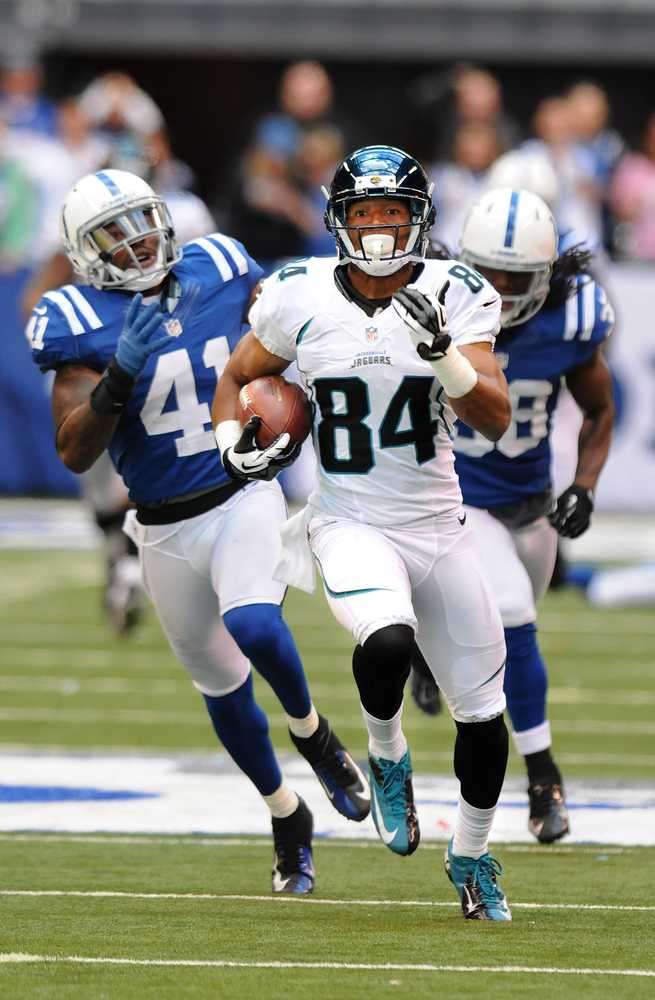
Shorts made the most of his one catch against the Colts

Shorts made the most of his one catch against the Colts.

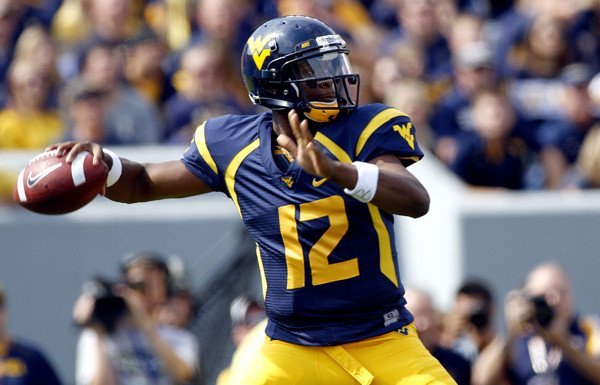
One of the surprising success stories of the 2012 season was the breakout performance of second-year Jacksonville wide receiver Cecil Shorts. With a cap value of $729,000 in 2013, Shorts is probably the best value on the Jaguars roster. But he’s one of the more confusing players to project.

The optimistic outlook on Shorts is simple. He missed two games with a concussion and took a couple of weeks to become a key part of the Jacksonville offense (he didn’t record a catch in week two, for example): in his final 12 games, Shorts averaged over 75 yards per game and scored 6 touchdowns. That would put him on a 1200-yard, 8-touchdown pace over a full slate of 16 games as a starter.

But there are other factors to consider. Shorts was only a fourth round pick and gained just 30 yards as a rookie, so he doesn’t have much of a resume beyond 2012. And while he may have produced impressive numbers, Jacksonville ranked 29th in ANY/A last year, making Shorts the co-star (along with Justin Blackmon) of a really bad passing offense. And what’s impressive about that?

So which view should carry more weight? The productive season he had as an individual or the fact that he’s a low-pedigree player who was only responsible for 26.1% of the receiving yards on a terrible passing team?
[continue reading…]

{ 5 comments }

Tempo in the NFL

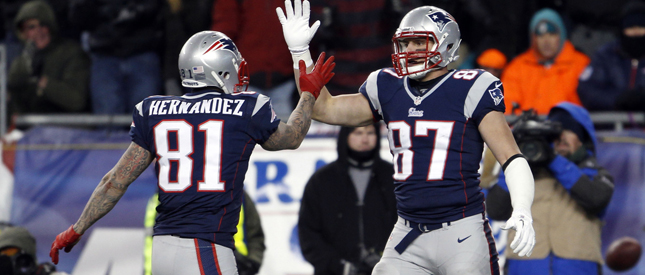
Gronkowski and Hernandez can rest after they score

Gronkowski and Hernandez can rest after they score.

It’s no secret that Bill Belichick’s Patriots ran an up-tempo offense last year: Tom Brady and crew ran 1,191 offensive plays in 2012, just eight shy of tying the record set by the Drew Bledsoe Patriots in 1994. With versatile players like Aaron Hernandez, Rob Gronkowski, and Danny Woodhead, New England was capable of running out of multiple formations without changing personnel and uses that flexibility to prevent defenses from substituting players based on down and distance. As a result, New England ran 31 more plays than any other team and 101 more plays than any other team that had a positive Game Scripts average. We would expect some teams with negative Game Scripts — especially when they have Matthew Stafford and Andrew Luck — to run a lot of plays late in games as they play catch up, which makes the Patriots’ offensive play numbers even more impressive.

New England ran an offensive play every 24.9 seconds, the highest rate in the league. The Saints were second at 26.1, which makes sense: New Orleans also has an MVP quarterback and versatile weapons at tight end (Jimmy Graham) and running back (Darren Sproles). You might be a little surprised to see Joe Flacco’s Ravens come in at #3 in play tempo, but the Ravens finished in the bottom five last year in time of possession. The Eagles will be running a high-octane offense under Chip Kelly in 2013, but Philadelphia already ranked fourth in tempo last year.

Here’s how to read the table below. In 2012, the Patriots ranked 1st in tempo (i.e., seconds per play). New England had an average Time of Possession of 30:56 and ran 1,191 offensive plays, an average of one play every 24.9 seconds. The Patriots Game Script average was 7.7, and New England ran 21.3% of their plays in the 1st quarter, 24.9% in the 2nd quarter, 27% in the 3rd quarter, 25.8% in the 4th quarter, and 0.9% in overtime.
[continue reading…]

{ 14 comments }

Time spent leading, tied, or trailing

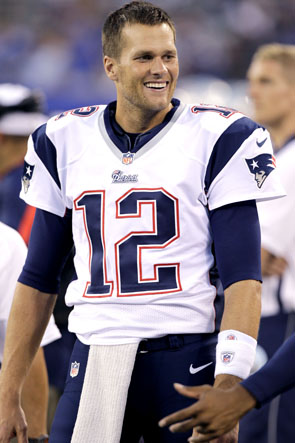
Tom  Brady thinks playing with the lead is funny

Tom Brady thinks playing with the lead is fun.

Earlier this week, I posted the Game Scripts for each team this season and in each game. After spending the time to calculate the Game Scripts — i.e., the average margin of lead or deficit over the course of every game — it involved minimal extra effort to measure the percentage of time each team spent with the lead, tied, or trailing. So that’s what I’ve done for you today. [1]One note: I’ve noticed I made one minor mistake, which I do not have the energy to spend to fix. If a team scored first in overtime and then stopped the opponent on the ensuing drive, I did … Continue reading

It’s not surprising to see the Patriots #1 in minutes spent with the lead: New England ranked first in Game Scripts score and in points differential. But the #2 team might surprise you. One reason the Vikings were so successful basing their offense around Adrian Peterson was because the team held the lead 59% of the time. You may recall the Vikings week 1 victory against the Jaguars, when Christian Ponder led Minnesota from behind to steal the win; that was an extreme outlier. In the team’s other nine victories, the Vikings held the lead for at least 45 minutes in each game. On the other hand, Minnesota led for less than 25 minutes in all seven of their losses.

The table below shows the percentage of the time each team spent leading, tied, or trailing. I’ve also included their respective ranks in each category.
[continue reading…]

References

References
1 One note: I’ve noticed I made one minor mistake, which I do not have the energy to spend to fix. If a team scored first in overtime and then stopped the opponent on the ensuing drive, I did not include those extra minutes spent on defense as time spent with the lead.
{ 1 comment }

Previously on the 2013 RSP Football Writers Project…

Introduction/My Picks in Rounds 1 and 2
My Pick in Round 3
My Picks in Rounds 4 and 5
My Picks in Rounds 6 through 11

You can also view every pick in this draft recap.

Rounds 12/13

Already on team: QB Josh Freeman, WR Julio Jones, WR Brandon Marshall, TE Greg Olsen, LT D’Brickashaw Ferguson, G Alex Boone, 3-4 DE Desmond Bryant, 3-4 DE Cameron Heyward, 3-4 OLB DE Paul Kruger, 3-4 OLB Courtney Upshaw, CB Vontae Davis
[continue reading…]

{ 2 comments }

Implied SRS Ratings of each NFL Team

On Wednesday, Jason Lisk came up with a set of power rankings based on the point spread for nearly every game this season (spreads for the games in the final week of the season have not yet been released).

We can use the SRS to come up with the implied ratings for each team (this is what Lisk did, although I don’t think he used the SRS). So how do we come up with the SRS ratings? The point spread in each game provides an implied strength margin (“ISM”) between the two teams: When the Jaguars are 14-point underdogs in Denver, that implies that Denver is 11 points better than Jacksonville. If we treat each ISM like we would margin of victory, then we can use the SRS to come up with team ratings. For those who need a primer on what the SRS is, you can read about it here; the rest of you can skip to the ratings:
[continue reading…]

{ 12 comments }

Jerry Rice’s records are essentially unbreakable. Over a marvelous twenty-year career, Rice caught 41 more touchdowns than Randy Moss, 44 more than Terrell Owens, and 67 more than every player other than Moss and Owens. He also holds the overall touchdowns mark, with 33 more touchdowns than Emmitt Smith, 46 more than LaDainian Tomlinson, and over 50 touchdowns more than every other player in NFL history. If you check the NFL records books, no player has finished his career with more than 16,000 receiving yards and fewer than 22,895 receiving yards: that’s how wide the gulf is between @JerryRice and the rest of the great wide receivers.

But there is one record that possibly, maybe, hey you never know could be broken. Jerry Rice is the career leader with 1,549 receptions. For some perspective, Steve Largent was the first player to reach the 800 receptions mark, and Art Monk passed Largent in 1992. Rice caught the still-active Monk in the final game of the 1995 regular season. Monk would retire after the season with 940 catches to his name; as he laced up his cleats for the last time, he was the career leader in receptions. When he came off the field that day, he had been relegated to number two. That’s because 700 miles away, Rice caught 12 passes against the Falcons, bringing his career total up to 942. Oh, and Rice also set the single-season record for receiving yards that day, too. Rice turned 34 in 1996; up until that point, only Charlie Joiner (325) had recorded more than 300 receptions after his age 33 season. Even though Rice missed nearly the entire 1997 season due to injury, he still caught 607 passes after 1995. Which is why we always assumed this record was unbreakable.

However, as teams began passing more frequently (and more conservatively) than ever before, some modern receivers have compiled massive receptions totals. Did you know that Tony Gonzalez is number two all-time in career receptions? With 1,242 catches, Gonzalez has a 140-catch lead on #3 man Marvin Harrison, but Gonzalez still trails Jerry Rice by 307 catches.

But what about Gonzalez’ statistical doppelganger, Jason Witten? Four years ago, I wrote that Witten was going to find himself in the Hall of Fame because of his massive numbers:

Jason Witten entered the NFL at age 21. That’s very young for a player at any position, let alone tight end. So how has he done?

  • Through age 22, he had more receptions and receiving yards than any other tight end.
  • Through age 23, he had more receptions and receiving yards than any other tight end.
  • Through age 25, he had more receptions and receiving yards than any other tight end.
  • Through age 26 (the 2008 season), he had more receptions and receiving yards than any other tight end.
  • With 40 receptions and 472 receiving yards in 2009, he will have more receptions and more receiving yards than any other tight end through the age of twenty-seven.

Witten hasn’t slowed down since I wrote that article. With 806 receptions, he has the most catches of any player through age 30 in history (although Larry Fitzgerald should catch him next year). I thought it would be interesting to chart the career receptions totals of Rice, Witten, and Gonzalez. The graph below shows the career receptions of each player at the end of each season, with age on the X-axis and career receptions on the Y-axis. Witten is in Cowboys blue and silver; unfortunately Chiefs fans, I chose to reserve red and gold for Rice, leaving Gonzalez in Falcons black and red.

Rice Witten Gonzalez career receptions

Even now, Gonzalez has a lead on Rice, and he’ll be 36 catches ahead of Rice after 2013 even if he doesn’t catch a single pass. Of course, Rice went (literally) off the chart in his final years, making it essentially impossible for Gonzalez to catch him.

But Witten has basically had the same career as Gonzalez but with an even larger buffer against Rice. Witten’s lead on Gonzalez grew significantly this year thanks to a 110-catch season at age 30 (the year Gonzalez had just 73 catches), but ages 31 to 33 were ridiculous years for both Gonzalez and Rice. The odds are very much against Witten getting to 1,549 catches, but becoming the second player to hit the 1400-catch mark is a realistic (and incredibly impressive) goal.

The left columns in the table below shows the number of career receptions through each age for each of Rice, Gonzalez, and Witten. The right three columns show the number of catches by each player at each age.

AgeRice (C)Gonzalez (C)Witten (C)Rice (S)Gonzalez (S)Witten (S)
21033353335
220921225987
2349168188497666
24135261252869364
25200334348657396
26264397429646381
27346468523827194
2844657061710010294
29526648696807879
306107218068473110
317088208069899
3282091680611296
3394299980612283
341050106980610870
3510571149806780
36113912428068293
371206124280667
381281124280675
391364124280683
401456124280692
411519124280663
421549124280630

Witten has a nearly 200-catch lead on Rice through age thirty. If we assume Witten can stay healthy in each of the next five years, he’ll get an even bigger buffer when he hits age 35. If we give Witten 351 catches over the next five years, he’ll be at 1157, giving him a 100-catch lead on Rice. Based on what Rice did after age 35, that’s not going to be anywhere near enough. If Witten wants a realistic shot, he’s going to need to keep pumping out 90-100 catch seasons for the next four years, at least. In any event, Witten will be able to keep this dream up for awhile: he needs just 38 catches in 2013 to end the year with the most receptions of any player through age thirty-one.

{ 8 comments }

The Saints would dig Football Perspective

The Saints would dig Football Perspective.

Last week, Chase had a great post where he looked at what percentage of the points scored by a team in any given game is a function of the team, and what percentage is a function of the opponent. The answer, according to Chase’s method, was 58 percent for the offense and 42 percent for the defense (note that, in the context of posts like these, “offense” means “scoring ability, including defensive & special-teams scores”, and “defense” means “the ability to prevent the opponent from scoring”). Today I’m going to use a handy R extension to look at Chase’s question from a slightly different perspective, and see if it corroborates what he found.

My premise begins with every regular-season game played in the NFL since 1978. Why 1978? I’d love to tell you it was because that was the year the modern game truly emerged thanks to the liberalization of passing rules (which, incidentally, is true), but really it was because that was the most convenient dataset I had on hand with which to run this kind of study. Anyway, I took all of those games, and specifically focused on the number of points scored by each team in each game. I also came armed with offensive and defensive team SRS ratings for every season, which give me a good sense of the quality of both the team’s offense and their opponent’s defense in any given matchup.

If you know anything about me, you probably guessed that I want to run a regression here. My dependent variable is going to be the number of points scored by a team in a game, but I can’t just use raw SRS ratings as the independent variables. I need to add them to the league’s average number of points per game during the season in question to account for changing league PPG conditions, lest I falsely attribute some of the variation in scoring to the wrong side of the ball simply due to a change in scoring environment. This means for a given game, I now have the actual number points scored by a team, the number of points they’d be expected to score against an average team according to SRS, and the number of points their opponents would be expected to allow vs. an average team according to SRS.
[continue reading…]

{ 2 comments }

Yesterday, I presented the average lead or deficit for each team in the NFL last year, a number I’ve called the “Game Script.” Teams that find themselves with big leads or in deep holes early in games tend to deviate from their game scripts. That’s why it’s important to put metrics like pass/run ratio in context with how the game scripts unfold.

The table below shows the Game Scripts score for each team in all 267 games last year (this includes the post-season). The table is fully searchable and sortable; to shorten the load times, the table by default will display only the top 25 games, but you can change that with the dropdown box on the left (and you can use the previous/next buttons — or the search box — to find other games).
[continue reading…]

{ 2 comments }

Game Scripts – The Best Teams of 2012

Last year, I introduced the concepts of Game Scripts. There are 3600 seconds in every game: the Game Script is the average score over each of those 3600 seconds. For reference, you can check out this list of the top single-seasons of all-time.

Did you know that the Patriots ranked 20th in pass/run ratio last year? Without the concept of Game Scripts, we can’t put that in proper context. New England actually ranked second in the league in rush attempts last season, a result based on two factors: the Patriots ran an incredible 1,191 plays last year and on average, the team was winning by over a touchdown in each game.

Here are the 2012 Game Script scores for each team, which represent the average lead held by the team in every second of every regular season game from last year:
[continue reading…]

{ 6 comments }

As most of you know, I also write for Footballguys.com, what I consider to be the best place around for fantasy football information. If you’re interested in fantasy football or like reading about regression analysis, you can check out my article over at Footballguys on how to derive a better starting point for running back projections:

Most people will use last year’s statistics (or a three-year weighted average) as the starting point for their 2013 projections. From there, fantasy players modify those numbers up or down based on factors such as talent, key off-season changes, player development, risk of injury, etc. But in this article, I’m advocating that you use something besides last year’s numbers as your starting point.

There is a way to improve on last year’s numbers without introducing any subjective reasoning. When you base a player’s fantasy projections off of his fantasy stats from last year, you are implying that all fantasy points are created equally. But that’s not true: a player with 1100 yards and 5 touchdowns is different than a runner with 800 yards and 10 touchdowns.

Fantasy points come from rushing yards, rushing touchdowns, receptions, receiving yards, and receiving touchdowns. Since some of those variables are more consistent year to year than others, your starting fantasy projections should reflect that fact.

The Fine Print: How to Calculate Future Projections

There is a method that allows you to take certain metrics (such as rush attempts and yards per carry) to predict a separate variable (like future rushing yards). It’s called multivariate linear regression. If you’re a regression pro, great. If not, don’t sweat it — I won’t bore you with any details. Here’s the short version: I looked at the 600 running backs to finish in the top 40 in each season from 1997 to 2011. I then eliminated all players who did not play for the same team in the following season. I chose to use per-game statistics (pro-rated to 16 games) instead of year-end results to avoid having injuries complicated the data set (but I have removed from the sample every player who played in fewer than 10 games).

So what did the regression tell us about the five statistics that yield fantasy points? A regression informs you about both the “stickiness” of the projection — i.e., how easy it is to predict the future variable using the statistics we fed into the formula — and the best formula to make those projections. Loosely speaking, the R^2 number below tells us how easy that metric is to predict, and a higher number means that statistic is easier to predict. Without further ado, in ascending order of randomness, from least to most random, here is how to predict 2013 performance for each running back based on his 2012 statistics:

You can read the full article here.

{ 2 comments }

Why do you need to run the ball when you have this guy?

Why do you need to run the ball when you have this guy?

The Packers have gone 43 consecutive regular season games without having a 100-yard rusher. Not coincidentally, Green Bay drafted Alabama’s Eddie Lacy and UCLA’s Johnathan Franklin in the draft last weekend, hoping that one of those players can bolster the team’s rushing attack.

Brandon Jackson rushed for 115 yards in an overtime loss against the Redskins on October 10, 2010. How long ago was that? Washington’s quarterback that day was Donovan McNabb. Two months later, Jackson rushed for 99 yards in a loss in Foxboro, and Ryan Grant had 92 rushing yards in a September victory in Chicago in 2011, but no Packer has hit the century mark in a regular season game since October 10th, 2010. (It’s worth noting that James Starks rushed for 123 yards in a playoff victory against the Eagles in the 2010 playoffs, but NFL game streaks routinely exclude postseason performances.)

The table below lists all teams since 1960 to go at least 32 games without a 100-yard rusher. Here’s how the second row of the table reads: The Washington Redskins went 72 games without a 100-yard rusher. The team’s last 100-yard rusher came in a game on December 17, 1961, and the streak finally ended on September 24, 1967. The player to break the streak was Bobby Mitchell, and you can see the boxscore from that game in the final column.
[continue reading…]

{ 3 comments }

Can you believe no one drafted me?

Can you believe I went undrafted?

Now that the NFL Draft is behind us, I thought I’d take a look at the best undrafted rookies to enter the NFL since 2002. At some positions (quarterback, tight end, pass rusher), picking the best players is very easy; at others (running back, wide receiver, safety) you’ll notice that there have been quite a few successful undrafted free agents. I think the most valuable part of this exercise is simply seeing where it’s reasonable and unreasonable to expect to find a successful player outside of the draft.

Below is my starting lineup, although I’ve selected 12 players on offense and 14 players on defense to accommodate different schemes.

Quarterback: Tony Romo (2003)
Honorable Mention: Shaun Hill (2005), Matt Moore (2007)

This one’s a no-brainer.  Outside of Romo, no undrafted quarterback has done much as of late.  As Scott Kacsmar noted yesterday, it’s not just undrafted quarterbacks struggling for playing time: all but five of the expected 2013 starting quarterbacks were top-40 picks.

Running Back: Arian Foster (2009)
Honorable Mention: Willie Parker (2004), Ryan Grant, Fred Jackson, Pierre Thomas (all 2007), BenJarvus Green-Ellis, Mike Tolbert, (both 2008), Danny Woodhead (2009), LeGarrette Blount (2010)
[continue reading…]

{ 17 comments }

Scoring is 60% of the Game

These guys are more valuable than their defensive counterparts.

These guys are more valuable than their defensive counterparts.

When the New England Patriots score 34 points in a game, that is the result of a couple of things: how good the Patriots are at scoring points and how good the Patriots’ opponent is at preventing points. As great as Tom Brady is, he’s not going to lead New England to the same number of points against a great defense as he will against a terrible defense.

So exactly what percentage of the points scored by a team in any given game is a function of the team, and what percentage is a function of the opponent? There are several ways to look at this, but here’s what I did.

1) I looked at the number of points scored and allowed by each team in each game in the NFL from 1978 to 2012. [1]I removed the 1982 and 1987 seasons due to the player strike, and I also removed the 1999, 2000, and 2001 seasons. In those three years, the NFL had an odd number of teams, and therefore removing … Continue reading Since teams often rest players in week 17, I removed the 16th game for each team from the data set.

2) I then calculated the number of points scored by each team in its other 14 games. This number, which is different for each team in each game, I labeled the “Expected Points Scored” for each team in each game. I also calculated the expected number of points allowed by that team’s opponent, based upon the opponent’s average points allowed total in their other 14 games. That number can be called the Expected Points Allowed by the Opponent.

3) I performed a regression analysis on over 10,000 games using Expected Points Scored and Expected Points Allowed by the Opponent as my inputs. [2]For technical geeks, I also chose to make the constant zero. We don’t care what the constant is in this regression, we just want to understand the ratio between the two variables. My output was the actual number of points scored in that game.

The Result: The best measure to predict the number of points a team will score in a game is to use 58% of the team’s Expected Points Scored and 42% of Expected Points Allowed by the Opponent of the team.
[continue reading…]

References

References
1 I removed the 1982 and 1987 seasons due to the player strike, and I also removed the 1999, 2000, and 2001 seasons. In those three years, the NFL had an odd number of teams, and therefore removing the last week of the season was going to make things messy, so I just opted to delete them.
2 For technical geeks, I also chose to make the constant zero. We don’t care what the constant is in this regression, we just want to understand the ratio between the two variables.
{ 25 comments }

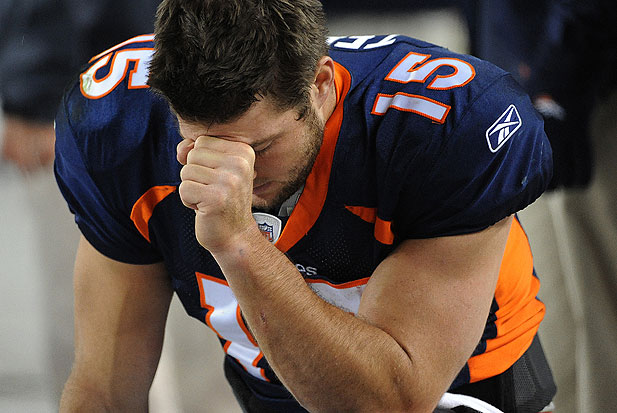
Tim Tebow's prayers are answered: He's #1

Tim Tebow's prayers are answered: He's #1

With the Jets releasing Tim Tebow, it appears that his NFL career may be over. If that’s the case, it’s time to reflect on a great career that never ceased to captivate the nation. While there are many ways to grade a quarterback, probably the best and simplest measure would be “production in last home start.” After all, the NFL is a ‘what have you done for me lately’ league.

The table below lists the final home start for over 400 retired (or close to retired) quarterbacks (the default is to show just 25 quarterbacks, but the table is fully sortable and searchable, and you can change the number of players displayed by using the drop-down box on the left). For each quarterback, I have provided a link to the boxscore from that game, the result of the game, and the quarterback’s passing and rushing statistics. If Tebow is in fact retired, he will have finished with the highest Adjusted Yards per Attempt (minimum 10 attempts) of any player in his last home start:
[continue reading…]

{ 15 comments }

Football Perspective’s Thoughts on the Jets Draft

Yesterday, I discussed some of my general reactions to the NFL Draft. Today, my thoughts on the Jets draft in particular.

Milliner Island

Milliner Island.

Round 1, Pick 9: CB Dee Milliner (Alabama)

Some mocks had Milliner, the consensus best cornerback in the draft, going as high as third overall.  The Jets had a need at cornerback following the Darrelle Revis trade, and perhaps the same scouts who fell in love with Revis (and not the ones scouting Kyle Wilson) saw similar traits in Milliner. So from that standpoint, the pick makes sense.

But I’m not sure if the selection fits in with the team’s overall philosophy.  By trading Revis, the implication was that the Jets don’t think any individual cornerback is all that valuable in both Rex Ryan’s scheme and in a division that features a two (tight end)-headed bohemoth. That’s a reasonable position to take, and trading Revis — instead of paying him $16M/year — is consistent with an organizational philosophy that values depth rather than a singular talent at cornerback.

But then why spend a top-ten pick on a corner?  Perhaps the Jets just think Revis wasn’t ever going to be Revis again, and the two moves had nothing to do with each other.  Maybe New York just likes young corners.  New general manager John Idzik restructured Antonio Cromartie‘s contract to provide immediate cap savings, but he’ll count for $15M against the salary cap in 2014.  And while Cromartie was excellent in 2012, he’ll be 30 years old this time next year; the Jets may want to move on from him at that point.  Add in the fact that 2014 is Wilson’s final year, and Milliner may be the only cornerback on the roster in both 2013 and 2015.
[continue reading…]

{ 15 comments }

My Thoughts on the 2013 Draft

Over the last three days, I analyzed the trades from the first round, rounds 2 and 3, and the final four rounds. Today, I wanted to discuss the things that stood out to me during the draft. In the comments, let me know what got your attention.

Are the Bills building the fastest offense in the NFL?

Are the Bills building the fastest offense in the NFL?

What was that blur? Chances are it came from Buffalo

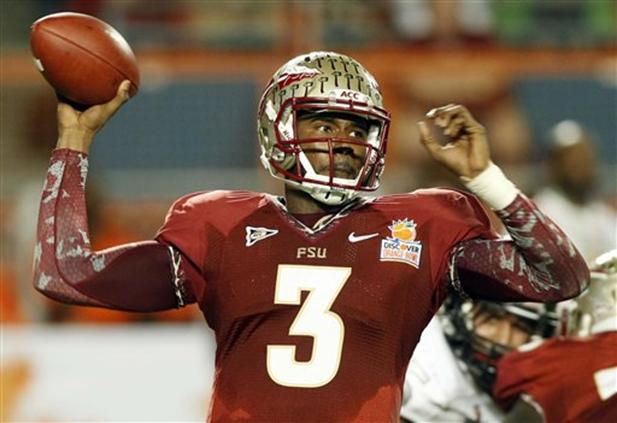
Buffalo wasn’t necessarily a slow team, with C.J. Spiller, Steve Johnson, and T.J. Graham, the track star from North Carolina State drafted in the third round last season. But in the 2013 draft, the Bills clearly placed an emphasis on improving the team speed. In the first round, GM Buddy Nix traded down and then selected Florida State quarterback E.J. Manuel, perhaps the quarterback with the highest ceiling in the draft. The 6’5, 237 pound quarterback ran a 4.65 40-yard dash at the combine and it seems likely that the Bills plan on running some read option plays this year. Buffalo also addressed the receiving group in a big way. First, Nix drafted USC wideout Robert Woods in the second round; then, he used the third rounder received from the Rams in the Tavon Austin trade to draft Texas wide receiver and Olympic athlete Marquise Goodwin (who ran a 4.25 40 in February). After the draft, Buffalo signed former Tennessee (and then Tennessee Tech) wide receiver Da’Rick Rogers, another high upside receiver (who went undrafted due to non-football reasons). The Bills also drafted Arkansas tight end Chris Gragg, who ran a 4.50 40, had a 37.5 inch vertical leap, and a 125 inch broad jump; all three marks were easily the best among tight ends at the combine. With Spiller, Goodwin, Gragg, and Manuel, Buffalo will have one of the fastest players in the NFL at each skill position.

[continue reading…]

{ 10 comments }

On Friday, I examined the trades from Round 1 of the 2013 NFL Draft; yesterday, I looked at the trades from rounds two and three. Let’s take a look at what happened on Saturday:

Chip Kelly saw enough out of Barkley to trade for him.

Chip Kelly saw enough out of Barkley to trade for him.

1) Jacksonville traded #98 to Philadelphia for the 101st and 210th picks

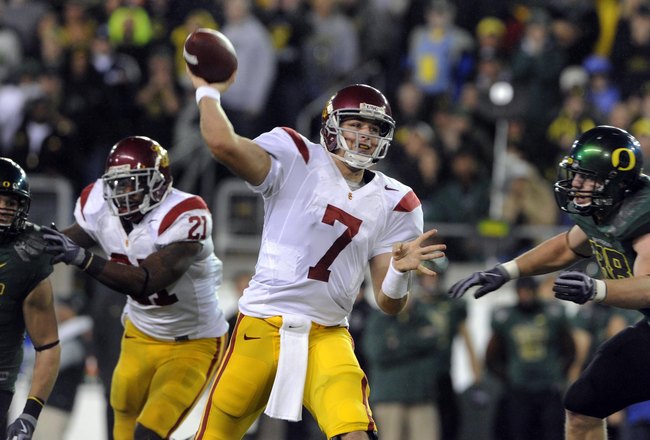
With Kansas City reportedly interested in drafting USC quarterback Matt Barkley, Philadelphia jumped the Chiefs to give Chip Kelly another quarterback.  The Jaguars then selected Ace Sanders, the South Carolina slot receiver that they presumably wanted at 98, anyway.  If nothing else, he can do this.

Jacksonville team received 107 cents on the dollar according to the Football Perspective chart and 96 cents on the dollar according to the Jimmy Johnson chart.

Winner: Win-Win.  Kelly now has Michael Vick, Nick Foles, and Matt Barkley: we’ll see who emerges from that competition.  Meanwhile, I really like the idea of having Justin Blackmon and Cecil Shorts on the outside and Sanders in the slot.  If Maurice Jones-Drew is healthy, Blaine Gabbert will be out of excuses in 2013. Jacksonville also added Denard Robinson — who looks to be playing running back in the NFL — later in the draft, giving them one of the more interesting drafts of the weekend.

Chart Used: Combination of the two charts. As you’ll soon see, teams didn’t strictly adhere to the Jimmy Johnson chart often in the later rounds.
[continue reading…]

{ 3 comments }

Yesterday, I examined the trades from Round 1 of the 2013 NFL Draft. Let’s take a look at what happened on Friday:

1) San Francisco traded #34 to Tennessee for the 40th and 216th picks plus a 2014 3rd rounder

The Titans traded up to draft Justin Hunter, the wide receiver from the University of Tennessee. It’s always difficult to value future draft picks, as every team has their own discount rate. So in addition having to figure out the value to be able to pick right now, we also don’t know whether that future pick will be in the beginning, middle, or end of the round. In this particular instance, it doesn’t matter, as the 49ers made out like bandits. For purposes of the calculator, I made the 2014 3rd rounder equal to the 97th pick in this draft. In that case…

The 49ers received 140 cents on the dollar according to the Football Perspective chart and 110 cents on the dollar according to the Jimmy Johnson chart.

On the bright side, with Hunter, Kenny Britt, and now Kendall Wright in the slot, Jake Locker has a lot of weapons this year. Throw in the additions of Andy Levitre and Chance Warmack, and the Titans have done everything they can to make the offense a strength in 2013. Still, it’s hard not to love what the 49ers did.

Winner: San Francisco, significantly. Not only did they get fantastic value, they then selected Tank Carradine, a top-20 talent at defensive end, with the 40th pick. Unreal. A day after the Vikings overpaid to draft one Volunteer receiver, the Titans do the same for the other.

Chart Used: The Jimmy Johnson chart with a dash of coach/GM on the hot seat

[continue reading…]

{ 5 comments }

Analyzing the Trades in Day 1 of the 2013 Draft

There were five trades in the first round of the NFL Draft.  Who were the winners and losers?  Which draft chart was used — the traditional Jimmy Johnson chart or something closer to my chart?  I’ve never argued that teams use my chart when making trades (rather, I’ve argued simply that they should), but it’s worthwhile to see the trade market has shifted under the new CBA.

1) Oakland traded the #3 pick for Miami’s #12 and #42 picks

At the time, most thought the Dolphins were trading to select the last of the three left tackles, Oklahoma’s Lane Johnson.  Instead, Miami drafted Dion Jordan, the DE/OLB out of Oregon.  Jordan will team with Cameron Wake to give Miami an incredible set of pass rushers, although the left tackle situation remains unresolved.

My draft pick value calculator says the Raiders received 107% of the value they gave up, making it slightly in their favor.  On the other hand, the Jimmy Johnson chart says the Raiders only received 76% of the value of the third pick back.

Winner: Oakland.  The Raiders were able to select the player they really wanted (D.J. Hayden), so they essentially received the #42 pick for free.  Meanwhile, the Dolphins gave up a high second round pick, a risky move in a draft that is flat on talent.  Miami fans will be happy with Jordan now, and the team could still send their other second round pick to Kansas City for Branden Albert, but strictly on trade value, the Raiders won this one.
[continue reading…]

{ 19 comments }

A recap of every #1 pick in NFL and AFL Draft History, along with their conference affiliations:

YearDraftPlayerTeamPosSchoolConf (Then)Conf (Now)
2013NFLEric FisherKANTCentral MichiganMACMAC
2012NFLAndrew LuckINDQBStanfordPac-12Pac-12
2011NFLCam NewtonCARQBAuburnSECSEC
2010NFLSam BradfordSTLQBOklahomaBig 12Big 12
2009NFLMatthew StaffordDETQBGeorgiaSECSEC
2008NFLJake LongMIATMichiganBig TenBig Ten
2007NFLJaMarcus RussellOAKQBLSUSECSEC
2006NFLMario WilliamsHOUDENorth Carolina St.ACCACC
2005NFLAlex SmithSFOQBUtahMWCPac-12
2004NFLEli ManningSDGQBMississippiSECSEC
2003NFLCarson PalmerCINQBUSCPac-10Pac-12
2002NFLDavid CarrHOUQBFresno St.WACWAC
2001NFLMichael VickATLQBVirginia TechBig EastACC
2000NFLCourtney BrownCLEDEPenn St.Big TenBig Ten
1999NFLTim CouchCLEQBKentuckySECSEC
1998NFLPeyton ManningINDQBTennesseeSECSEC
1997NFLOrlando PaceSTLTOhio St.Big TenBig Ten
1996NFLKeyshawn JohnsonNYJWRUSCPac-10Pac-12
1995NFLKi-Jana CarterCINRBPenn St.Big TenBig Ten
1994NFLDan WilkinsonCINDTOhio St.Big TenBig Ten
1993NFLDrew BledsoeNWEQBWashington St.Pac-10Pac-12
1992NFLSteve EmtmanINDDEWashingtonPac-10Pac-12
1991NFLRussell MarylandDALDTMiami (FL)IndependentACC
1990NFLJeff GeorgeINDQBIllinoisBig TenBig Ten
1989NFLTroy AikmanDALQBUCLAPac-10Pac-12
1988NFLAundray BruceATLLBAuburnSECSEC
1987NFLVinny TestaverdeTAMQBMiami (FL)IndependentACC
1986NFLBo JacksonTAMRBAuburnSECSEC
1985NFLBruce SmithBUFDEVirginia TechIndependentACC
1984NFLIrving FryarNWEWRNebraskaBig 8Big Ten
1983NFLJohn ElwayBALQBStanfordPac-10Pac-12
1982NFLKenneth SimsNWEDETexasSWCBig 12
1981NFLGeorge RogersNORRBSouth CarolinaIndependentSEC
1980NFLBilly SimsDETRBOklahomaBig 8Big 12
1979NFLTom CousineauBUFLBOhio St.Big TenBig Ten
1978NFLEarl CampbellHOURBTexasSWCBig 12
1977NFLRicky BellTAMRBUSCPac-8Pac-12
1976NFLLee Roy SelmonTAMDEOklahomaBig 8Big 12
1975NFLSteve BartkowskiATLQBCaliforniaPac-8Pac-12
1974NFLToo Tall JonesDALDETennessee St.----
1973NFLJohn MatuszakHOUDETampaIndependent--
1972NFLWalt PatulskiBUFDENotre DameIndependentIndependent
1971NFLJim PlunkettNWEQBStanfordPac-8Pac-12
1970NFLTerry BradshawPITQBLouisiana Tech--WAC
1969NFLO.J. SimpsonBUFRBUSCPac-8Pac-12
1968NFLRon YaryMINTUSCAAWUPac-12
1967NFLBubba SmithBALDEMichigan St.Big TenBig Ten
1966NFLTommy NobisATLLBTexasSWCBig 12
1966AFLJim GrabowskiMIARBIllinoisBig TenBig Ten
1965NFLTucker FredericksonNYGRBAuburnSECSEC
1965AFLJoe NamathNYJQBAlabamaSECSEC
1964AFLJack ConcannonBOSQBBoston Col.IndependentACC
1964NFLDave ParksSFOWRTexas TechSWCBig 12
1963AFLBuck BuchananKANDTGrambling St.----
1963NFLTerry BakerRAMQBOregon St.IndependentPac-12
1962AFLRoman GabrielOAKQBNorth Carolina St.ACCACC
1962NFLErnie DavisWASRBSyracuseIndependentBig East
1961NFLTommy MasonMINRBTulaneSECCUSA
1961AFLBob GaitersDENRBNew Mexico St.BorderWAC
1960NFLBilly CannonRAMTELSUSECSEC
1959NFLRandy DuncanGNBQBIowaBig TenBig Ten
1958NFLKing HillCRDQBRiceSWCCUSA
1957NFLPaul HornungGNBRBNotre DameIndependentIndependent
1956NFLGary GlickPITDBColorado St.SkylineMWC
1955NFLGeorge ShawBALQBOregonPCCPac-12
1954NFLBobby GarrettCLEQBStanfordPCCPac-12
1953NFLHarry BabcockSFOWRGeorgiaSECSEC
1952NFLBilly WadeRAMQBVanderbiltSECSEC
1951NFLKyle RoteNYGWRSMUSWCCUSA
1950NFLLeon HartDETWRNotre DameIndependentIndependent
1949NFLChuck BednarikPHILBPennsylvaniaIndependent--
1948NFLHarry GilmerWASQBAlabamaSECSEC
1947NFLBob FenimoreCHIRBOklahoma St.MVCBig 12
1946NFLBoley DancewiczBOSQBNotre DameIndependentIndependent
1945NFLCharlie TrippiCRDRBGeorgiaSECSEC
1944NFLAngelo BertelliBOSQBNotre DameIndependentIndependent
1943NFLFrankie SinkwichDETRBGeorgiaSECSEC
1942NFLBill DudleyPITRBVirginiaIndependentACC
1941NFLTom HarmonCHIRBMichiganWesternBig Ten
1940NFLGeorge CafegoCRDFBTennesseeSECSEC
1939NFLKi AldrichCRDCTCUSWCBig 12
1938NFLCorby DavisRAMRBIndianaWesternBig Ten
1937NFLSam FrancisPHIFBNebraskaBig 6Big Ten
1936NFLJay BerwangerPHIRBChicagoWestern--
{ 0 comments }

Football Perspective Mock Draft

Before we get to my mock draft, here’s a recap of some of my previous articles on the NFL draft:

Draft Pick Value Calculators – Don’t Watch the Draft Without Them

I’ve created Draft Pick Value Calculators based on both my Draft Value Chart and the Jimmy Johnson Draft Value Chart.  As trades unfold tonight, you can use both calculators to see who won the trade.  I’ll be providing draft commentary on twitter, and you can follow me @fbgchase.

The 2013 Football Perspective Mock Draft

1. Chiefs – LT Eric Fisher, Central Michigan
Eric Fisher has more upside than Luke Joeckel and is a more physical player, which is why we’re now seeing more people mock Fisher to the Chiefs. The Chiefs aren’t in need of a left tackle, but Fisher is the top prospect in the draft at an elite position. Kansas City will try to trade the pick (and/or Branden Albert), but will ultimately end up selecting Fisher.

2. Dolphins (From Jaguars in Draft Night Trade) – LT Luke Joeckel, Texas A&M
Miami didn’t go all-in on Ryan Tannehill and Mike Wallace to leave a hole at left tackle. Jeff Ireland is on the hot seat, and is happy to send his 2014 1st rounder to Jacksonville for a premier left tackle, especially one who has played with Tannehill and under OC Mike Sherman. New GM Dave Caldwell wants more for the #2 pick, but knows having an additional first rounder in 2014 could help in finding a franchise quarterback.

3. Raiders – DT Sharrif Floyd, Florida
Oakland wants to trade down, but can’t find a willing suitor. The Raiders are desperate for bodies on the defensive line, and Floyd is a penetrating one-gap tackle who will instantly make the Raiders defense better.

4. Eagles – DE Dion Jordan, Oregon
Chip Kelly can’t resist taking the most exciting defensive prospect in the draft. Jordan is capable of playing in both the 3-4 and 4-3, making him a good fit for Kelly’s hybrid defense. An elite pass rusher who can help his new Eagles teammates get used to life under Kelly is a dream scenario Philadelphia fans, who will still boo the pick.

5. Chargers (From Lions in Draft Night Trade) – LT Lane Johnson, Oklahoma
Mike McCoy needs to resurrect Philip Rivers’ career, and the addition of King Dunlap (Philadelphia) and now Johnson will help shore up the edges of the San Diego line. Johnson is already one of the most athletic tackles in NFL history with off-the-chart measurables, making him the type of player a team is willing to move up to take. The Lions are willing to take any of the top corners, so Detroit accepts San Diego’s offer of the 11th, 76th, and 111th picks for the 5th pick.

[continue reading…]

{ 10 comments }

We already know what the average draft pick is worth, thanks to the Football Perspective Draft Value Chart. If we assign the draft value associated with each pick to the college of that player, then we can determine which school had the most draft value in any given year. As it turns out, the best single draft since 1967 came courtesy of USC in 1968. Look at this pretty incredible draft for the Trojans, with five players in the top 24:

Pk   Team  Player               Pos  School
1    MIN   Ron  Yary             T    USC
10   PIT   Mike  Taylor          T    USC
14   PHI   Tim  Rossovich        LB   USC
16   CHI   Mike  Hull            RB   USC
24   DET   Earl  McCullouch      WR   USC
68   PHI   Adrian  Young         LB   USC
94   WAS   Dennis  Crane         DT   USC
101  NYJ   Gary Magner          DT   USC
298  OAK   Chip  Oliver          LB   USC
438  DEN   Steve Grady          RB   USC
439  NOR   James  Ferguson       C    USC

In modern times, the best draft class (in terms of draft pick value) by a single school came in 2004, when the Miami Hurricanes sent this impressive haul to the NFL:

Rk   Team  Player               Pos  School
5    WAS   Sean  Taylor	        DB   Miami (FL)
6    CLE   Kellen  Winslow  Jr.	TE   Miami (FL)
12   NYJ   Jonathan  Vilma	LB   Miami (FL)
17   DEN   D.J.  Williams	LB   Miami (FL)
19   MIA   Vernon  Carey        T    Miami (FL)
21   NWE   Vince  Wilfork	NT   Miami (FL)
213  NYJ   Darrell  McClover	LB   Miami (FL)
215  CHI   Alfonso  Marshall	DB   Miami (FL)
254  SDG   Carlos  Joseph	T    Miami (FL)

[continue reading…]

{ 2 comments }

Are some positions safer than others in the draft? Conventional wisdom tells us that quarterbacks are risky, while offensive linemen are safe. But is that true? Jason Lisk wrote a great article on bust rates three years ago at the old PFR Blog, and I’ve decided to update that article based on more recent data.

I looked at the first rounds of all drafts from 1990 to 2009. Over that time period, 46 quarterbacks were selected in the first round, and those quarterbacks were selected, on average, with the 9th or 10th pick. The table below breaks down each position, the number of players selected in the twenty-year period, and their average draft slot:

PosCountAvg Pk
QB469.6
DE7414.1
OLB5114.6
T7014.9
DT5615
WR7315.9
RB6415.9
ILB1917.7
S2917.9
CB7418
TE2420.5
G1620.8
C922.4

[continue reading…]

{ 9 comments }

Are certain teams better at drafting than others?

A.J. Smith knows a perfect throwing motion when he sees one.

A.J. Smith knows a perfect throwing motion when he sees one.

On the surface, this seems like an obvious question. Yes, certain teams are good at drafting and certain teams are bad at drafting. It’s easy to think of the Matt Millen Lions or the Raiders at the end of the Al Davis era as terrible drafting teams. With the benefit of hindsight, they were terrible at making draft selections. But is it easy to identify going forward which teams will be good or bad in the draft?

Think back to April 2007. A.J. Smith and Bill Polian were widely considered the two best draft minds in the NFL. At the time, Smith’s last three draft classes had been outstanding. He added Philip Rivers (via the Eli Manning trade), Igor Olshansky, Nick Hardwick, Shaun Phillips, Michael Turner, and Nate Kaeding in 2004, and followed that up with Shawne Merriman, Luis Castillo, Vincent Jackson, and Darren Sproles in 2005 and another strong class (Antonio Cromartie, Marcus McNeill, and Jeromey Clary) in 2006.

The defending Super Bowl champions were the Indianapolis Colts, a team that Polian had built from scratch. From 1996 to 2003, Polian’s eight first round picks were spent on Marvin Harrison, Tarik Glenn, Peyton Manning, Edgerrin James, Rob Morris, Reggie Wayne, Dwight Freeney, and Dallas Clark. His most recent first round pick was Joseph Addai, who had 1400 yards from scrimmage as a rookie and 143 yards in the Super Bowl victory over Chicago.

[continue reading…]

{ 38 comments }

We would like to start the bidding at Fort Knox.

We would like to start the bidding at Fort Knox.

This trade was a Win-Win-Win for all three sides. The Buccaneers received the best cornerback in the NFL when healthy, the perfect elixir for a team that ranked 1st against the run and 32nd against the pass in 2012. I’m a big fan of Josh Freeman, who should continue to improve as he matures. The Bucs were the 3rd youngest team in the NFL last year, making them a team on the rise. Adding Revis and Dashon Goldson to the secondary makes Tampa Bay an immediate playoff contender and a darkhorse Super Bowl contender.

Meanwhile, this is a big win for Revis, who received an incredible $96 million dollar contract and no longer has to worry about playing this season on a three million dollar base contract. Instead, he has a $13M base for each of the next six seasons, as well as a $1.5M workout bonus and $1.5M roster bonus in each season. By making $16M per season, he’s making just a hair below what Calvin Johnson and Larry Fitzgerald are making, and he’s trumped the averages per year going to Adrian Peterson and Chris Johnson. He’s making not just quarterback money, but elite quarterback money. The trade-off for that insanely high annual figure is that he has little protection. Technically, he has no guaranteed money, but absent a season-ending injury — and maybe not even that — he’s going to make at least $32M over the next two years. And unless he falls apart, he’ll pocket $48M from 2013 to 2015, an incredible three-year haul. It’s also a few million dollars more than what DeMarcus Ware, Terrell Suggs, and Clay Matthews received on their monster deals. Unless Tampa Bay cuts Revis after two years — in which case they would have paid $32M and lost a first round draft pick and obviously received very little — a deal with no guaranteed money isn’t particularly risky for Revis. In reality, zero guaranteed dollars is a red herring, and Revis will receive $40+M over the next three years even if Tampa Bay cuts him after year two or $48M if he stays on the team.
[continue reading…]

{ 5 comments }

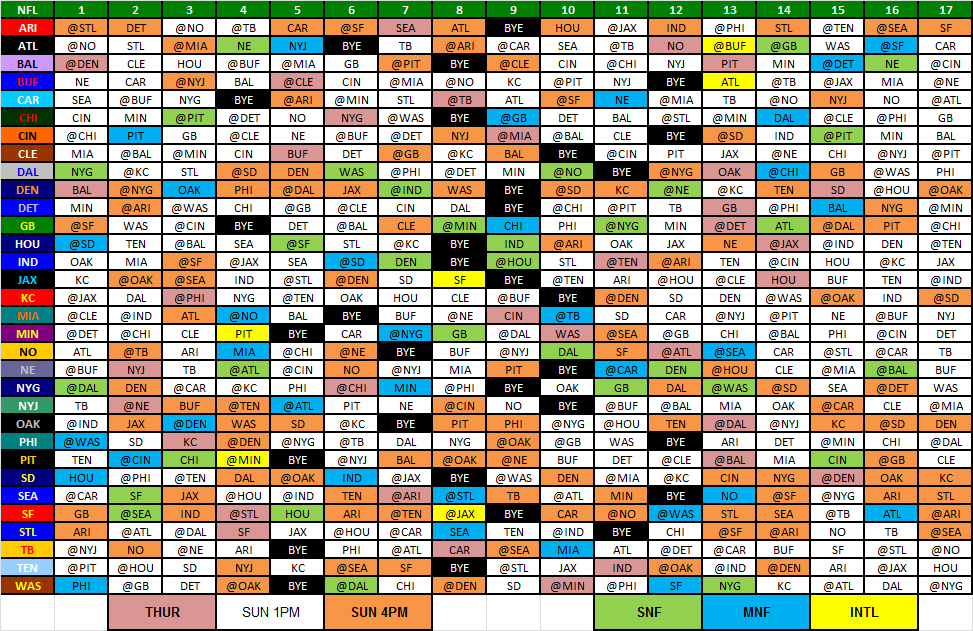
[In case you missed it, earlier this week, I created an NFL Draft Pick Value Calculator and provided wallet-sized and iPhone-style copies of the 2013 NFL Schedule.]

I find old newspaper articles very entertaining, so I decided to see how the Boston Globe documented the selection of Tom Brady in the sixth round of the 2000 Draft.
On April 17th, the day after the draft concluded, the Globe provided a full summary of each player. Here’s how they described the 199th pick:

6, 199 – Tom Brady, QB, Michigan

A pocket passer who will compete for a practice squad spot with the Patriots . . . Drafted as a catcher by the Montreal Expos in 1995 out of Serra (San Mateo, Calif.) HS . . . Completed 62.8 percent of his passes with 20 TDs and six interceptions. Only Elvis Grbac had more TD tosses in a season for the Wolverines . . . Throws a great slant . . . At almost 6-4, 214 pounds, has some mobility . . . Platooned with sophomore Drew Henson . . . Was projected to go in the third round, but dropped quickly.

[continue reading…]

{ 1 comment }

I’ve received a couple of questions asking about what the discount rate should be when trading future draft picks. For example, two years ago, Atlanta traded the 27th, 59th, and 124th picks in the 2011 draft, along with their first and fourth round picks in the 2012 draft, to the Browns to acquire the 6th pick and select Julio Jones. In making that trade, the Falcons were implying that the future picks were worth less than current selections. Can we quantify exactly what discount rate they used?

The Falcons went 13-3 in 2010, so they probably expected that they’d be picking pretty late in the first round of the 2012 draft, especially after adding Jones. No doubt part of the reason we see teams trading future picks is because teams expect those to be late future picks. Atlanta went 10-6 in 2011 (and lost their first playoff game), earning the 22nd pick in the 2012 draft. But let’s give Atlanta the biggest benefit of the doubt possible and say that we should assume that they were going to win the Super Bowl.

If you place picks 27, 59, and 124 into the Draft Pick Value Calculator, you see that they are worth 26.1 points. Unfortunately for Atlanta, that haul alone — without adding the future picks — is worth more than the value of the 6 pick (23.3 points). The Football Perspective chart is based on actual NFL production of drafted players, but I don’t argue that teams use my chart: just that they should. In reality, we know what chart they do use (at least as a starting point).
[continue reading…]

{ 14 comments }

Wallet-Sized Copy of the 2013 NFL Schedule

I have created a wallet-sized color copy of the 2013 NFL Schedule, which you can download here:

2013 NFL SCHEDULE

That Excel file also contains a full page color copy of the schedule, along with black and white wallet-sized and full page size schedules. On the wallet-sized photos, the line between weeks 8 and 9 has been enlarged — that is where you want to fold the paper in half.

If you don’t like downloading Excel files, you can just bookmark this page. If you have an iPhone, point your web browser to that page, and then hit your power and home button at the same time to take a photo. It’s been formatted to fit that screen will enable you have always carry the schedule on your phone.

2013 nfl schedule 2
{ 10 comments }

Will Geno Smith fall in the draft?

Would you risk your job on this man?

Would you risk your job on this man?

I have no inside information and I’m not a draftnik, but that won’t stop me from trying to read the tea leaves. I’m of the opinion that Geno Smith will fall to the late first round of the draft next week. I’m not a huge Smith fan — a passer-friendly system boosted his admittedly impressive numbers — but I wouldn’t label myself a Smith hater, either. So why do I think he’ll slide? Part of the reason is that Smith simply isn’t a slam dunk pick, much to the chagrin of several teams in the top five. Another factor is that following the delusional quarterback carousel last month, no team has a pressing need for a quarterback to start in week 1, a stark contrast to where the Redskins and Colts were this time last year. Finally, while Smith may be the top quarterback prospect on most boards, I’m sure some teams think selecting Matt Barkley, E.J. Manuel, Ryan Nassib, Tyler Wilson, Mike Glennon, Tyler Bray, or Landry Jones in rounds two, three, or four, is preferable to spending a high first round pick on Smith. If those picks miss, the cost is lower, and team won’t feel the immediate need to thrust them into the lineup like they would with Smith.

Looking at the teams drafting in the top ten, and I don’t see any landing spot that is particularly likely for Smith. Consider:
[continue reading…]

{ 7 comments }

Introducing the NFL Draft Pick Value Calculator

I first created a draft value chart five years ago. While the famous Jimmy Johnson chart was designed to facilitate trades, my chart was designed to measure the actual expected value from each draft pick. I fine-tuned my chart last November, and the graph below shows how much marginal Approximate Value you can expect from each draft pick over the course of the first five years of his career:

draft value chart 2

You can see all the values for each draft pick here, but today, I’m introducing the Draft Pick Value Calculator. It’s pretty simple to use: just type in the draft picks that Team A is trading and the draft picks that Team B is trading, and the calculator will let you know which team is winning the deal.
[continue reading…]

{ 62 comments }