≡ Menu

Johnny Jaguar

Johnny Jaguar.

A couple of years ago, I wrote that when a team misses on a first round quarterback, someone tends to gets fired (update here). I identified 22 quarterbacks drafted in the first round between 1998 and 2010 who did not turn into stars: in nearly every case, the offensive coordinator and/or head coach was fired.

Jacksonville has underdone significant upheaval over the past few years. In January 2012, Shahid Khan acquired the Jaguars. The general manager at the time was Gene Smith: after a 2-14 season, Smith was fired, and Khan brought in his man, David Caldwell.

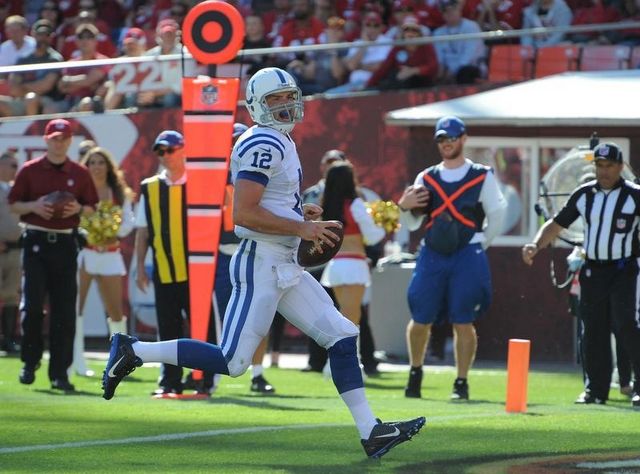
Caldwell brought in his own man, too, when he replaced Mike Mularkey with Gus Bradley. The new management team also inherited Blaine Gabbert, the 10th overall pick in the 2011 draft. After two poor seasons from Gabbert before they arrived, Caldwell and Bradley could have decided to select a quarterback in the 2013 draft. But with the 2nd overall pick, there was no Andrew Luck or Robert Griffin III available, and the Jaguars selected offensive tackle Luke Joeckel.

When Jacksonville was on the clock at the top of the second round, the only quarterback off the board was EJ Manuel. The Jaguars could have drafted Geno Smith, but instead selected Jonathan Cyprien. In the third round, Mike Glennon was still available, but the team picked Dwayne Gratz. In the fourth round, before Matt Barkley, Ryan Nassib, Tyler Wilson, and Landry Jones were drafted, the Jaguars took Ace Sanders.

[continue reading…]

{ 17 comments }

Running backs getting shorter and heavier

Short and stout is what NFL teams look for in a running back

Short and stout is the ideal look.

In December, I noted that fewer rushing yards are coming from first round picks. That’s a trend that seems very likely to continue in 2014, and perhaps for the foreseeable future. As it turns out, running backs are also getting shorter and heavier.

LeSean McCoy, Alfred Morris, Frank Gore, Knowshon Moreno, Zac Stacy, DeAngelo Williams, Maurice Jones-Drew, Ray Rice, Giovani Bernard, Trent Richardson, Doug Martin, Danny Woodhead, and Mark Ingram are all 5’10 or shorter. As you can probably infer from the sheer quantity of the group, those players aren’t significant outliers: the “average” running back, weighted by rushing yards last season, was only five feet and 11.1 inches tall. That means backs like Jamaal Charles (6’1), Matt Forte (6’1), and Adrian Peterson are more outliers than the 5’10 backs.

This is a weighted average, so McCoy (who had about 3% of all rushing yards from running backs last year) counts three times as much as, say, Donald Brown when calculating the 2013 (weighted) average running back height. Regular readers will recognize that this is the same methodology I used when calculating the average (weighted) average of each team’s receivers last season. The graph below shows the average weighted height of all running backs since 1950: [continue reading…]

{ 7 comments }

Interesting stat about LeBron James courtesy of Tim Reynolds: The Heat superstar has increased his field goal percentage in seven straight seasons. Take a look at his field goal percentage by season:

Season Age Tm FG%
2003-04 19 CLE .417
2004-05 ★ 20 CLE .472
2005-06 ★ 21 CLE .480
2006-07 ★ 22 CLE .476
2007-08 ★ 23 CLE .484
2008-09 ★ 24 CLE .489
2009-10 ★ 25 CLE .503
2010-11 ★ 26 MIA .510
2011-12 ★ 27 MIA .531
2012-13 ★ 28 MIA .565
2013-14 ★ 29 MIA .567

Now as you guys can probably figure out, I’m not terribly invested in the career of LeBron James or basketball stats. But one thing I know is that improving on any metric in seven straight years is really freakin’ rare.

How rare? Only one quarterback in NFL history has increased his passing yards output in six straight years. That quarterback actually increased his passing yards per game in eight straight seasons, but no other quarterback can come close to matching that feat, either. Can you guess who our mystery quarterback is?

Trivia hint 1 Show
Trivia hint 2 Show
Trivia hint 3 Show
Click 'Show' for the Answer Show

Here, take a look at his career stats:

Click 'Show' Show

So while 1) my interest in basketball is limited, and 2) as Neil would tell me, field goal percentage is meaningless, simply increasing your performance in any stat for seven straight years is remarkable. No running back has ever increased their rushing output in seven straight years, although Earl Ferrell (if you count his rookie year of zero rushing yards per game, 1982-1988) and Pete Johnson (1977-1983) both increased their rushing yards per game in six straight years.

No receiver has seen a seven-year increase in any stat, either.  However, three players have increased their number of receptions in six straight years: Jason Avant (2006-2012), Raymond Berry (1955-1961), and Reggie Wayne (2001-2007). However, none of them managed to pull off that feat in receiving yards.

But two other players did: Tim Brown (1989-1995) and Marcus Pollard (if you count his rookie year of zero receiving yards, 1995-2001) increased their receiving yards in six straight seasons. And Leonard Thompson (1977-1983), Brown, and Pollard were the only players to increase their receiving yards per game in six straight years.

So whatever you think of LeBron, just know that here’s one more reason a stats geek could find his career fascinating.

{ 6 comments }

Which College Conferences Dominate the NFL Draft?

On Sunday, I used my draft value chart to determine how NFL teams valued various positions. Today, I’ll use the same method to see which schools and conferences dominate the NFL Draft. You are not going to be surprised to discover that USC Trojans have dominated the draft over the last ten years. You’ll be even less surprised to see that SEC teams have accumulated the most draft value, and the most value per team, of any conference. But let’s put some numbers on what we all know. Here’s what I did:

1) Using these draft values, assign a value to every pick in every draft from 2004 to 2013.

2) Calculate the amount of draft capital assigned to each college team by summing the values from each draft pick for each player from that college.

3) Sum the values for each school in each conference. Note: I am using the school-conference affiliations as of the 2013 season, so the SEC gets credit for the last ten years of Texas A&M, and the ACC gets a decade worth of Pitt draft picks. (Speaking of Pitt, regular readers may recall last year’s two posts on college and NFL team connections). On the other hand, Maryland and Rutgers are not credited to the Big Ten… yet. This is almost certainly not the ideal way to handle the situation, but any other approach would be too time consuming and as a reminder, nothing about college football makes any sense, anyway.

Based on that methodology, the table below shows the 100 schools that have produced the most draft value from 2004 to 2013. By default, I’m listing only the top 10, but you can change that in the dropdown box to the left: [continue reading…]

{ 13 comments }

In January, I calculated the AV-adjusted age of every team in 2013. In February, I looked at the production-adjusted height for each team’s receivers. Today, we combine those two ideas, and see which teams had the youngest and oldest set of targets.

To calculate the average receiving age of each team, I calculated a weighted average of the age of each player on that team, weighted by their percentage of team receiving yards. For example, Anquan Boldin caught 36.7% of all San Francisco receiving yards, and he was 32.9 years old as of September 1, 2013. Therefore, his age counts for 36.7% of the 49ers’ average receiving age. Vernon Davis, who was 29.6 on 9/1/13, caught 26.5% of the team’s receiving yards last year, so his age matters more than all other 49ers but less than Boldin’s. The table below shows the average age for each team’s receivers (which includes tight ends and running backs) in 2013, along with the percentage of team receiving yards and age as of 9/1/13 for each team’s top four receiving leaders: [continue reading…]

{ 6 comments }

In case you haven’t heard, the St. Louis Rams are running a contest to predict the team’s 2014 schedule. lThe prize is $100,000, which sounds nice until you realize that to win, you must accurately predict not only the opponent each week, but the location and the exact day of the game. Nobody is going to win this contest. Nobody is going to come close to winning the contest. It’s a personal information/PR grab and nothing more.  Normally, this wouldn’t bother me, but it’s not like the Rams are giving away a billion dollars.  For a hundred grand — which is less than two percent of the amount of dead cap space being allocated to Cortland Finnegan this season — the team shouldn’t have needed to make it impossible for anybody to win. Considering the rules, St. Louis might as well have announced that the grand prize is eleventy billion dollars.

So what are the odds of winning this contest? Let’s start with an easier problem than the one at hand: predicting the Rams opponent in each week of the season.

With 17 weeks, there are 17 possible opponents once you include home/road designations and the bye week. Therefore, you have a 1-in-17 chance of correctly guessing the Rams opponent in week one. By extension, you have a 1-in-16 chance of correctly guessing who St. Louis plays in week two, assuming you were correct with your guess in week one (this is what we mean by conditional probabilities). Do this for every week of the season, and by week 17, you have a 100% chance of correctly guessing who is on the team’s schedule.

It may not be intuitive exactly how daunting a task this is. But this is much, much harder than Warren Buffet’s bracket contest.  For example, you only have a a 1-in-272 chance of correctly guessing who the Rams opponents will be in the first two weeks of the season. That drops to 1-in-4,080 through three weeks, 1-in-8.9 million through six weeks, and 1-in-8.8 billion through nine weeks. That already makes it harder than the bracket contest, and you still have the back eight to play. The odds of correctly guessing the opponent each week is 1-in-356 trillion. And remember, this is quite a bit easier than the actual contest!

But let’s make some adjustments based on the information we know (which will lower the odds) and the added conditions one must satisfy (which will drastically increase the odds).

Adjustment #1

The first adjustment to our 1-in-356 trillion likelihood lowers the odds. If we assume that each team plays a division opponent in week 17, that makes the contest ever so slightly easier. If we work in reverse order, you now have a 1-in-6 chance of guessing the week 17 opponent (remember, you need to specify game location), a 1-in-16 chance of guessing the week 16 opponent assuming your week 17 selection was correct, and so on. This improves your odds all the way to 1-in-126 trillion. Hooray? [continue reading…]

{ 14 comments }

Ranking the Almost Dynasties, Part II

Andrew Healy is back with a sequel to his popular post. As always, we thank him for his generous contributions. Andrew Healy is an economics professor at Loyola Marymount University. He is a big fan of the New England Patriots and Joe Benigno.


A couple of weeks ago, I went decade-by-decade since the 1970 AFL-NFL merger to identify the teams that were the best of their eras and the teams that nearly became the teams we remember most instead. In those rankings, I used Pro Football Reference’s Simple Rating System to estimate team strength. Today, I use Football Outsiders’ DVOA ratings and go back an additional twenty years. Using DVOA produces some pretty notable differences that were bigger than I would have guessed.

What are some of those changes?

  • The Steelers have been supplanted as the true team of the ‘70s.
  • The best team to win no titles changes for three of the decades.
  • The ‘70s Vikings get replaced by a more recent what-might-have-been team as the best to win nothing in the Super Bowl era.

Before we get to that, I cover the 1950s and 1960s, identifying the true teams of those decades and the what-might-have-been teams. In a follow-up post, I’ll bring it all together and identify the franchises that have maximized their championship potential the most, and those that have left the most money on the table. [continue reading…]

{ 17 comments }
Luck's rushing ability makes him a QBR star

Luck's rushing ability makes him a QBR star.

A few weeks ago, I put ESPN’s Total QBR under the microscope. Today, I want to look at the quarterbacks whose passing statistics most differ from their QBR grades.

Total QBR grades go back to 2006, so to start, I ran a regression using Adjusted Net Yards per Attempt to predict Total QBR. The best-fit formula was:

Total QBR = -13.5 + 11.23 * ANY/A

For those curious, the R^2 was 0.80, indicating a very strong relationship between ANY/A and Total QBR. What this formula tells us is that a passer needs to average 5.65 ANY/A to be “projected” to have a QBR of 50; from there, every additional adjusted net yard per attempt is worth 11.2 points of QBR. Last year, Peyton Manning averaged 8.87 ANY/A, which projects to a QBR of 86.2. In reality, Manning had a QBR of “only” 82.9; this means Manning’s QBR says he wasn’t quite as amazing as his excellent efficiency numbers would indicate (to say nothing of his otherworldly gross numbers). One likely reason for this result is that Manning ranked 29th in average pass length in the air (according to NFLGSIS) and 6th in yards after the catch per completion; this matters because ESPN gives more credit to quarterbacks on the yards they accumulate through the air. (Throughout this post, we will be forced to deal with educated guesses, because Total QBR is a proprietary formula.)

As it turns out, Manning rating higher in actual QBR than projected QBR is a stark departure from prior years. In 2012, he finished 7.2 points higher in actual QBR than projected QBR, but that’s nothing compared to his time with the Colts. In five years in Indianapolis during the Total QBR era, Manning finished at least 10 points higher in actual QBR each season.

Along with Manning, Matt Ryan and Andrew Luck are the two quarterbacks who are most likely to over-perform relative to their “projected” ratings. Let’s be careful about exactly what this means: whatever the ingredients that go into the QBR formula that don’t go into the ANY/A formula, Manning, Ryan, and Luck seem to have a lot of them.

Luck is a fascinating case. In 2012, he ranked just 20th in ANY/A, but 11th in QBR. I wrote several articles during Luck’s rookie season about how his QBR ratings surpassed his standard stats. [1]Although now I can’t recall if his 2012 ratings were inflated because of his 4th quarter comebacks.  And I can’t check, because once ESPN decided to cap the clutch weight associated with … Continue reading Last year, he ranked 16th in ANY/A and 9th in QBR. Does this make Luck the quarterback most underrated (if you buy into QBR) by his traditional passing numbers (if you buy into ANY/A)? [continue reading…]

References

References
1 Although now I can’t recall if his 2012 ratings were inflated because of his 4th quarter comebacks.  And I can’t check, because once ESPN decided to cap the clutch weight associated with each play, they retroactively applied the current formula across past years.
{ 11 comments }

Analyzing Position Values in the NFL

Every draft pick has a value, as seen in my draft value chart.  When the first overall pick is used on a quarterback, that means the quarterback position gets credited with 34.6 picks. If you assign a value to every pick in each of the last ten drafts, you can get a sense of the amount of value spent on each position in the NFL in an average draft. The graph below shows the percentage of the draft value pie attributed to each position; for example, quarterbacks are selected with 7% of all draft capital:

[visualizer id=”19019″] [continue reading…]

{ 7 comments }

2014 Running Back Free Agent Market

The free agent running back market has been as peculiar as it’s been quiet. There have been no big contracts doled out and only a few sizable ones of note, although some of the ensuing narrative about the demise of the running back position has been overblown. Today I want to look at the ten biggest free running back signings [1]Excluding Joique Bell, who was a restricted free agent. of 2014 and see what conclusions we can draw.

Player contracts are notoriously complicated to analyze; I won’t pretend that we can truly and fully measure contracts handed out by ten different teams. But I won’t let the perfect be the enemy of the great: armed with the understanding that this analysis is not perfect, we march onwards. Over The Cap publishes detailed salary cap information, including the total value of the contract, the average per year, the amount of guaranteed money (which is never as clear as it sounds), the guaranteed money per year, the percent guaranteed, and the number of years.  I’ve added one additional column: the approximate value of the contract in the first two years, which in itself is pretty tricky to calculate. [2]For players on one-year contracts, I averaged the guaranteed amount and the total amount, and multiplied that average by two. For players on two-year contracts, I averaged the guaranteed amount and … Continue reading It’s not close to perfect, but no method is, and I thought this was a better metric by which to sort the table than any other. Take a look: [continue reading…]

References

References
1 Excluding Joique Bell, who was a restricted free agent.
2 For players on one-year contracts, I averaged the guaranteed amount and the total amount, and multiplied that average by two. For players on two-year contracts, I averaged the guaranteed amount and total amount. For players on three- or four-year contracts, I treated the first two years as fully guaranteed and ignored the remainder.
{ 3 comments }

Owen Daniels and Gary Kubiak, Together Again

A couple of years ago, I wrote this post about Josh McDaniels and Brandon Lloyd. Well, with Owen Daniels reuniting with Gary Kubiak in Baltimore — lest you forget, Kubiak is the Ravens new offensive coordinator with Jim Caldwell now head coach in Detroit — I thought it might be fun to look at previous examples of a tight end playing with a head coach or offensive coordinator in two different cities. I’ve found nine examples since 2000 (minimum 400 yards by that tight end in at least one season of his career), including another Kubiak favorite.

Dallas Clark and Jim Caldwell in Baltimore in 2013 (after Indianapolis)

Clark was a productive tight end/slot receiver in Indianapolis for nine years, but he was released in the post-Peyton Manning makeover after the 2011 season.  Caldwell was with the Colts from ’02 to ’11, including as the team’s head coach in his final three years. After Dennis Pitta dislocated his hip in the summer of 2013, Caldwell — by then the Ravens offensive coordinator — decided to bring in Clark.  With Ed Dickson dealing with a hamstring injury, Clark made an immediate impact in week 1 with 7 receptions for 87 yards against the Broncos. Clark wound up finishing with the most receiving yards of any Ravens tight end last year, but still totaled just 343 yards in 12 games. [continue reading…]

{ 0 comments }
Megatron at his best

Megatron at his best.

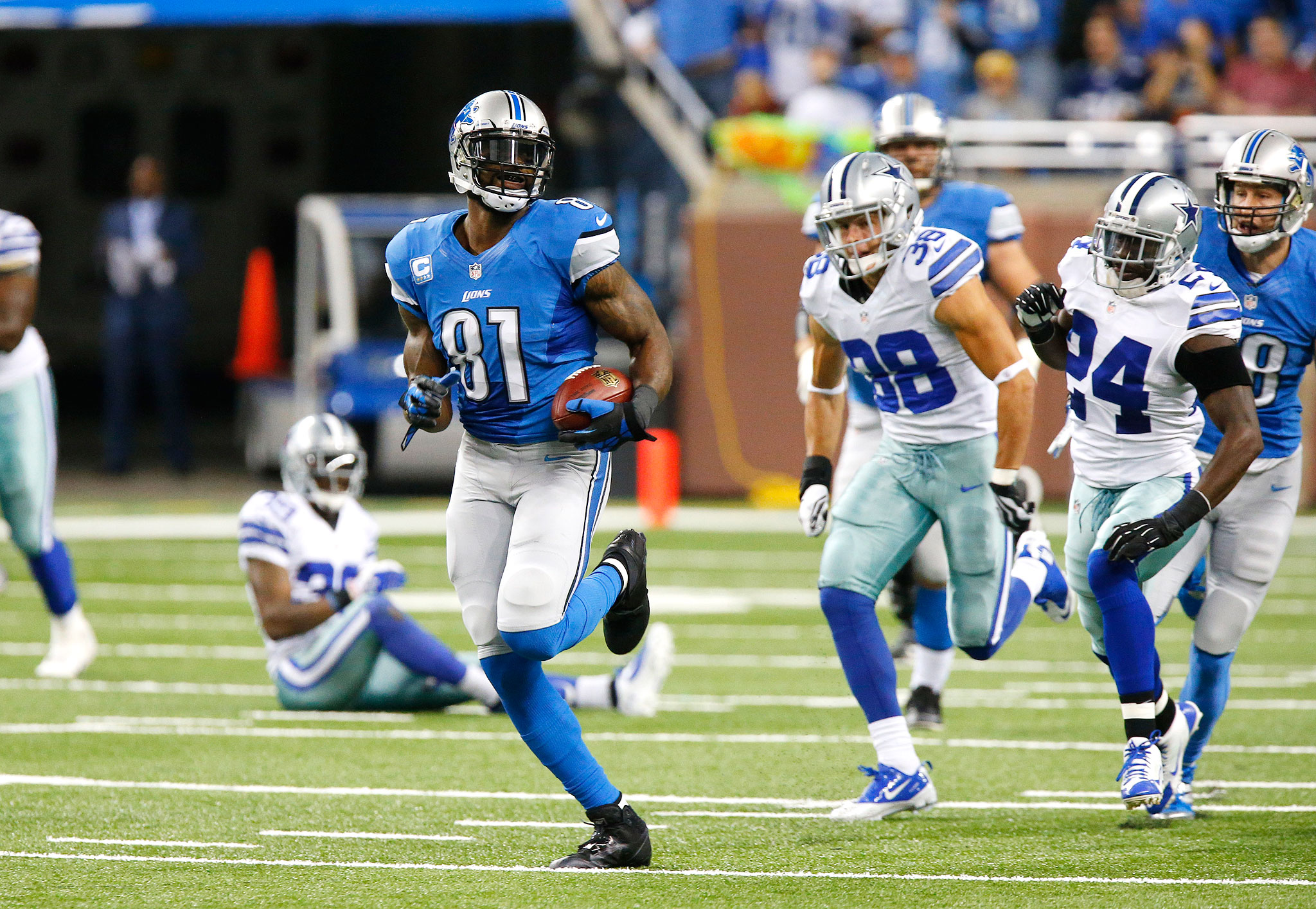
In his seven-year career, Calvin Johnson has already recorded 9,328 receiving yards. And for those curious about these sorts of things, he’s the career leader in receiving yards per game at 88.0, too. But Johnson has also benefited greatly from playing on teams that have thrown a weighted average of 635 pass attempts per season.

What is a weighted average of team pass attempts? I’m defining it as an average of pass attempts per season weighted by the number of receiving yards by that player. Why use that instead of a simple average? When thinking about whether a receiver played for a run-heavy or pass-happy team, we tend to think of that receiver during his peak years. If he caught 10 passes for 150 yards as a rookie on a very pass-happy team, that should not be given the same weight as the number of pass attempts his team produced in his best season. For example, here is how I derived the 635 attempt number for Megatron.

Twenty-one percent of his career receiving yards came in 2012, when Detroit passed 740 times (excluding sacks). Therefore, 21% of his team pass attempts average comes from that season, while 18% comes from his 2011 season, 16% from his 2013 season, and so on. In the table below, the far right column shows how we get to that 635 figure: by multiplying in each season the percentage of career receiving yards recorded by him in that season by Detroit’s Team Pass Attempts.

YrRecYdTPAPercTM * %
2013149263416%101.4
2012196474021.1%155.8
2011168166618%120
2010112063312%76
200998458510.5%61.7
2008133150914.3%72.6
20077565878.1%47.6
Total93284354100%635.2

There are 121 players with 7,000 career receiving yards. Unsurprisingly, Johnson has the highest weighted average number of team pass attempts, which must be recognized when fawning over his great raw totals. Marques Colston is just a hair behind Johnson, but no other player has an average of 600+ team pass attempts.

The table below contains data for all 121 players (by default, the table displays only the top 25, but you can change that). Here’s how to read it, starting with the GOAT: Jerry Rice ranks first in career receiving yards, and he played from 1985 to 2004. Rice played in 303 games, gained 22,895 receiving yards, and his teams threw a weighted average of 547 passes per season. Among these 121 players, that rank Rice as playing for the 25th highest or most pass-happy team. Rice also averaged 76 receiving yards per game, which ranks 5th among this group. [continue reading…]

{ 16 comments }

Is Matt Schaub washed up? Is he the next Jake Delhomme? For the first six seasons of his Texans career, Schaub was an above-average quarterback in both Net Yards per Attempt and Adjusted Net Yards per Attempt. But last year was disastrous in a way that his poor conventional stats fail to completely capture (for example, Schaub threws picks six in four straight games).

But does that mean hope is lost? Schaub turns 33 in June, which means more than you might think. Sure, Peyton Manning and Tom Brady can defy the odds, but 33 is still six years to the right side of the peak age for passers. Perhaps even more damning, Schaub’s steep decline in 2013 was his second in two years; he averaged 7.8 ANY/A in 2011, 6.5 in 2012, and then 4.5 last year; his NY/A averages (7.7, 6.6, 5.7) have followed a similar pattern. The graph below shows Schaub’s Relative NY/A and Relative ANY/A — i.e., his averages compared to league average — for each year of his Texans career:

[continue reading…]

{ 21 comments }

What Does Chris Johnson Have Left?

CJ1K?

CJ1K?

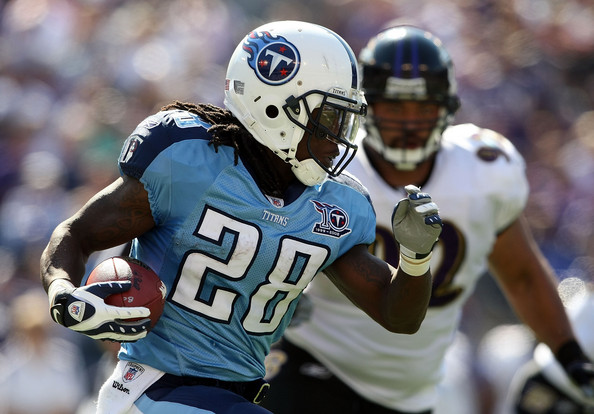
After six seasons in Tennessee, Chris Johnson is now a free agent. The star running back has had an up-and-down career. The successes are easy to document: since 2008, only Adrian Peterson has more rushing yards, and Johnson has rushed for 1,299 more yards than the next closest back, Matt Forte. Johnson was just 32 yards shy of 10,000 yards from scrimmage with the Titans, the second most in the league over that period behind only Peterson. There was a magical 2009 season, where Johnson rushed for 2,000 yards, averaged 5.6 yards per carry, and set the still-standing record for yards from scrimmage in a season with 2,509. [1]Less relevant but one of my favorite Johnson moments came in the 2007 Hawaii Bowl against a Boise State team that would go 38-2 over the following three seasons. In that game, East Carolina won 41-38 … Continue reading

But there’s also the bad. In the four seasons since his Hall of Fame-caliber performance, Johnson has had 24 games with five or more carries where he averaged three or fewer yards per rush, the most such games in the league. In the last three seasons, Johnson has recorded 10+ carries and averaged 3.0 YPC or worse in 17 of his 48 games, also the most in the NFL. The man known as CJ2K became famous for his big play ability but has recorded a below-average YPC rate in two of the past three seasons.  And while he’s never been a success rate star, he’s still checking in at below-average in percentage of successful runs in recent times, so it’s not as though the lower YPC average is a reflection of a style change to become a more consistent back. Last year, Johnson ranked 53rd in Advanced NFL Stats’ measure of success rate out of 84 eligible backs.

Johnson’s a pretty complicated back to analyze. He’s boom or bust, but he’s also displayed excellent durability over his career and is a consistent yardage machine. But he now rarely make big plays and is at an age where nothing is assured. In 2009, Johnson had 22 carries of 20+ yards; last year, he had only five such runs. So I decided a fun way to project Johnson’s 2014 season would be to run him through a similarity program based on nine factors. [continue reading…]

References

References
1 Less relevant but one of my favorite Johnson moments came in the 2007 Hawaii Bowl against a Boise State team that would go 38-2 over the following three seasons. In that game, East Carolina won 41-38 as Johnson rushed for 223 yards and scored two touchdowns on 28 carries. That’s the second most rushing yards allowed by Boise State to any player since 2000.
{ 3 comments }

Head Coach Retention Rates

In the footnotes (always read the footnotes!) to one of Neil’s posts at 538, he included a fun chart displaying the likelihood that a baseball manager would be retained by his team X seasons from now. That made me wonder: what is the NFL head coach retention rate? And, as is often assumed by the football commentariat, are coaching seats hotter than ever in this “win now” era?

Just nine teams will have the same coach in 2014 as they did entering the 2009 season. Those nine men are Mike Smith, Marvin Lewis, Mike McCarthy, Sean Payton, Bill Belichick, Tom Coughlin, Rex Ryan, Mike Tomlin, and John Harbaugh.  A 28% five-year retention rate sounds pretty low, but is it? Does a 28% rate back up the claim that trigger fingers are itchier than ever, and owners are impatient and irrational Donald Trumps?

No. Let’s flash back to the start of the 1993 season. Don Shula was in Miami, of course, while Marv Levy had just taken the Bills to three straight Super Bowls. Levy had been the head coach in Buffalo since the middle of the 1986 season, which is the same year Jim Mora began as head coach in New Orleans. Mora was still with the Saints in ’93, and… well, that was it. Those three coaches were the only ones who had been with their teams for five straight years.

The same fact was true six years later: at the start of the 1999 season, only Dennis Green (Minnesota), Bill Cowher (Pittsburgh), and … Norv Turner (?!?) had been with their teams for five years. The graph below shows the percentage of head coaches who were still with the same team five years later for the period 1970 to 2009:

[continue reading…]

{ 5 comments }

A Passing League

In some ways, the premise of this post is geeky even for this site. And that’s saying something. There is a debate over the proper way to measure league average. For example, when we say the average completion percentage in the NFL is 61.2%, this is generally assumed to reflect the fact that in 2013, there were 18,136 passes thrown in the NFL, and 11,102 of them were completed.

An alternative method of measuring completion percentage in the NFL is take the average completion percentage of each of the 32 teams. That number won’t be very different, but it won’t be identical, either. The difference, of course, is that this method places the same weight on each team’s passing attack when determining the league average. The former, more common method, means that the Cleveland Browns make up 3.755% of all NFL pass attempts and the San Francisco 49ers are responsible for only 2.299% of the league-average passing numbers. The latter method puts all teams at 3.125% of NFL average.

Wow, Chase, is this really a football blog? Two paragraphs on calculating the average in a data set? Believe it or not, that background presents an interesting way to look at how the NFL has become more of a passing league.

For example, let’s look at the 1972 season. Miami led the NFL in points scored and in rushing attempts, while ranking 24th out of 26 teams in pass attempts. Does this mean the Dolphins weren’t a good passing team? Of course not; in fact, Miami had the highest Adjusted Net Yards per Attempt average of any team that season! That year,only two teams threw over 400 passes: New England and New Orleans. And both teams were below-average in ANY/A, with the Patriots ranking in the bottom three.

In 1972, the average pass in the NFL gained 4.28 Adjusted Net Yards.  But an average of each team’s ANY/A average was 4.34, because good passing teams like Miami and Washington passed less frequently than bad passing teams like New England and New Orleans.  The league-wide average was only 98.5% of the “average of the averages” average; whenever that number is less than 100%, we can conclude that the better passing teams are passing less frequently.

Fast forward 39 years. In 2011, three teams topped the 600-attempt mark: Detroit, New Orleans, and New England. Tom Brady’s Patriots and Drew Brees’ Saints ranked in the top three in ANY/A (and the Lions in the top 7), while Aaron Rodgers’ top-ranked Packers in ANY/A still finished above average in pass attempts. The Tim Tebow Broncos were last in pass attempts, and in the bottom ten in ANY/A. The Jaguars, who finished last in ANY/A by a large margin, were in the bottom five in pass attempts, too, as Maurice Jones-Drew led the league in rushing. In 2011, the league-wide average ANY/A was 5.90, while the “average of the 32 teams” ANY/A was 5.85; that’s because the best passing teams were throwing more frequently than the worst passing teams (the ratio here was 100.8%). [continue reading…]

{ 15 comments }

Interactive Trivia: Jerry Rice And [_______]

One of only two players to ...

One of only two players to ...

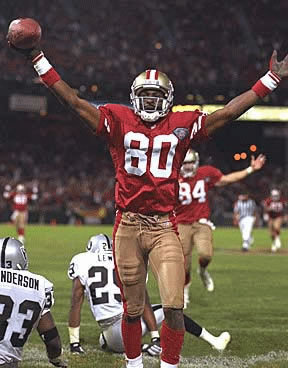
If you play with enough filters of the “my dad can beat up your sister” variety, you can get some pretty counter-intuitive results. For example, Jerry Rice and DeSean Jackson are the only two players in NFL history to catch 350 passes, gain 6,000 receiving yards, and average 17.1 yards per reception through their first six seasons. Here’s proof.

Here’s another one: Jerry Rice and Brett Favre are the only two players to ever catch a pass after turning 40 years old.

Like touchdowns? Rice and Cris Carter are the only two players to catch 35+ touchdowns from inside of five yards.

And one more: Jerry Rice and Doug Flutie are the only two players to ever score a touchdown after turning 42 years old.

But putting Rice in a group with Hall of Famer (or future Hall of Famer) isn’t very fun, and even Flutie and Jackson are good enough players that the trivia isn’t shocking. Hence today’s post: I want to see who can come up with the worst player to be in a bit of Rice trivia along these same lines. I will defer to mob rule to select a winning entry.

The rules:

1) The trivia must take this form: “Jerry Rice and [___] are the only two players…”

2) Everyone must be eligible, so no restrictions based on team. So it can’t be “Rice and Terrell Owens were the only two 49ers to… or “Rice and Deacon Jones are the only two players from Mississippi Valley State to….”. However, a “Rice and [__] are the only two players to [________] for two or more teams would be acceptable. Make sense? If not, hey, give it a shot and maybe the crowds will approve.

Fire away, and remember, the PFR play index is your friend. Multiple entries are not just permitted, but encouraged.

{ 30 comments }

Matt Waldman Rookie Scouting Portfolio

Every April 1st, friend-of-the-program Matt Waldman (@MattWaldman) releases his Rookie Scouting Portfolio. The RSP is, well, insane. It’s a 251-page draft guide that not only provides rankings and analysis of 164 players, but also provides over 1,000 pages of scouting checklists and play-by-play notes.

Matt does top-notch work year round, and I can confidently state that the Rookie Scouting Portfolio is the most comprehensive analysis of rookie draft prospects at the offensive skill positions I’ve ever seen. But it’s not just about rankings and his analysis; he makes the evaluation process as transparent as possible to the reader, by identifying:

  • Players that have boom-bust potential, players who may have already maxed out their potential, or players with great upside.
  • Breakdowns/rankings of players by individual skills at the position.
  • Player comparisons to past NFL players based on style and builds.
  • Overall rankings and comparisons in cheat sheet/table format with pertinent measurements and workout results.
  • Overall rankings with written explanations in paragraph form.
  • Overrated, underrated, and long-term projects.
  • Fantasy-friendly tiered cheat sheets.

Matt documents what he sees with play-by-play detail. Yes, that’s a lot of work. No, you don’t have to read that part of the book to get tremendous value from the RSP. And here’s something pretty neat: Matt ranks every player graded by position and then writes a post-draft analysis with rankings assembled in a tiered cheat sheet. This is free with the RSP purchase and available a week after the NFL Draft.

The RSP is $19.95 and available at www.mattwaldman.com. Matt donates 10 percent of every sale to Darkness to Light, a non-profit that combats sexual abuse through individual community and training to recognize how to prevent and address the issue. All told, the RSP contains nearly 1300 pages this year. If you’re the type who likes to read testimonials, well, Matt has lots of those. He’s also provided a few sample evaluations from prior years that you can review.

{ 3 comments }

Scoring Distribution Since 1940

We all know that scoring is on the rise. The 2013 season was the highest scoring season in NFL history, just narrowly edging out the … 1948, 1950, and 2012 seasons. Scoring soared in the aftermath of World War II, but quickly dropped off in the middle of the 1950s. Scoring fell to its nadir in 1977, prompting the 1978 rules changes regarding pass blocking and pass coverage. After another lull in the early nineties, scoring has steadily increased over the last twenty years. Take a look at the average points per game for professional teams (including the AAFC and AFL) since 1940:

nfl ppg [continue reading…]

{ 15 comments }

The Best Kickoff Returners in NFL History

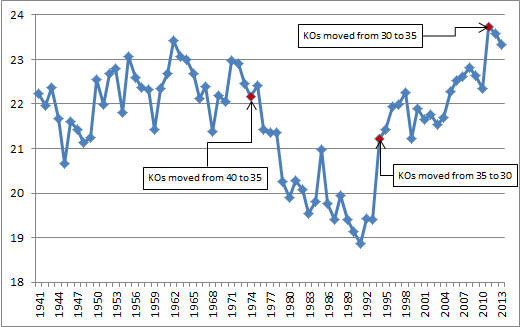
Two weeks ago, I looked at the best punt returners in NFL history; today, a look at the top kickoff returners. Again, we begin with a graph of the league average yards per kickoff return from 1941 through 2013. The variation here has been relatively minor, falling in a 5-yard window from 18.9 yards per return to 23.7.

kickoffs [continue reading…]

{ 17 comments }

Ranking The Almost Dynasties

A couple of weeks ago, Andrew Healy contributed a guest post titled, “One Play Away.” He’s back at it today, and we thank him for another generous contribution. Andrew Healy is an economics professor at Loyola Marymount University. He is a big fan of the New England Patriots and Joe Benigno.


What teams do we remember the most? Going back to the merger, the 1970s Steelers, the 1980s 49ers, the 1990s Cowboys, and the 2000s Patriots seem to stand above the rest. Each of these teams earned that place in our collective memory by winning the most Super Bowls in the decade.

How different could it have been? In other words, were the dynasties that happened by far the most likely ones? Or were there others that were equally, or even more likely? Think of teams that have suffered unusually cruel sequences of defeats (cue nodding Vikings, Bills, and Browns fans). We all know that those teams could have won Super Bowls. But maybe the more interesting question is whether those teams realistically could have won multiple Super Bowls, or even have become the dominant team of the era.

Today, I estimate the chances that different teams had of becoming the Team of the Decade (the TOD) for the ’70s, ’80, ’90s, and ’00s. Some of the results are surprising. One of the teams that became the TOD was actually much less likely than another to dominate that decade. Only two of the four teams truly stand out as being clearly the single most-likely team to be the TOD.

Even more interesting are the teams that might have been dynasties instead of the ones we’ve come to know. In most cases, these teams won at least one Super Bowl. In one case, though, a team that became famous for losing easily could have been not just a one-time winner, but a team that became a dynasty and dominated the decade.

To come up with the estimates of a team’s chances of winning Super Bowl, I simulated the playoffs 50,000 times. I used the actual playoff brackets and then created win probabilities for each game based on team strength. In tables that follow below, I’ll describe the probabilities that teams won multiple titles in a decade. I’ll also pick a True Team of the Decade (most expected Super Bowl wins), a What-Might-Have-Been-Dynasty that Won Nothing, a Team that Wasn’t as Good as We Remember, and a A Bottom-Feeder Team(s) for each decade.

First, a brief description of how I performed the simulations before getting to the rankings:

  • The playoffs were run under the rules in a given year: All rules relating to seeding, home field, and number of teams were used. If there was a rule in place preventing matchups between divisional opponents in a given round, I also applied that rule. To some extent, the fewer teams in earlier years helped make dynasties more likely in those decades.
  • Pro Football Reference’s Simple Rating System was used to measure team strength: I used PFR’s for all years to be consistent. It’s worth noting that their ratings and DVOA usually match up closely. Another possibility is to try to simulate DVOA ratings, but it seems simpler to just use SRS throughout. In some cases, there are some differences, such as for the 1998 Broncos and 1999 Titans.
  • I used the beginning of the NFL season to define the decades: So 1970-79 means Super Bowls V-XIV. An interesting thought experiment is to consider Super Bowl time instead of calendar decades. Then the Raiders would have been the team of Super Bowls XI-XX. Anyway, I’ll stick with the convention. It’s worth noting that my results suggest the Raiders were not as good as we might remember.

1970s

The table below shows each franchise’s probability of having won 0, 1, 2, 3, 4, 5, or 6 Super Bowls during the decade according to the methodology described above. The final column shows the expected number of Super Bowl wins for the decade.

Team0123456E(Wins)
PIT0.1450.330.3120.1560.0490.0080.0011.659
DAL0.2090.3770.2750.1110.0240.00401.377
MIN0.2360.4070.2610.0810.0130.00101.232
MIA0.3430.4220.1910.0390.004000.941
RAM0.390.3990.1690.0370.005000.87
OAK0.3950.4020.1650.0340.005000.853
BAL0.5610.3550.0760.0080000.532
WAS0.6010.3330.0610.0050000.469
SD0.6410.359000000.359
DEN0.6540.320.0250.0010000.373
SF0.7430.2350.0220.0010000.281
DET0.7620.238000000.238
NE0.8320.1610.00700000.175
CIN0.8820.1140.00400000.123
KC0.8920.108000000.108
STL0.90.0970.00300000.103
GB0.9050.095000000.095
PHI0.9240.0750.00100000.077
CLE0.9650.035000000.035
HOU0.9720.028000000.028
TB0.9740.026000000.026
BUF0.9750.025000000.025
CHI0.9820.018000000.018
ATL0.9980.002000000.002
NYG10000000
NYJ10000000
SEA10000000

The True Team of the Decade: Pittsburgh Steelers
The Steelers had only a 14.5% chance of winning no Super Bowls in the ’70s and a 4.9% chance of winning the four that they did. The expected value of SB wins for Pittsburgh was 1.67, the highest value for any team in any decade.

The What-Might-Have-Been-Dynasty that Won Nothing: Minnesota Vikings
The Vikings are not too far away from the Steelers and Cowboys. There was only a 23.6% chance the Vikings would have won nothing in the ’70s. And they certainly could have won multiple championships. There was over a 35% chance the Vikings would have won at least two titles and a 9.6% chance they would have won at least three. Of all the teams that won nothing, the 1970s Vikings are the best candidate for the team that could have been the TOD.

The What-Might-Have-Been Dynasty that Won Nothing, Part 2: Los Angeles Rams

A little bit behind the Vikings are the Rams. Los Angeles had only a 39% chance of winning no Super Bowls in the ’70s and a 20.3% chance of winning multiple titles.

The Team that Wasn’t as Good as We Remember: Oakland Raiders
When I starting working with the data, I expected the Raiders to challenge for the TOD. Five losses in the AFC championship to go with the one title. Seven playoff appearances. Despite all that, the Raiders only had the sixth-most expected titles in the decade. In fact, they didn’t really underperform at all in terms of titles. They had a 39.5% chance of winning none at all. The Raiders’ SRS ratings explain this. Oakland was never really great, only passing +10.0 in a year (1977) where they finished second in the division.

Bottom-Feeder Teams: New York Giants, New York Jets
Only two teams played the entire decade and missed the playoffs every single year. They happened to be the two teams that played in New York. The chance that two teams would miss the playoffs every year and New York would happen to miss playoff football entirely: about 0.2%.

1980s

Team0123456E(Wins)
SF0.1460.3370.310.1560.0420.0070.0011.637
CHI0.2890.4810.1980.030.002000.975
MIA0.4160.3970.1540.0290.003000.805
WAS0.3920.450.1410.0170.001000.785
DEN0.4730.4020.1120.0120000.664
CLE0.5370.3710.0830.0090000.565
PHI0.5850.3550.0560.0030000.478
DAL0.6010.3290.0650.0050000.475
CIN0.6080.340.0510.0010000.446
NYG0.6250.3320.0420.0010000.419
OAK/LA0.6430.3020.050.0050000.417
SD0.70.2710.0280.0010000.329
BUF0.7070.2620.030.0010000.324
MIN0.7560.2250.0180.0010000.263
NYJ0.7720.210.01800000.247
ATL0.7840.2160.00100000.217
RAM0.8370.1520.0100000.174
NE0.8690.1290.00200000.134
NO0.8720.128000000.128
SEA0.9010.0970.00300000.102
GB0.9020.098000000.098
PIT0.9090.0880.00300000.094
TB0.930.07000000.071
HOU0.940.0590.00200000.062
BAL/IND0.9570.043000000.043
DET0.9720.027000000.028
KC0.9830.017000000.017
STL/PHX0.9970.003000000.003

The True Team of the Decade: San Francisco 49ers
Unlike the 1970s, the ’80s weren’t close. The Niners were similar to the ’70s Steelers with an expectation of 1.64 Super Bowl wins in the decade. The ’80s 49ers had about a 4.2% chance of winning the four Super Bowls they did and 51.7% chance of winning at least two. And, while not shown in the table above, it’s exciting to note that the Niners had a 0.004% chance of winning seven Super Bowls in the 1980s.

The What-Might-Have-Been-Dynasty that Won Nothing: Miami Dolphins
I was really surprised by this one. The Dolphins come in third in the 1980s in expected SB wins with 0.81. Based on their consistency in the first half of the decade, the Dolphins had an 18.6% chance of winning multiple Super Bowls in the 1980s. That’s substantially higher than the 12.4% chance for their nearest competitor: the much better-remembered Denver Broncos who were annihilated in three Super Bowls.

The Team that Wasn’t as Good as We Remember: Oakland/LA Raiders
Despite never being close to dominant, the Raiders won two Super Bowls in the 1980s. According to the number of SB wins we would have expected them to have, the Raiders actually rank 11th, behind six teams that won none in the decade. They had about a 5.5% chance of winning multiple titles in the decade.

A Bottom-Feeder Team: Houston Oilers
For teams that played every season since the merger, the Oilers had the least hope of winning a title over the 1970s and 1980s combined. That’s a little surprising given that they had at least one memorable moment in the playoffs during that stretch, unlike some of the teams ahead of them.

1990s

Team0123456E(Wins)
SF0.1510.3310.3080.1560.0460.0070.0011.639
DAL0.3120.4160.2160.0510.005001.023
GB0.3630.4870.1380.0110000.799
WAS0.3950.5630.0410.0010000.647
BUF0.5190.3710.0960.0140.001000.607
KC0.5130.3830.0950.0090000.601
DEN0.5520.3510.0860.010000.557
MIN0.550.3990.0490.0020000.504
PIT0.5930.3280.0720.0070000.495
RAM/STL0.5780.422000000.422
HOU/TEN0.6580.3010.0390.0020000.386
NYG0.7640.2260.0100000.247
JAC0.8020.1920.00600000.204
MIA0.8130.1730.0130.0010000.202
NYJ0.8010.199000000.2
LA/OAK0.830.1670.00300000.173
NE0.8420.1510.00700000.166
ATL0.850.1490.00100000.151
SD0.8660.1290.00500000.139
IND0.8660.1330.00100000.135
NO0.8710.1250.00300000.132
DET0.8860.110.00400000.118
CAR0.8990.101000000.101
PHI0.9050.0920.00300000.097
TB0.9160.0830.00100000.086
CLE/BAL0.9190.081000000.081
CHI0.9560.043000000.044
SEA0.9590.041000000.041
CIN0.9930.007000000.007
PHX/ARI10000000

The True Team of the Decade: San Francisco 49ers
This one almost leaps off the page. Not only were the Niners on top in the 1990s in terms of expected SB wins, they were way on top. Given the Cowboys’ relatively short run, it’s not surprising that they would do worse here, but they’re closer to the 10th place Rams on this list than they are to the 49ers. Even though they only won one in the decade, the Niners had the same number (1.64) of expected titles in the ’90s as they did in the ’80s, and a 51.7% chance of multiple titles.

The What-Might-Have-Been-Dynasty that Won Nothing: Buffalo Bills
The Bills actually do worse on this list than I would have expected. They were about even money to win the zero titles that they did in the ’90s. They had an 11.0% chance of winning multiple titles, making them the top-ranked no-title team of the ’90s, but ranking them well behind the ’70s Vikings, the ’70s Rams, and the ’80s Dolphins.

The What-Might-Have-Been-Dynasty that Won Nothing, Part 2: Kansas City Chiefs
On the field, the ’90s Chiefs only went to one AFC Championship game and no Super Bowls. Nevertheless, they’re about even with the Bills in terms of the Super Bowls they could have won. They had a 10.4% chance of winning multiple titles in the ’90s.

The Team that Wasn’t as Good as We Remember: Pittsburgh Steelers
I’m not sure there’s a great candidate in this category, so I was tempted to just pick the Raiders again to keep the pattern. You could go with Broncos here, but the 1998 Broncos are one case where there’s a clear gap between SRS and DVOA, which gives them more credit. The ’90s Steelers had four playoff byes in a run of six straight playoff appearances. Still, they had a 59.3% chance of winning no Super Bowls and only a 7.9% chance of winning multiple titles.

A Bottom-Feeder Team: Phoenix/Arizona Cardinals
The worst team in two consecutive decades. Over twenty years, the Cardinals had 0.003 expected titles. That’s only 0.003 more expected titles than the Houston Texans and they weren’t even in the league yet.

2000s

Team0123456E(Wins)
NE0.170.4160.2990.0980.0160.00101.38
IND0.4150.4020.1480.0310.004000.807
PHI0.4280.3990.1430.0270.003000.78
PIT0.4630.3990.1220.0160000.693
OAK0.4690.4320.0970.0020000.633
STL0.4940.4320.0720.0020000.584
TEN0.5780.3470.070.0050000.501
SD0.5890.3470.060.0040000.48
BAL0.6220.3160.0570.0050000.445
CHI0.6390.3190.0410.0010000.404
NYG0.6470.3070.0440.0030000.403
NO0.6410.3260.0330.0010000.393
GB0.6990.260.0380.0030000.344
TB0.710.2650.0240.0010000.316
DEN0.7160.2680.0160.0010000.3
SEA0.740.250.0100000.27
DAL0.7870.1990.01400000.227
MIN0.7880.1970.01400000.226
KC0.8010.1980.00100000.199
CAR0.8560.140.00400000.149
NYJ0.8690.1240.00600000.138
ATL0.9140.0830.00300000.088
MIA0.920.0790.00100000.082
WAS0.9520.048000000.049
SF0.9630.037000000.038
JAC0.9710.029000000.029
CIN0.9750.025000000.025
CLE0.9910.009000000.009
ARI0.9910.009000000.009
BUF10000000
DET10000000
HOU10000000

The True Team of the Decade: New England Patriots
Less dominant than the other True TODs, the Patriots of the aughts still have a healthy gap over their closest rival, the Colts. There was only a 17% chance the Patriots would have gotten shut out in the ’00s. There was a 41.7% chance that the Pats would win multiple titles in the decade, more than double the chance of any other team.

The What-Might-Have-Been-Dynasty that Won Nothing: Philadelphia Eagles
The Eagles rank third in expected titles in the ’00s with 0.78, just a hair behind the Colts for second. They also look similar to the 1970s Rams and 1980s Dolphins in terms of multiple-title potential. They had about a 17.4% chance of winning multiple titles in the aughts.

The Team that Wasn’t as Good as We Remember: Tampa Bay Buccaneers
Hopefully, it’s not too hard to remember a decade that ended with President Obama in the White House, but the Bucs come in lower here than I might have guessed. They made the playoffs five times, but still are only 14th in expected SB wins. They actually had a 71% chance of winning no titles in the decade. Even in their best year, 2002, where they ranked #2 in SRS and #1 in DVOA, they were far from dominant and so had only about a 21% chance of winning the title.

Bottom-Feeder Teams: Buffalo Bills, Detroit Lions
Neither team made the playoffs in the decade, a more impressive accomplishment than the ’70s Giants and Jets in an era of expanded playoffs. Both cities also suffered through deindustrialization and so seemed to deserve better football as a compensating differential.

Closing Thoughts

I was excited to check this out because I wanted to compare teams like the ’90s Bills and the ’70s Rams. That comparison makes it pretty clear that the ’70s Vikings are hands-down the clearest What-Might-Have-Been-Dynasty that Won Nothing. This is all post-merger, so arguably the best Vikings team of that era (the ’69 edition) doesn’t even count in the calculation. If you count the 1969 Vikings, there was only about a 1-in-6 chance that those Vikings would end up with no Super Bowls.

Maybe the most remarkable regularity over the years is how the Cardinals have been so bad for so long. Even though Arizona came close in 2008, the Cardinals had only an 11.2% chance of winning any of the last 44 Super Bowls. In fact, they were lucky just to make the one Super Bowl that they did (in more ways than one).

Finally, a couple of thoughts about this decade. While we’re only four years in, this decade could wind up resembling the 1990s. The Patriots right now are playing the role of the ’90s Niners, while the Seahawks may be the best candidate to be the Cowboys. So far, the Patriots have been (perhaps surprisingly) dominant. There’s only about a 27% chance that New England would have no titles in the 2010s and there was even a 28.5% chance that the Patriots would have already won multiple titles; that likelihood is more than four times more as any other team. Despite having none on the field through four seasons, the ’10s Patriots are on pace through four years to have the most expected SB wins for any decade. They already have 1.07 expected wins, more than double their nearest competitor.

{ 21 comments }

One of the very first posts at Football Perspective measured how various passing stats were correlated with wins.  One of the main conclusions from that post was that passer rating, because of its heavy emphasis on completion percentage and interception rate, was not the ideal way to measure quarterback play. But what about ESPN’s Total QBR, a statistic invented specifically to improve on — and supersede — traditional passer rating?

As a reminder, we can’t simply correlate a statistic with wins to determine the utility of that metric. The simplest way to remember this is that 4th quarter kneeldowns are highly correlated with wins. Just because you notice it’s raining when the ground is wet doesn’t mean a wet ground causes rain; i.e., just because two variables are correlated doesn’t mean variable A leads to variable B (alternatively, variable B could lead to variable A, variable C could lead to both variable A and B, or the sample size could be too small to determine any legitimate causal relationship). That said, it at least makes sense to begin with a look at how various statistics have correlate with wins.

The Sample Set

Throughout this post, I will be looking at a set of quarterback data consisting of the 152 quarterback seasons from 2006 to 2013 where the player had at least 14 games with 20+ action plays. Games where the quarterback had fewer than 20 plays were excluded, but the quarterback was still included if he otherwise had 14 such games.

The next step was to sum the weekly quarterback data on various metrics, including wins, and create season data. [1]For ESPN’s QBR, I took a weighted average of the weekly QBR data. I should note that this is not the way ESPN calculates QBR. As explained to me via email, the scaling function that gives the … Continue reading This allowed me to measure the correlation between a quarterback’s statistics over those 14+ games with that player’s winning percentage in those games.

As it turns out, ESPN’s Total QBR is very highly correlated with wins, with a 0.68 correlation coefficient. [2]As a reminder, the correlation coefficient is a measure of the linear relationship between two variables on a scale from -1 to 1. If two variables move in the same direction, their correlation … Continue reading This is to be expected; after all, Total QBR is based off Expected Points Added on the team level, which generally tracks wins and losses. The second most correlated statistic with wins was Adjusted Net Yards per Attempt, my favorite non-proprietary quarterback metric. After ANY/A, both traditional passer rating and touchdowns per attempt were the next most correlated statistics with wins (after all, this is only a step or two away from saying scoring points is correlated with wins). In another unsurprising result, passing yards had almost no correlation with wins, while pass attempts had a slight negative correlation (as any Game Scripts observer would know).  Take a look:

StatCC
ESPN QBR0.68
ANY/A0.57
Passer Rating0.56
TD/Att0.54
NY/A0.46
Yd/Att0.45
INT/Att-0.43
Cmp%0.33
Sack Rate-0.21
Pass Yds0.16
Attempts-0.10

When ESPN first introduced QBR, I wrote that I was intrigued by the possibility of this metric, but frustrated that the specific details of the formula remained confidential. At the time, a clutch weight feature was included in the calculations, which made the metric more of a retrodictive statistic than a predictive one. Since then, ESPN has tweaked the formula several times, and the clutch weight has been capped. [3]When Dean Oliver was on the Advanced NFL Stats podcast, he noted that the formula was tweaked in 2013 so that the “clutch index” part of the formula was essentially capped. He added … Continue reading ESPN is not engaged in academia, so I understand why they have not published all the fine print; as a researcher, I’m still frustrated by that decision. Still, with 8 years of QBR data now publicly available, we can answer two questions: does Total QBR predict wins and how sticky is Total QBR?

We know that a high Total QBR is correlated with winning games, but we also know that there’s limited value to such a statement. If having a high Total QBR was one of the driving factor behind winning games, than such a variable would manifest itself in all games, not just the current one. So with my sample of 152 quarterbacks, I used a random number generator to divide each quarterback season into two half-seasons. Then I calculated each quarterback’s average in several different categories and measured the correlation between a quarterback’s average in such category in each half-season with his winning percentage in the other half-season. [4]Then I did the entire process again, using a new set of random numbers, and averaged the results. The results:

StatCC
ESPN QBR0.31
Wins0.28
ANY/A0.25
Passer Rating0.25
TD/Att0.24
NY/A0.22
Yd/Att0.20
Cmp%0.17
Pass Yds0.16
INT/Att0.15
Sack Rate0.14
Attempts0.06

As you would expect, all of our correlations are now smaller. But ESPN’s quarterback rating metric remains the best measure to predict wins. Perhaps even more impressively, Total QBR is more correlated with future wins than past wins. That’s pretty interesting. Another interesting result is that passer rating fares pretty well here, although much of the same issues as before remain with using correlation to derive causal direction. [5]For example, because passer rating is biased towards high completion percentage and low interception rates, quarterbacks who play with the lead tend to produce strong passer ratings; well, playing … Continue reading

One other concept to remember is that our sample of quarterbacks consists of players who were heavily involved in at least 14 games. That makes sure Peyton Manning, Tom Brady, and Drew Brees are involved, while filtering out some Christian Ponder, Blaine Gabbert, and Brandon Weeden seasons. In other words, the data set contains more above-average quarterbacks than a random sample would, so we may not be able to justify certain conclusions from this study.

The other important question is whether Total QBR is predictive of itself; i.e., how “sticky” is this metric over different time periods. We know that interceptions are very random, and knowing a quarterback’s prior interception rate is not all that helpful in predicting his future interception rate. Where does Total QBR fall along those lines?

StatCC
Pass Yds0.69
Attempts0.66
Sack Rate0.56
Cmp%0.49
Passer Rating0.49
ESPN QBR0.47
ANY/A0.46
NY/A0.45
TD/Att0.43
Yd/Att0.42
Wins0.28
INT/Att0.2

The most “sticky” stats were passing yards and pass attempts, which in retrospect isn’t too surprising. These reflect the style of the offense, the talent of the quarterback, and the quality of the defense, so they should be easier to predict. The second-least sticky metric was wins, which also makes sense. After that, ESPN’s Total QBR fits in a narrow tier with most of our other metrics as being somewhat predictable.

Conclusion

The numbers here indicate that Total QBR is worth examining.  It may be a proprietary measure of quarterback play, but it’s not a subjective one with no basis in reality.  It does seem to be the “best” measure of quarterback play, although whether the tradeoff in accuracy for transparency is worth it remains up to each individual reader. One of the drawbacks I see in Total QBR is the failure to incorporate strength of schedule. And while no other traditional passer metric does, either, it’s also easy enough to make those adjustments. Hopefully, an SOS-adjusted Total QBR measure will be released soon (I’ll note that the college football version does include a strength-of-schedule adjustment).  My sense is that Total QBR is underutilized because (1) ESPN haters hate it because it’s an ESPN statistic, (2) it’s proprietary, and (3) analytics types disliked it because of the (now-eliminated) clutch rating.  While I would not suggest making it the only tool at your disposal, it does appear to deserve a prominent place in your toolbox.

References

References
1 For ESPN’s QBR, I took a weighted average of the weekly QBR data. I should note that this is not the way ESPN calculates QBR. As explained to me via email, the scaling function that gives the “final” QBR on a 0-100 scale is nonlinear; as a result, you can’t just calculate a weighted average of the individual game QBR values to get season QBR. Instead, you need to have the “points per play”-like value that’s behind QBR and calculate the weighted average of that (and weight based on the capped clutch weights, not even the action plays), then re-apply the scaling function to get it back on the 0-100 scale. So while I’m recreating QBR, I’m not recreating it the way ESPN would. That disclaimer aside, I don’t think my method will bias these results.
2 As a reminder, the correlation coefficient is a measure of the linear relationship between two variables on a scale from -1 to 1. If two variables move in the same direction, their correlation coefficient will be close to 1. If two variables move with each other but in opposite directions (say, the number of hours you spend watching football and your significant other’s happiness level), then the CC will be closer to -1. If the two variables have no relationship at all, the CC will be close to zero.
3 When Dean Oliver was on the Advanced NFL Stats podcast, he noted that the formula was tweaked in 2013 so that the “clutch index” part of the formula was essentially capped. He added (beginning at 13:45): “The most clutch plays are ending up counting essentially the same as all other plays. [What] we ended up deciding is that for games that are out of reach, when quarterbacks are putting up meaningless statistics because they are playing against a defense that is not trying as hard because they know that the game is essentially over – so that you can get your yards but we’re just trying to run out the clock – so we still keep in a clutch weight reduction effectively, associated with garbage time. But there isn’t the increase in clutch weight associated with clutch plays.”
4 Then I did the entire process again, using a new set of random numbers, and averaged the results.
5 For example, because passer rating is biased towards high completion percentage and low interception rates, quarterbacks who play with the lead tend to produce strong passer ratings; well, playing with the lead is pretty highly correlated with winning, and winning is also correlated with future wins.
{ 27 comments }

Okay, that title could be the opener to any number of jokes. But I mean “strange season” in the way Football Perspective has used the phrase before. Take a look at Cleveland’s schedule and results from 2013:

Score
Week Day Date Rec Opp Tm Opp
1 Sun September 8 boxscore L 0-1 Miami Dolphins 10 23
2 Sun September 15 boxscore L 0-2 @ Baltimore Ravens 6 14
3 Sun September 22 boxscore W 1-2 @ Minnesota Vikings 31 27
4 Sun September 29 boxscore W 2-2 Cincinnati Bengals 17 6
5 Thu October 3 boxscore W 3-2 Buffalo Bills 37 24
6 Sun October 13 boxscore L 3-3 Detroit Lions 17 31
7 Sun October 20 boxscore L 3-4 @ Green Bay Packers 13 31
8 Sun October 27 boxscore L 3-5 @ Kansas City Chiefs 17 23
9 Sun November 3 boxscore W 4-5 Baltimore Ravens 24 18
10 Bye Week
11 Sun November 17 boxscore L 4-6 @ Cincinnati Bengals 20 41
12 Sun November 24 boxscore L 4-7 Pittsburgh Steelers 11 27
13 Sun December 1 boxscore L 4-8 Jacksonville Jaguars 28 32
14 Sun December 8 boxscore L 4-9 @ New England Patriots 26 27
15 Sun December 15 boxscore L 4-10 Chicago Bears 31 38
16 Sun December 22 boxscore L 4-11 @ New York Jets 13 24
17 Sun December 29 boxscore L 4-12 @ Pittsburgh Steelers 7 20

[continue reading…]

{ 3 comments }

Predictions in Review: NFC North

During the 2013 offseason, I wrote 32 articles under the RPO 2013 tag. In my Predictions in Review series, I review those preview articles with the benefit of hindsight. Previously, I reviewed the AFC West, the NFC West, the AFC South, the NFC South, and the AFC North. Today, the NFC North.

The Detroit Lions will win more games in 2013, June 21, 2013

In 2012, Detroit finished 4-12, but they seemed like an obvious pick to have a rebound season. The Lions went 3-9 in games decided by 8 or fewer points that year, which was the worst mark in the league. Since such a poor record is usually a sign of bad luck rather than bad skill, Detroit wouldn’t need to do much to improve on their 4-win season. The Lions had 6.4 Pythagorean wins, and no team fell as far short of their Pythagorean record in 2012 as Detroit. There was one other reason I highlighted as to why Detroit would win more games in 2013: the Lions recovered only 33% of all fumbles that occurred in Detroit games. As a result, the team recovered 7.6 fewer fumbles than expected.

Of course, none of this was a surprise: Vegas pegged Detroit as an average team entering the season. And even though the Lions did finish 7-9, a three-win improvement wasn’t enough to save Jim Schwartz’ job. After a 3-9 record the year before, the 2013 Lions went 4-6 in games decided by 8 or fewer points, which included losses in the team’s final three games.  Detroit did improve when it came to fumble recoveries, but only slightly: the Lions recovered 42.6% of all fumbles in their games in 2013, which was 3.6 recoveries fewer than expected.

What can we learn: When it comes to records in close games and fumble recovery rates, we should expect regression to the mean.  Last year, the Colts (6-1) and Jets (5-1) had the best records in close games; Andrew Luck has been doing this for two years now, but no such benefit of the doubt should be given to the Jets. Meanwhile, Houston (2-9) and Washington (2-7) had the worst records in close games. All else being equal, we would expect both of those teams to improve on their wins total in 2014 (for the 2-14 Texans, it will take some work not to win more games in 2014; and, of course, such rebound seasons are already baked into the Vegas lines).

As far as fumble recovery rates, well, that’s one area where the Jets are hoping for some regression to the mean.

The 2012 Chicago Bears had the Least Strange Season Ever, August 2, 2013

Here’s what I wrote about the 2012 Bears:

The 2012 Bears played two terrible teams, the Titans and the Jaguars. Those were the two biggest blowouts of the season for Chicago. The Bears had five games against really good teams (Seattle, San Francisco, Houston, and the Packers twice): those were the five biggest losses of the season. Chicago had one other loss, which came on the road against the next best team the Bears played, Minnesota.

But the Bears didn’t just have a predictable season. That -0.89 correlation coefficient [between Chicago’s opponent’s rating and location-adjusted margin of victory] is the lowest for any 16-game season in NFL history. In other words, Chicago just had the least strange season of the modern era.

This post was not about predicting Chicago’s 2013 season but analyzing a quirky fact I discovered. The Bears struggled against the best teams in 2012, and that cost Lovie Smith his job. In 2013, Chicago’s season was much more normal; in fact, the Bears had a slightly “stranger” season than the average team.

The Bears did manage to defeat the Bengals and Packers (without Aaron Rodgers), but Chicago still finished below .500 against playoff teams thanks to losses to New Orleans, Philadelphia, and Green Bay (with Aaron Rodgers). After a 2-6 performance against playoff teams in 2012, I suppose a 2-3 record is an improvement. But the irony is that the reason Chicago’s season was less normal in 2013 wasn’t due to better play against the best teams, but because Chicago lost to Minnesota and Washington. In the first year post-Lovie, the Bears missed the playoffs because they lost to two of the worst teams in the league, causing them to miss out on the division title by one half-game. Here’s one stat I bet Lovie Smith knows: from 2005 to 2012, Chicago went 30-0 against teams that finished the season with fewer than six wins. As for which teams had the strangest and least strangest seasons in 2013? Check back tomorrow.

Can Adrian Peterson break Emmitt Smith’s rushing record?, August 3, 2013

What a difference a year makes. Eight months ago, the debate regarding whether Adrian Peterson could break Smith’s record was a legitimate talking point. After a “down” season with 1,266 yards in 14 games, nobody is asking that question anymore. Of course, Peterson never had much of a chance of breaking the record anyway, which was the point of my post. Not only had Smith outgained him Peterson through each of their first six seasons, and not only did Smith enter the league a year earlier than Peterson, but Emmitt Smith was also the leader in career rushing yards after a player’s first six seasons.

Peterson just turned 29 years old. He ranks sixth in career rushing yards through age 28, but Smith has a 1,119 yard advantage when it comes to rushing yards through age 28. Barry Sanders has them both beat, of course, but he retired after his age 30 season. The problem for Peterson? He needs to run for 8,241 yards during his age 29+ seasons to break Smith’s record. The career leader in yards after turning 29 is Smith with 7,121 yards.

What can we learn: Unless Peterson finds the fountain of youth, Smith’s record won’t be challenged for a long, long time.

Witnesses to Greatness: Aaron Rodgers Edition, August 30, 2013

In late August, I wondered if we had taken Rodgers’ dominance for granted. After all, he had a career passer rating of 104.9, the best ever. Then in 2013, he produced a passer rating of … 104.9, the fifth best mark among qualifying passers.

Passer rating stinks, as we all know, but Rodgers is dominant in nearly every metric. If we break passer rating down into its four parts we see:

  • Entering 2013, Rodgers was the career leader in completion percentage. Drew Brees now holds a 0.1% edge over Rodgers in this category. Rodgers completed 66.6% of his passes last year, the 5th best mark of 2013.
  • Rodgers was the career leader in interception rate entering 2013, and still holds that crown. Believe it or not, his 2.1% interception rate last year ranked only 12th.
  • With a 5.9% touchdown rate in 2013 (5th best), he remains the active leader in touchdown percentage. Everyone ahead of him on the career list began their career before 1960.
  • Rodgers was the active leader in yards/attempt prior to 2013, and then he had another dominant year by producing an 8.7 average (2nd best). He’s now widened his lead in this metric and should remain the active leader for the foreseeable future.

What can we learn: That Rodgers is the man? Of course, this year we got to see that first-hand. The Packers went 6-3 in Rodgers’ 9 starts and 2-4-1 without him, but remember, he threw just two passes in his Bears start, which the Packers lost. Count that as a non-Rodgers game, and Green Bay went 6-2 with him and 2-5-1 without him. From there, one might infer that he added 3.5 wins to the Packers last year, tied for the 4th most ever from a quarterback relative to his backups.

The only area where Rodgers struggles is with sacks, and it’s worth remembering that all of his other rate stats are slightly inflated because they do not include sacks in the denominator. He’s still the man, of course, but sacks, era adjustments, and the fact that he isn’t done producing top seasons is why he “only” ranked 12th and 14th on these lists.

{ 1 comment }

Comparing 2014 Vegas Projections to Estimated Wins

Three weeks ago, Vegas released the first set of 2014 win totals for all 32 teams. I immediately wondered how those win totals compare to the estimated wins I created based on 2013 DVOA ratings. I tweeted a request for someone to write such an article, and Warren Sharp (@SharpFootball) was kind enough to oblige. Warren runs SharpFootballAnalysis.com, where he provides handicapping analysis.

One other note before I let Warren take over. If you missed the post on estimating team wins using DVOA, I included this disclaimer:

Even Football Outsiders won’t use these [projections] for more than a starting point — their preseason projections will have the customary tweaks for things like teams getting new quarterbacks, injuries (or the lack thereof) in 2013, rookies, offensive line continuity, etc.

Please keep that note in mind. So when you see “Football Outsiders projects Green Bay to win 7.8 games this year,” that’s just shorthand for “Green Bay’s 2013 offensive, defensive, and special teams ratings, when regressed based on historical data, project a 7.8-win season.” I’m sure with a healthy Aaron Rodgers, Football Outsiders expects more than 7.8 wins in 2013, but the regression formula is ignorant of that fact. And now, I’ll let Warren take over.


On March 7, CG Technology, formerly Cantor Gaming, became the first Las Vegas book to set win totals. For eight teams (25%), the win totals were within one half-game of the estimated DVOA projections: The two sources see eye to eye on Washington, Chicago, Cincinnati, Miami, Detroit, Dallas, Cleveland, and the New York Giants.

For 11 teams (34%), Las Vegas was more enthusiastic than DVOA was, i.e., the books projected higher win totals. The biggest outliers here were Green Bay (10 projected wins by CG vs 7.8 by DVOA) and Houston (8.5 vs 6.5). For Green Bay, we can presume that injuries were the biggest reason for the discrepancy: in addition to Rodgers, Randall Cobb, Clay Matthews, and Casey Hayward all missed significant action. As for the Texans, my guess is that Vegas sees the Colts dropping back two wins from 2013, and the AFC South remains pretty poor.  Houston won 10 games in 2011 and 12 games a year ago, and now faces a pretty easy schedule (the rest of the division, Buffalo, Oakland, the AFC North and NFC East; note that last year, Houston had to face the AFC West, NFC West, New England, and Baltimore.) The Texans were also just 2-9 in games decided by seven or fewer points, a trend that is unlikely to continue.

For the remaining 13 teams (41%), Las Vegas projected fewer wins than DVOA. The two standouts in this category were Arizona (7.0 vs 8.6) and St. Louis (6.5 vs 8.0). As we’ll get to later, CG and Football Outsiders are in considerable disagreement about the fortunes of the NFC West teams.

In some cases, the borderline playoff teams are the most interesting to analyze. There were four teams that DVOA had at sub-.500 that the linemakers have in playoff contention: Green Bay, Houston, Pittsburgh (9.0 vs 7.7) and Baltimore (8.5 vs 7.3). Arizona was the only team in the opposite situation, where Las Vegas projects a losing record despite the DVOA estimates pointing towards a winning record.

The table below shows the numbers for all 32 teams. The Packers had 8.5 wins in 2013, Vegas has set Green Bay’s 2014 wins total at 10.0, and DVOA projects the Packers at 7.8 wins. Therefore, Vegas is 2.2 wins higher on Green Bay than DVOA, Vegas is 1.5 wins higher on Green Bay than the Packers’ 2013 result, and DVOA expects 0.7 fewer wins from Green Bay this year. [continue reading…]

{ 5 comments }

Take heart, Browns fans: there was a 50% chance Cleveland would recover this

Take heart, Browns fans: there was a 50% chance Cleveland would recover this fumble.

There are few statistics more random in all of sports than fumble recoveries. When a football is on the ground, it’s not the case that better teams are more likely to fall on the ball than bad teams: in the NFL, recovering fumbles is nearly all luck and little skill. This is a fact widely accepted by all statisticians, but I figured I would still crunch the numbers just to confirm.

I looked at all teams from 1990 to 2012. First, I looked at fumble recovery rates for teams on their own fumbles. The correlation coefficient between fumble recovery rate in Year N and fumble recovery rate in Year N+1 was 0.00. In other words, there is simply no correlation between fumble recovery rates from year to year. Nada. Zilch. (Of course, fumble recovery rates do vary by type, but that appears to be muted when analyzing fumbles in the aggregate.)

I then looked at fumble recovery rates for teams on their opponent’s fumbles. The correlation coefficient there from year-to-year was -0.02. In other words, there is simply no correlation between recovering your opponent’s fumbles in one year and the next. The best way to predict each team’s fumble recovery rate is to simply project teams to recover about half of all their fumbles. [1]Actually, the best number is usually just shy of fifty percent. If words like regression cause your eyes to roll over, consider this: from 1990 to 2012, the top 20 teams in fumble recovery rate recovered 75.4% of their own fumbles; the following year, they recovered 50.4% of their own fumbles.

With that disclaimer out of the way, who were the best and worst teams at recovering fumbles in 2013? Let me walk through the Cowboys as an example. Last year, Dallas fumbled on offense 18 times, and lost 8 of them. Based on the league-wide average 47.6% recovery rate last year, the Cowboys lost 0.6 fewer fumbles than expected (a negative number here means the team did not lose as many fumbles as they “should” have). Cowboys opponents fumbled 16 times and lost 13 of them; as a result, Dallas recovered 5.4 more fumbles than we would have expected. Overall, this means the Cowboys recovered 6.0 more fumbles than expected, the highest number from last season; overall, on the 31 fumbles in Cowboys games, Dallas recovered 67.6% of them. [continue reading…]

References

References
1 Actually, the best number is usually just shy of fifty percent.
{ 6 comments }

The Best 40-Yard Dash Times since 1999

A month ago, I looked Jadeveon Clowney’s impressive time in the 40-yard dash. In that post, I argued that all 40-yard times must be adjusted for weight. Well, thanks to the good folks at NFLSavant.com, 40-yard dash times are available for many players going back to 1999. Which made me wonder: which players have posted the best and worst times after adjusting for weight?

After playing around with the data, I noticed that two other variables were correlated with 40-yard dash times: height and year. The best way to explain the relationship is through the best-fit linear regression formula, which is:

40 yard time = 10.0084 – 0.00326 * Year – 0.00214 * Height + 0.00605 * Weight

What does that mean? For every year since 1999, the average time has been increased by three thousands of a second. That may not seem like very much, but it does make a 4.45 time from 1999 equivalent to a 4.40 time today. Similarly, taller players have an advantage, to the tune of two thousands of a second per inch. The effect is so tiny not to matter, but an extra eight inches means you should expect a 4.5 to turn into a 4.48. [1]In retrospect, I think this understates the effect of height. There are enough tall, slow quarterbacks — who are really outliers on the speed scale, since they are not particularly heavy … Continue reading The big variable, of course, remains player weight. A 6’5, 260 pound player in 2014 would be expected to run the 40 in 4.85 seconds; make that player weigh 220 pounds, and his expected time drops to 4.61.

Courtesy of the data from NFL Savant, I calculated the expected 40-yard dash time of about 4500 players since 1999; the expected time is based solely on the formula presented at the top of this post. A couple of disclaimers: I’ve tried to link each player to their appropriate PFR page, but there is some name overlap, so forgive any errors. Also, in order to make the tables sort correctly, I’ve included an 8 for the round of any undrafted player or 2014 prospect. [continue reading…]

References

References
1 In retrospect, I think this understates the effect of height. There are enough tall, slow quarterbacks — who are really outliers on the speed scale, since they are not particularly heavy — to confuse the regression. At least, I think.
{ 16 comments }

How will DeSean Jackson age?

DeSean Jackson crosses the goal line before discarding the ball

DeSean Jackson crosses the goal line before discarding the ball.

If you believe the rumors, the Eagles are desperately trying to trade wide receiver DeSean Jackson; absent an eligible suitor, and Philadelphia may even cut the three-time Pro Bowler. This is a pretty weird situation; what’s even weirder is how few tangible reasons have been given as to why the Eagles desire to remove him from the roster.

Jackson has a cap hit of $12.75M this year and $12M in each of the next two seasons; that’s obviously a significant amount, and I don’t doubt that Philadelphia feels a bit of buyer’s remorse on that contract. But reading the tea leaves indicates that a high salary cap figure is only part of the issue; unfortunately, without knowing the other reasons, it’s impossible to suggest whether a team would be wise to trade for him. This might be a Randy Moss-to-New England situation, or it could just as easily be a Santonio Holmes-to-the-Jets disaster. [continue reading…]

{ 10 comments }
Sanchez tries to understand the formula for wins above expectation

Sanchez tries to understand the formula for wins above expectation.

On Friday, the Jets released Mark Sanchez. I don’t have much in the way of a post mortem, but it felt odd not to have at least some post on the subject. And despite watching every Sanchez start for four years, it still takes me by surprise when I see that his career record is 33-29. That winning record came despite Sanchez being one of the worst starters in the league for most of his career. Through five seasons, he has a career Relative Adjusted Net Yards per Attempt average of -1.03. Among the 140 quarterbacks to enter the NFL since 1970 who have started 40 games, only one other passer (who will remain nameless for now) had a winning record with a worse RANY/A than Sanchez; the next worst quarterback with a winning record over that time frame is Trent Dilfer, who finished 58-55 with a career -0.85 RANY/A.

If you grade quarterbacks by #Winz, Sanchez is above-average. If you look at passing statistics — i.e., ANY/A — he’s one of the worst in the league. So I thought I would quantify that gulf and see if Sanchez was the quarterback with the largest disparity between winning percentage and passing statistics.

First, I ran a regression on team wins (pro-rated to 16 games) and Relative ANY/A for every year since 1970. The best fit formula was 8.00 + 1.756 * RANY/A. In other words, for every 1.00 ANY/A above league average, a team should expect to win 1.756 more games. For a team to expect to win 11 games, they need to finish 1.71 ANY/A better than average.

Next, I calculated the career RANY/A — i.e., the ANY/A relative to league average — for every quarterback to enter the league since 1970. For example, Sanchez has a RANY/A of -1.03. This means you would expect his teams to win 6.19 games every season, for a 0.387 winning percentage. In reality, Sanchez’s Jets have a 0.632 winning percentage, which means he has an actual winning percentage that is 0.146 higher than his expected winning percentage. As it turns out, that differential puts him in the top ten, but it is not the best mark.

That honor belongs to Mike Phipps. Here’s how to read the table below, which shows all 140 quarterbacks to enter the league since 1970 and start at least 40 games. Phipps entered the league in 1970 and last played in 1981, starting 71 games in his career. He finished with a career RANY/A of -1.52; as a result, he “should have” won only 23.6 games. In reality, he won 39 games, meaning he won 15.4 more games than expected. On a percentage basis, his RANY/A would imply a .333 expected winning percentage; his actual winning percentage was 0.549, and that difference of +0.216 is the highest in our sample. [continue reading…]

{ 11 comments }

Wazzup????

Wazzup????

Some quarterbacks and wide receivers just go together. Peyton Manning and Marvin Harrison. Dan Marino and Mark Clayton and Mark Duper. Joe Namath and Don Maynard. John Hadl and Lance Alworth. But quarterbacks play with lots of receivers, and receivers generally play with several quarterbacks. We don’t remember most combinations, but that doesn’t mean they were all unproductive. So I thought it might be interesting to look at every wide receiver since 1950, find his best single season in receiving yards, and record who was his team’s primary quarterback that season.

Jerry Rice’s best year came with Steve Young, not Joe Montana. Randy Moss set the touchdown record with Tom Brady, but his best year in receiving yards was with Daunte Culpepper. Lynn Swann’s best year was with Terry Bradshaw, but John Stallworth’s top season in receiving yards came with Mark Malone. James Lofton’s best season was with Lynn Dickey, Isaac Bruce’s best year was with Chris Miller, Torry Holt’s top season came with Marc Bulger, and Tim Brown’s top year was with Jeff George.

This is little more than random trivia, but this site does not have aspirations for March content higher than random trivia. In unsurprising news, 25 different players had their best season in receiving yards (minimum 300 receiving yards) while playing with Brett Favre. That includes a host of Packers, but also a couple of Jets and Vikings, too (including one future Hall of Famer).

After Favre, Marino is next with 22 players, and he’s followed by Manning and Fran Tarkenton (20). From that group, I suspect that Tarkenton might surprise some folks. That is, unless they realized that he was the career leader in passing yards when he retired and played for five years with the Giants and thirteen with Minnesota.

The table below shows every quarterback who was responsible for the peak receiving yards season of at least five different receivers (subject to the 300 yard minimum threshold). For each quarterback, I’ve also listed all of his receivers. [continue reading…]

{ 10 comments }