≡ Menu

One of the most difficult decisions an organization has to make is when to admit its mistakes. The Jaguars drafted Blaine Gabbert with the 10th overall pick in 2011, and his lack of success is even more striking when compared to the rest of the top dozen selections:

Last year, there were three legitimate excuses the Jaguars could proffer to defend Gabbert’s play: he was a rookie, the lockout prevented him from getting proper training, and Jacksonville had the worst set of receivers in the league. Giving up on a first round quarterback after just one season would be silly, especially one where the expectations were that the rookies would struggle. And the cupboard was bare: Jacksonville became the first team since the 2004 Ravens and only the 5th team in the previous 20 seasons to not have a 500-yard wide receiver, so it’s not like Gabbert had a lot to work with. [1]Of course, there is the obvious “chicken or the egg” question involved there. The other four teams on that list? The 2004 Ravens (Kyle Boller), 2003 Lions (Joey Harrington), 1997 … Continue reading

But through five games, little has changed in Jacksonville. The Jaguars should wait to evaluate Gabbert’s career — five games into his second season isn’t a fair sample size — but his production so far have been extremely disappointing:

A few years ago, Jason Lisk wrote this post on when the Lions should have given upon Joey Harrington. One of the most relevant points of that article was Lisk’s supposition

that teams are far more likely to commit errors of holding on to a quarterback for too long, while rarely giving up on a quarterback too early — once they have seen him play any amount of time in a real NFL game. I can think of examples of quarterbacks who were drafted, never started for their original team, and found success elsewhere, but its relatively rare to find a quarterback who started but never had success with his original team, and moved elsewhere to have his first breakout.

There were 70 quarterbacks selected in the first round of NFL drafts between 1978 and 2010. How often did a team give up too early on a good quarterback? [2]Note that for purposes of this post, I am considering Eli Manning, Philip Rivers, Jim Everett, and John Elway as being drafted by the Giants, Chargers, Rams and Broncos. Vinny Testaverde had success outside of Tampa Bay, but the Bucs didn’t give up “early” on him by any means; he played for six years in Tampa with with varying levels of success. The team did give up too early on Steve Young, although he wasn’t included in this study because he was selected in the supplemental draft. Jim Harbaugh had success in Indianapolis, but it’s not like the Bears didn’t know what they had: Harbaugh was in Chicago for the first seven years of his career.

Jeff George had good years outside of Indianapolis, but I wouldn’t say the Colts gave up early on him. He was inconsistent for four years and caused problems off the field; he was finally traded in connection with a holdout. Mike Vick has had success in Philadelphia, but the Falcons obviously had their hands forced when they gave up on him. Ditto Kerry Collins, whose off the field issues left the Panthers with little choice.

With the exception of Steve Young, who Tampa traded after two years — and who may not have ever turned into a star quarterback in Tampa Bay — you’d be hard pressed to find any examples of teams giving up on first round picks too early (with the exception of those released/traded for nonfootball reasons). Chad Pennington had one great year in Miami, but that was after a long career in New York. Doug Williams and Trent Dilfer won Super Bowls with other teams, but Tampa Bay didn’t give up on either quarterback too early by any reasonable definition of the phrase. The reality is, teams will do just about everything before giving up on a first round quarterback too early and as a result, take way too long to move on from a bad investment. And while teams are (understandably) deathly afraid of giving up on a highly drafted quarterback too early, they’re more likely to harm themselves by waiting to move on for too long on a bad investment.

Through six weeks, NFL teams are averaging 6.44 NY/A, meaning Gabbert is averaging only 67% as many net yards per attempt as the average passer. How does that compare historically? The table below shows all drafted quarterbacks who threw at least 250 passes in their second season, and lists their NY/A and NY/A relative to league average during their sophomore years:

QBYearTmAttNY/ANY/A LgAvRd.Ovrl
Dan Marino1984MIA5648.6146%1.27
Ben Roethlisberger2005PIT2687.8131%1.11
Daunte Culpepper2000MIN4747.4127%1.11
Peyton Manning1999IND5337.3126%1.1
Eric Hipple1981DET2797117%4.85
Boomer Esiason1985CIN4316.8117%2.38
Jay Cutler2007DEN4676.8112%1.11
Matt Robinson1978NYJ2666109%9.227
Bernie Kosar1986CLE5316.3107%1.1
David Carr2003HOU2956.2106%1.1
Josh Freeman2010TAM4746.5105%1.17
Kerry Collins1996CAR3646.1105%1.5
Trent Edwards2008BUF3746.4105%3.92
Brett Favre1992GNB4716104%2.33
Eli Manning2005NYG5576.1104%1.1
Drew Bledsoe1994NWE6916.2104%1.1
Doug Williams1979TAM3975.9103%1.17
Joe Flacco2009BAL4996.3103%1.18
Jim Everett1987RAM3026103%1.3
John Elway1984DEN3806103%1.1
Gus Frerotte1995WAS3966.1103%7.197
Michael Vick2002ATL4216102%1.1
Brian Griese1999DEN4526102%3.91
Rodney Peete1990DET2716101%6.141
Vinny Testaverde1988TAM4665.9100%1.1
Charlie Batch1999DET2705.899%2.60
Joe Montana1980SFO2735.999%3.82
Byron Leftwich2004JAX4416.199%1.7
Tom Brady2001NWE4135.899%6.199
Craig Erickson1993TAM4575.799%4.86
Jake Plummer1998ARI5475.898%2.42
Timm Rosenbach1990PHO4375.998%1.2
Tony Eason1984NWE4315.898%1.15
Matt Ryan2009ATL451697%1.3
Tarvaris Jackson2007MIN2945.997%2.64
Tony Banks1997STL4875.597%2.42
Chuck Long1987DET4165.797%1.12
David Woodley1981MIA3665.897%8.214
Vince Young2007TEN3825.997%1.3
Carson Palmer2004CIN4325.997%1.1
Drew Brees2002SDG5265.696%2.32
Jim McMahon1983CHI2955.795%1.5
Mark Sanchez2010NYJ5075.895%1.5
Billy Joe Tolliver1990SDG4105.795%2.51
Alex Smith2006SFO4425.694%1.1
Mike Pagel1983BAL3285.694%4.84
Steve Walsh1990NOR3365.694%1.1
Shaun King2000TAM4285.493%2.50
Neil O'Donnell1991PIT2865.593%3.70
Chad Henne2009MIA4515.792%2.57
Patrick Ramsey2003WAS3375.392%1.32
David Whitehurst1978GNB3285.192%8.206
JaMarcus Russell2008OAK3685.590%1.1
Don Majkowski1988GNB3365.389%10.255
Tyler Thigpen2008KAN4205.589%7.217
Trent Dilfer1995TAM4155.389%1.6
Danny Kanell1997NYG294588%4.130
Troy Aikman1990DAL3995.288%1.1
Marc Wilson1981OAK3665.287%1.15
Todd Blackledge1984KAN2945.187%1.7
John Friesz1991SDG4875.287%6.138
Chris Miller1988ATL3515.187%1.13
Donovan McNabb2000PHI5695.187%1.2
Steve Fuller1980KAN3205.286%1.23
Browning Nagle1992NYJ387586%2.34
Joey Harrington2003DET554586%1.3
Charlie Frye2006CLE392584%3.67
Kellen Clemens2007NYJ250583%2.49
Cade McNown2000CHI2804.882%1.12
Rick Mirer1994SEA3814.982%1.2
Colt McCoy2011CLE4635.282%3.85
Steve DeBerg1978SFO3024.480%10.275
Phil Simms1980NYG4024.880%1.7
Tim Tebow2011DEN2714.978%1.25
David Klingler1993CIN3434.578%1.6
Sam Bradford2011STL3574.977%1.1
Kyle Boller2004BAL4644.675%1.19
Jeff George1991IND4854.575%1.1
Andrew Walter2006OAK2764.474%3.69
Akili Smith2000CIN2673.560%1.3

If your quarterback plays poorly in his second year, you’re basically hoping he’s Phil Simms (who had his first strong season at age 30) or the good version of Jeff George. Maybe Sam Bradford or [gasp] Tim Tebow, will also become solid starters in the NFL one day. But that’s only one part of the equation, and it’s the minor half. You could have the next Akili Smith or Kyle Boller or David Klingler or Colt McCoy or Rick Mirer or Cade McNown or Joey Harrington, too.

You might think it’s far better to wait a year too long with a first round investment than to cut bait a year too early. Tell that to the Ravens, who after two years of Kyle Boller, chose to wait it out in the 2005 draft and selected Mark Clayton over Aaron Rodgers (why take Rodgers, Cal quarterbacks are terrible!). Detroit selected Joey Harrington with the third pick in the 2002 draft, but as Lisk noted, Detroit could have reasonably “given up” (more on this in a second) on Harrington by the end of the 2003 season. The Lions did not, and selected Roy Williams in the 2004 draft instead of say, Ben Roethlisberger.

And “give up” doesn’t necessarily mean cut or spend a first round pick on another quarterback. Assuming Joe Flacco re-signs with Baltimore, there won’t be any real options in free agency for the Jaguars to address the quarterback position (Jason Campbell is probably the best of the bunch). But they can certainly address the issue in the draft. If a quarterback the Jaguars’ scouts view as elite is available with their (potentially very high) first round pick, then I don’t think you can simply say “let’s give Blaine one more year.” But at a minimum, the Jaguars must spend a pick on a quarterback in the 2013 draft if Gabbert doesn’t improve over the rest of 2012.

References

References
1 Of course, there is the obvious “chicken or the egg” question involved there. The other four teams on that list? The 2004 Ravens (Kyle Boller), 2003 Lions (Joey Harrington), 1997 Buccaneers (Trent Dilfer) and 1992 Bengals (Boomer Esiason/David Klingler) featured four first round quarterbacks who ended up being busts.
2 Note that for purposes of this post, I am considering Eli Manning, Philip Rivers, Jim Everett, and John Elway as being drafted by the Giants, Chargers, Rams and Broncos.
{ 17 comments }

Week 6 Power Rankings

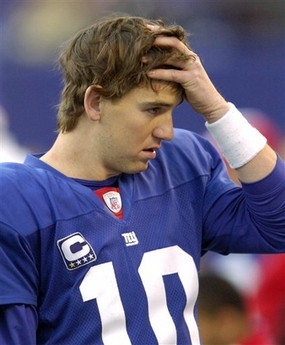
Eli, what is your reaction to people picking the Giants to be #1?

Jason Lisk and the wisdom of crowds say the Giants are the best team in the league; Aaron Schatz’ DVOA numbers agree. The computer operated by Brian Burke prefers Denver and Bill Barnwell’s wheel landed on Chicago. ESPN prefers the Falcons, a pick that is surely more retrodictive than predictive.

Technically, I don’t do power rankings, because I don’t even know what power rankings are supposed to represent. What I do is predict how many games I expect each team to win in 2012. And while it was ugly and under the spotlight, Houston’s performance against the Packers on Sunday Night wasn’t enough to make me think any other team ends up winning more games than the Texans will this season.

[As always, the number of wins I’m projecting each team to finish the season with is in column 3. The fourth column – PWIN – shows how many wins I projected last week, and the difference column represents how many wins I added or subtracted this week. The “RSOS” column stands for the remaining SOS for the team, based on the number of projected wins I’m giving to each of their opponents. The “RHG” column stands for remaining home games.]

TeamRecWinsPrvWinDiffRemSOSRemHGComment
Houston Texans5-11213-10.4695I'm not sure how many teams would have beaten the Packers last week. The gap between Houston and the next best AFC team is still significant.
Atlanta Falcons6-0121200.4445Their last 5 wins have all come against quarterbacks drafted in the top 4: Carson Palmer, Robert Griffin III, Cam Newton, Philip Rivers, and Peyton Manning.
San Francisco 49ers4-21112-10.5315A reality check for a 49ers team that looked unstoppable a week ago. Last week I wrote "I can't imagine projecting SF under 12 wins again this year." My imagination is pretty narrow, apparently.
Chicago Bears4-1111010.5116Chicago just experienced the greatest bye week ever according to every power ranking I've seen.
Denver Broncos3-311920.3945According to Advanced NFL Stats, Denver is the best team in the league. Their remaining schedule is absurdly easy, so I'm going to perhaps prematurely give them a two-win bump. Their week 15 game in Baltimore may be for a bye, and I now think Denver is the favorite.
New England Patriots3-31012-20.5136New England is three plays away from being 6-0, but with terrible pass defense, I'm not sure they're that much better than their record.
Baltimore Ravens5-11011-10.5134Baltimore's defense is forced to rely on the continued good health of Ed Reed. Now, he latest news is that Reed has been playing with a torn labrum.
Green Bay Packers3-310910.4635As bad as the season has been, the Packers looked like world champs against the Texans. Now we just need to see some consistency.
Pittsburgh Steelers2-3911-20.4556Pittsburgh, I just can't quit you. I still kind of think the Steelers are a Super Bowl contender, but only because I'm an idiot. Still, a 7-4 record the rest of the way isn't a high bar for them against this schedule.
New York Giants4-29900.5445I've projected the Giants at 9 wins every week so far, and I'm not going to change now. The Giants are plagued by inconsistency, so I won't drop them from 9 wins if they lose to Washington this week.
Miami Dolphins3-39810.4945I'm on the bandwagon, although the Rams win was really ugly. Still, Philbin Phever!
Seattle Seahawks4-29810.5385Brutal remaining schedule and serious doubts about their offense makes it hard for me to bump them to 10 wins, but a huge win over New England.
Minnesota Vikings4-289-10.5635I knew it! Minnesota could not prove that they were "for real for real"!
Arizona Cardinals4-289-10.5814I'd like to pat myself on the back for having Arizona at 9 wins two weeks ago. :patsback:
Philadelphia Eagles3-389-10.4945Okay, even Eagles apologists have to wonder what's going on here. I'm no longer giving this team the benefit of any doubt.
San Diego Chargers3-38800.4445They're terrible, I know, but they still have games against CLE, KC, TB, CIN, CAR, NYJ and OAK.
Dallas Cowboys2-38800.4896The Cowboys had a bad week, but they still have an edge on the Giants and could win the division if they defeat New York at home in 10 days.
New York Jets3-38710.4944Jets have already been 1-1, 2-2 and 3-3; can see them at 4-4 in two weeks, too.
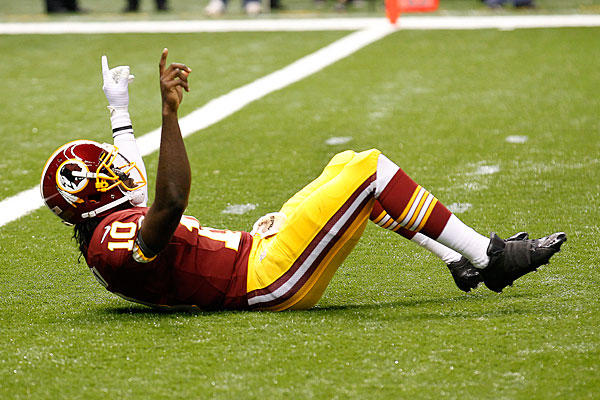
Washington Redskins3-38620.4945Robert Griffin III is two good games away from being the MVP of the first half of the season. RG3 is 4th in ANY/A and 2nd in both rushing touchdowns and yards per carry.
Cincinnati Bengals3-378-10.5136Lose to the Browns: Drop 1 win.
New Orleans Saints1-47700.5345How is Drew Brees 23rd in completion percentage?
St. Louis Rams3-37700.5505With the exception of the Bears game, St. Louis has looked pretty good every week.
Buffalo Bills3-37610.5066The most uninspiring road win ever against a 4-1 team.
Detroit Lions2-36600.5806Big win over Philadelphia but I'm not sure if much has changed in Detroit. What can they do against that schedule?
Carolina Panthers1-46600.5065Cam Newton's body language last week was invisible.
Tampa Bay Buccaneers2-36600.5175The next five games are against New Orleans, Minnesota, Oakland, San Diego, and Carolina. I have no idea how any of those games will go.
Indianapolis Colts2-36600.4665I pat myself on the back for the extreme caution I advised regarding the Indy bandwagon. The sign that I have only two pats on the back is not good.
Tennessee Titans2-46510.4945Not a lot to like here, which makes them a darkhorse playoff team in the AFC.
Kansas City Chiefs1-556-10.4505Join the 2005 Texans as the only teams to fail to hold a lead for even a second in any of their first six games.
Oakland Raiders1-45500.4206Good showing in Atlanta, but even a 4-7 record might be pushing it for this team the rest of the way.
Jacksonville Jaguars1-45500.4835Big game this week in Oakland, which should show if there's any hope for a playoff push or if they're competing for the #1 pick.
Cleveland Browns1-54310.4945Welcome to 2012, where every AFC team has a chance to make the playoffs.
{ 0 comments }

NYT Fifth Down: Post-week 6

If you feel like this has been one of the most unpredictable seasons so far, you’re right:

Pete Rozelle dreamed of a parity-filled league in which any team could win on a given Sunday. If alive today, the former N.F.L. commissioner would surely smile at how the 2012 season has started. Half of the league’s 32 teams have 2-3, 3-3 or 3-2 records, just the third time since 1970 that the league was so tightly packed after six weeks.

Only in 2001 — the year New England became one of the unlikeliest Super Bowl champions — were more teams (17) within a half-game of .500 after six weeks. The last two seasons, roughly two-thirds of the teams had at least two more wins than losses or losses than wins. But the first third of the 2012 season has been among the most unpredictable stretches in modern N.F.L. history. Consider: Underdogs are 57-32-2 against the spread this year, the second-highest rate after six weeks in 35 seasons.

Since 1978, underdogs have won just over 50 percent of games against the spread during the first six weeks of a season, and only in 1999 did underdogs fare better than they have this year. Underdogs are 40-51 in games this season, the first time in N.F.L. history that after six weeks, 40 underdogs have won games outright.

In the A.F.C., as noted last week, parity is just a euphemism for mediocrity.

In August, the New England Patriots were the favorites to win the Super Bowl; in mid-October, they’re a 3-3 team with a pass defense that is allowing 7.5 net yards per pass attempt and a pass offense that’s averaging only 6.9 NY/A. The Patriots were everyone’s choice to win the A.F.C. East, and there was similar unanimity that Miami would occupy the division’s cellar. Right now, all four teams in the division are 3-3, with Miami having the longest winning streak — at two games.

The Pittsburgh Steelers won 12 games and led the league in points allowed in three of the last four seasons before 2012. This year, Pittsburgh is 2-3 and ranks in the bottom half of the league in points allowed, as an aging defense has been the team’s Achilles’ heel.

Last year’s surprise team in the conference was the Cincinnati Bengals, who built on that success by starting this year 3-1… before promptly losing consecutive games as favorites in Weeks 5 (Miami) and 6 (Cleveland).

The Tennessee Titans looked to be one of the worst teams in the league entering Week 6 but emerged with an upset win over Pittsburgh.

The Indianapolis Colts appeared to have “arrived” following a come-from-behind victory over Green Bay, only to have been pronounced dead on arrival by halftime in their game against the previously hapless Jets.

A few days ago, the Houston Texans were considered the best team in the league at 5-0, but on Sunday, the Texans lost to… the Packers, who couldn’t even beat the Colts last week, who couldn’t beat the Jets this week, who couldn’t beat… Houston last week.

The Kansas City Chiefs lost a nailbiter, 9-6, to the Ravens last week, but were blown out by Tampa Bay, 38-10, on Sunday.

The Oakland Raiders had been outscored by 15 points per game entering a Week 6 date in Atlanta, home of the only undefeated team in the league. Shockingly — or in 2012 parlance, as expected — Oakland led most of the game, losing only in the final seconds on a 55-yard field goal.

On Monday Night, the 3-2 San Diego Chargers hosted the 2-3 Broncos, so obviously Denver won after San Diego raced out to a 24-0 halftime lead. The Broncos became the first team to trail by 24 or more points at halftime and win by double digits.

The N.F.C. may have the more talented teams, but it is not immune from the parity virus.

You can check out the rest of the article here.

{ 0 comments }

Checkdowns: Patriots Passing Game Struggles

If there was one thing you can count on in New England, it’s that the Patriots passing attack would be more efficient than their opponent’s nearly every week. From 2003 to 2011, New England averaged 6.9 net yards per pass attempt while their defense allowed 6.0 NY/A. But this season, the Patriots passing offense is struggling by New England standards while the pass defense is worse than ever. Take a look: [1]Note that the table below lists team passing yards, which already deducts sack yardage lost

YearAttYdsSkOpp_AttOpp_YdsOpp_SkNY/ANY/A ADiff
20122431758132191733116.97.5-0.7
20116125084326194703407.97.10.8
20105073847256114136367.26.40.8
20095924436185123355317.36.21.1
20085363569464743219316.16.4-0.2
20075864731215263041477.85.32.5
20065273400295183203446.15.70.4
200556441202852737033376.60.3
200448535882653834004575.81.2
200353734323261832324164.91.1
20026053577315313179345.65.60
20014823089465463497415.96-0.1
20005653181485443522295.26.1-1

Playing the Jets on Sunday is the perfect medicine for a NY/A-imbalance, but what do you make of New England’s struggles this year?

References

References
1 Note that the table below lists team passing yards, which already deducts sack yardage lost
{ 3 comments }

I’m always interested in creative ways to maximize your team’s chances of winning. A few weeks ago, I wrote that when trailing by 14 or 15 points, teams should go for two if they score a touchdown. A different scenario came up during the Ravens-Cowboys game, as Baltimore was up 24-23 with just under five minutes to go when Ray Rice went in for a one-yard score. At that point, some clamored that Baltimore should have gone for two and essentially put the game away. A conversion would have given the Ravens a 9-point lead, while a miss would still leave Baltimore a touchdown. On the surface, it might sound like a risk-free proposition, where even if the gamble fails, you’re still in good shape.

But I don’t think I’d advocate for the bold decision in that situation. In essence, you’re deciding whether your offense is more likely to convert when going for two than your defense is likely to prevent your opponent’s attempt. The decision depends on the likelihood of success: If the league-average rate was 75%, then you’d want to go for two, but if the average rate was 25%, you’d rather force your opponent to have to convert.

In reality, the conversion rate hovers around 50% in the NFL. From 2007 to 2011, teams went for two on 269 plays and converted on 130 of them (48.3%). We can break that down further:

  • On 21 quarterback runs, the conversion was successful 13 times (62%). That is made consists of a 6-for-11 rate on runs up the middle and a 7-for-10 rate on other quarterback runs (which may include some scrambles on designed pass plays).
  • On 50 running back runs, teams converted 33 times (66%). That includes being 21-of-32 on runs to the outside and a 12-for-18 rate on runs up the middle (which includes two Danny Woodhead runs from shotgun).
  • There were also three trick plays with wide receivers throwing passes (Cedrick Wilson, Josh Cribbs and Anquan Boldin) with two of them being successful.
  • On the other 195 pass plays, four times the quarterback was sacked (2%), twice the pass was complete but short of the end zone (1%), and 107 times the pass was incomplete (55%). That leaves 82 successful passes (42%) on two-point conversion pass attempts.

It’s tempting to say that teams should simply run the ball more frequently in these situations, but I think we need to be careful and not let the data speak too loudly. The fact that teams passed on 74% of these plays is itself an indication that passing is the higher-percentage play. When a backup running back has a higher yards per carry average than the starter, it doesn’t mean that the starter is the worse player. I think running is a nice surprise move in these situations, but if teams ran more frequently, the success rate would surely drop (of course, the success rate on passes would then increase, which might make it wise just as a matter of course for teams to try to run more frequently in these admittedly rare situations).

In any event, I don’t think teams should get overconfident about their ability to convert when going for two. However, it’s worth noting that usually it is losing teams — and perhaps that means bad teams — that are going for two. Indeed, on only 108 of the 269 conversion attempts (40%) was the team winning before attempting to go for two. In those 108 cases, teams converted 60 times (56%). For what it’s worth, 31 of the 71 rushing plays (44%) came in these situations, and teams were 41-of-77 (53%) when passing with the lead.

So there does seem to be something to the idea that “bad” teams are dragging down the league average rate, although we’re dealing with small sample sizes. It’s the easy way out, but my gut tells me the actual rate really is right around 50/50.

In that case, does going for 2 up by 1 (before the touchdown) make sense? I don’t think so, unless your offense is much better than your defense (or your opponent’s offense is much better than its defense). In some ways, we should be indifferent about whether we go for two or if our opponent is forced to; it’s like caring about whether you get to call the coin toss or your opponent does.

Say you are up by 1 point and score a touchdown with two minutes to go. Let’s stipulate that the opponent has a 28% chance (to use what will be round numbers in a minute) of going down and scoring to tie it up. If you kick the extra point to go up 8, you have a 93% chance of winning — a 72% chance you stop your opponent plus a 14% chance that even if they score, you stop them on the 2-point conversion, plus another 7% chance that even if they force overtime, you win.

Now, if you go for two and convert, let’s say you have a 100% chance of winning. So converting gives you an extra 7% chance of winning. If you go for two and miss, you still have an 86% chance of winning — the 72% chance your opponent does not score plus the 14% chance you win in overtime. So choosing to go for two and missing only lowers your odds 7% — again, teams should be relatively indifferent about whether it is them or their opponent who ultimately goes for two, assuming the roughly 50% success rate.

But the above analysis is ignoring something, which to me, makes the decision easy. With a minute to go, and a good offense and bad defense, maybe you go for two. But that’s not the situation Baltimore was in — the clock read 4:41 when Rice scored his touchdown. Here is the part that is counter-intuitive but true assuming a 50% conversion rate: the difference between being up by 7 or being up by 8 is *larger* than the difference between being up by 8 or being up by 9.

That’s because going for 2 and converting doesn’t end the game; your win probability doesn’t shoot up to 100%. Down 9, the opponent will play more aggressively, knowing they need two scores. Assume you go for 1 and extend the lead to 8. If your opponent faces a 4th and short on their next drive, they may still punt, because it’s (in their minds) a one-possession game. They won’t punt if down by 9. They are more likely to take their time trying to score (which is beneficial to you, the leading team), which means the odds are very low that they win in regulation. Trailing by 9, they know they need two scores, and will play more aggressively to win the game. To me, I don’t see any reason to incentive bold moves by my opponent, and the more time remaining, the worse the decision to try to “ice the game” by going up 9 looks.

The Ravens game provides a good example. Suppose Baltimore had gone for two and missed. Well, the Cowboys went down and scored, and would have kicked off to the Ravens. Instead — in this case, it is irrelevant that Baltimore kicked the XP and Dallas missed the 2-point conversion, we can assume Baltimore went for two and made it — the Cowboys went for the onside kick and got the ball back. That’s not a move you make in a tie game, but one an aggressive team trailing has to do. Going for 2 early doesn’t bring your win probabiliy up to 100%, and this effect is magnified the more time remaining in the game.

{ 9 comments }

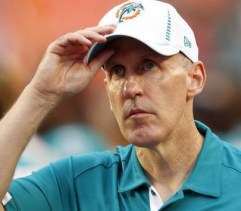
Joe Philbin tips his hat to good coaching.

While most coaches act like they’re on autopilot when it comes down to crucial 4th down decisions, let’s credit a coach who took his job title literally this weekend.

Did you hear about what Joe Philbin did? No? Then it must have worked. Leading 17-14 with 4:15 to go, Miami faced 4th and 1 from their own 40. As Jason Lisk noted, going for it here makes a lot of sense due to the time remaining. With 4 minutes to go, the Rams wouldn’t drain the clock even if they scored, so your worst case scenario is something like down by 4 with a minute to go. More likely (and that’s probably being too kind to Jeff Fisher), the Rams would play it uber conservatively, and either miss a long field goal or convert with more than a minute remaining, giving Miami ample time to regain the lead. Miami called for a fake punt — advisable in an age when coaches don’t think teams should go for it in these circumstances — and converted. They punted a few plays later, but the Rams had less than two minutes to go and the ball at their own three. They had to settle for a 66-yard field goal, and missed, giving Miami the win.

Honorable mention: Pete Carroll doesn’t really deserve credit here, but we grade on a scale at Football Perspective. Trailing 23-10 with 7:26 left in the 4th quarter, Carroll chose to go for it on 4th and 3 from the Seattle New England 10. Obvious? Maybe, but how many coaches would “take the 3 points,” thinking they could transform a two-score game into a … two-score game. Carroll had Russell Wilson throw a fade in the end zone to Braylon Edwards, who came down with the touchdown. What coach might kick it there? How about Marvin Lewis, who once did so on 4th and 8 from the 8 with less than 7 minutes to go.

And on the other side…

Bruce Arians twice declined to go for it on 4th and 1 against the Jets. On Indianapolis’ opening drive, the Colts stalled at the Jets 40-yard line. Facing 4th and 1 against a weak offense in enemy territory? On the opening drive of the game, this should be as easy a decision as it gets, but Bruce Arians chose to punt. It was a good one — downed at the Jets 3 — but that’s a poor tactic. New York went three-and-out, and Indianapolis took over at their own 41. They drove down to the Jets one-yard-line, and then… sent Adam Vinatieri in to kick a field goal to take a crucial (?) 3-0 lead midway through the first quarter.

Making those blunders even worse: Rex Ryan’s fake punt with Tim Tebow was perhaps the turning point in the game. New York was up 14-6 with just over two minutes to go, but faced 4th and 11 on the Indianapolis 40. A punt and Andrew Luck gets to work his two-minute drill magic, and we could have a 14-13 or tie game at halftime. The Jets faked the punt, converted, and scored a timeout with only seconds left in the half. That decision set in motion the events that led to a 21-6 halftime lead, and the game was effectively over.

Facing 4th and 1 with an explosive offense and a mediocre defense, against a team with an occasionally explosive offense and always terrible defense, Atlanta’s Mike Smith chose to punt from his own 45-yard line in a tie game with 6:26 remaining. The Raiders would drive down the field, only to have Carson Palmer and Asante Samuel do what they do best — throw lazy out routes and jump on sideline routes for interceptions, respectively — to help give Atlanta the victory. Samuel must have intercepted it because of the big boost of faith his coach put in the defense!

Were you surprised to see the Redskins defeat the Vikings? On each of Minnesota’s first three drives, the Vikings got inside the Washington ten-yard line, but settled for three field goals. The 4th down decisions weren’t terrible, but the third-down calls were. On 3rd-and-goal from the 5, Christian Ponder threw a short pass to Toby Gerhart who was tackled at the 3. An okay call if you plan to go for it on 4th down, but alas, Blair Walsh was sent onto the field for the ill-advised, 20-yard attempt.

On the next series, Minnesota faced 3rd and 12 from the 16, and Ponder threw a short pass to Adrian Peterson who gained seven yards. Why? Admittedly I didn’t see this game so it’s possible this was a checkdown.

On the third series of the game, facing 3rd and 4 from the 10, Minnesota… ran Toby Gerhart over the left guard for one yard. No one needs to have watched the game to roll your eyes at that decision.

Still, the 9-0 lead was huge for Minnesota, or should I say, would have been huge for Minesota if this was 1944. Instead, Robert Griffin III and Washington scored 38 points in the final three quarters, a shocking development for a team that, you know, is ranked third in the league in points. This was some surprisingly conservative playcalling for the team that pulled one of the upsets of the year against San Francisco, which started when Kyle Rudolph scored a one-yard touchdown on 4th and goal in the first quarter.

{ 3 comments }

Here’s a quick Monday data dump… I ran the Simple Rating System (for offense and defense) on this year’s NFL results, but instead of weighing each game equally, I used Wayne Winston’s method of giving more weight to recent outcomes. Winston’s system is simply to give each game a weight of:

λ ^ (weeks ago)

In the NFL’s case, a λ of 0.95 works best for predicting future outcomes. The games from yesterday were (6 – week 6) = 0 weeks ago, so they get a weight of .95 ^ 0, or 1.00. Last week’s games were (6 – week 5) = 1 week ago, and get a weight of .95 ^ 1 = 0.95; the opening-week games were (6 – week 1) = 5 weeks ago, and get a weight of .95 ^ 5 = 0.77. See how it works?

Using this weighted form of SRS, here are the rankings going into tonight’s game (NOTE: For defenses, negative SRS numbers are better):

RkTeamGmsWLOffDefSRSwpa_locwpa_vegaswpa_1stwpa_2ndwpa_3rdwpa_4th/ot
1Chicago Bears5417.6-7.615.2-0.070.480.130.020.730.22
2New York Giants6429.8-3.012.80.000.260.060.210.050.43
3San Francisco 49ers6420.5-10.410.90.000.80-0.040.210.30-0.28
4New England Patriots6339.00.48.6-0.141.000.620.000.27-1.75
5Green Bay Packers6334.9-2.57.50.000.670.440.06-0.64-0.53
6Seattle Seahawks642-2.0-8.76.60.00-0.200.68-0.740.191.07
7Houston Texans6514.6-1.25.80.001.34-0.190.760.12-0.02
8Atlanta Falcons6602.3-3.25.40.000.610.520.200.411.25
9Denver Broncos5232.5-2.24.70.07-0.13-0.34-0.630.120.41
10Tampa Bay Buccaneers523-0.5-4.54.00.07-0.420.350.200.36-1.06
11St Louis Rams633-2.8-6.73.90.00-0.770.020.27-0.100.58
12Dallas Cowboys5231.4-2.33.6-0.070.23-0.21-0.18-0.400.13
13Baltimore Ravens6511.4-2.13.50.140.65-0.310.760.060.70
14Arizona Cardinals642-3.8-5.71.90.14-0.360.080.10-0.191.22
15Washington Redskins6337.35.51.80.00-0.150.010.751.15-1.76
16Minnesota Vikings642-2.3-3.10.80.00-0.010.71-0.36-0.010.67
17Miami Dolphins633-2.8-2.5-0.30.00-0.59-0.010.741.29-1.43
18Detroit Lions5235.27.2-2.0-0.070.20-0.31-0.82-0.330.83
19Carolina Panthers514-2.5-0.4-2.20.07-0.12-0.84-0.050.24-0.80
20Philadelphia Eagles633-6.5-3.8-2.70.000.52-0.68-0.310.70-0.24
21New York Jets633-2.30.5-2.80.14-0.400.04-0.10-0.410.73
22San Diego Chargers532-3.3-0.5-2.8-0.070.270.450.020.36-0.53
23Cincinnati Bengals6330.34.9-4.6-0.140.170.610.43-1.210.14
24New Orleans Saints5143.27.8-4.60.070.390.05-0.95-0.08-0.99
25Pittsburgh Steelers523-2.02.8-4.8-0.070.540.130.160.18-1.44
26Cleveland Browns615-2.13.0-5.00.00-1.15-0.21-0.740.080.02
27Buffalo Bills6330.99.1-8.3-0.14-0.310.320.02-0.140.25
28Indianapolis Colts523-1.86.8-8.60.07-0.620.25-0.350.020.13
29Oakland Raiders514-4.26.6-10.8-0.07-0.39-0.240.30-1.550.45
30Kansas City Chiefs615-7.16.5-13.60.00-0.76-1.110.05-1.000.82
31Tennessee Titans624-4.98.9-13.80.00-1.15-0.610.39-0.350.72
32Jacksonville Jaguars514-10.73.3-14.00.07-0.60-0.38-0.44-0.210.06

I also included a breakdown of each team’s quarter-by-quarter Win Probability Added (WPA), so you can see where each team’s wins above/below average thus far have come from.

{ 7 comments }

Rating offenses and defenses since 1970

NFL offenses and defenses are not mirror images of each other. The gap between the best and worst offenses is generally bigger than the spread on the defensive side of the ball. And strength of schedule is more likely to play a key role when it comes to determine the best and worst defenses, too. Today’s post is a two-parter: in Part I, we look at some data on the best and worst teams in the modern era, while Part II analyzes the above claims.

Ranking offenses (or defenses) isn’t easy. I don’t like using yards, which is misleading in a lot of ways. Points scored sounds good, but non-offensive scores and other big plays on defense and special teams can make that metric less telling. There are some very good advanced metrics, but they don’t help us if we want to go back to the 1970s. So I simply used offensive touchdowns scored to rank the offenses and offensive touchdowns allowed to rank the defenses. And since I’m going to go back to 1970, I’ll be comparing each unit to the league average in that season.

Part I – Team Rankings

In addition, I’m going to adjust the offenses and defenses for strength of schedule. I’ll be doing this in an iterative way just like I do with the SRS. Listed below are the top 100 teams since 1970 in terms of offensive touchdowns per game over average (and in addition to adjusting for strength of schedule, I’ve pro-rated the non-16 game seasons to 16 games). The first line shows the 2007 Patriots, who scored 67 offensive touchdowns when the league average was 34.6. Therefore, NE gets credit for being 32.4 touchdowns over average. The Patriots’ schedule was actually difficult (once you adjust for the fact that their opponents faced New England) — it cost the offense nearly 2 touchdowns — so their final rating is +34.4.
[continue reading…]

{ 2 comments }

Week 7 NCAA SRS Ratings and the B12 lovefest may be back

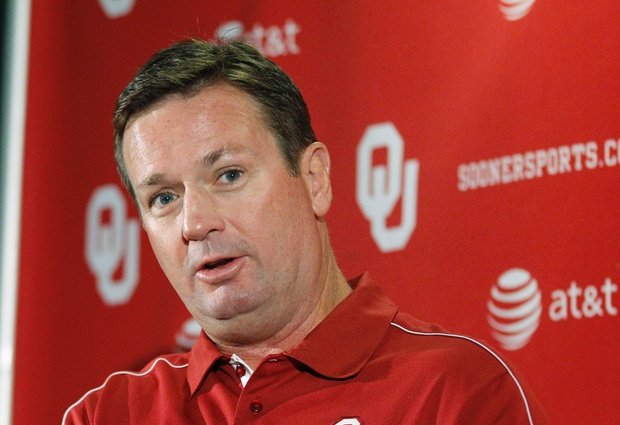
Hey Bob, did you know the fate of the conference is in your hands?

Last year, the computers loved the Big 12. The first BCS Standings will be released tonight, and I suspect the B12 will again be viewed favorably by the computers. As a whole, B12 teams have just three nonconference losses, and two of them were by Kansas (to Rice and Northern Illinois). As long as the other nine teams in the conference keep crushing the Jayhawks, those losses won’t matter. The other loss came by Oklahoma State in Arizona, which looks bad in retrospect but again the damage may be limited. With the exception of a blowout over Lousiana-Lafayette, OSU simply hasn’t looked good this season, falling short of a single-game SRS score of 50 in every other game. Yesterday, OSU won by just six points in Manhattan. For the purposes of Kansas State, Oklahoma, Texas Tech and West Virginia, as long as they also beat down on Oklahoma State (and Texas has already handed them one conference loss), I suspect the computers will continue to love them. And for purposes of the BCS computers, a win over the Cowboys is all they will need (as margin of victory is not included).

On the other side, the conference doesn’t really have any landmark victories, either. Mississippi (via Texas), Louisiana-Monroe (Baylor), Tulsa and Iowa (Iowa State), and Miami (Kansas State) are the most impressive heads hanging in the conference’s living room. We might not learn a lot about the Big 12 conference teams as they relate to the rest of college football — the 10 teams have already played 29 of their 30 nonconference games this season. Fortunately for us, that last remaining game is in two weeks, when Notre Dame travels to Oklahoma. If the Sooners win that game, the computers will likely love the Big 12 for the rest of the season.

Below are the SRS Ratings after seven weeks. As always, thanks to Dr. Peter Wolfe.
[continue reading…]

{ 1 comment }

College Football BCS odds

Before today’s games, I figured we could take a second to look at the latest odds to win the BCS Championship:

TeamOddsPerc
Alabama7/529.2%
Oregon7/215.6%
West Virginia6/110%
South Carolina7/18.8%
Florida8/17.8%
USC8/17.8%
Kansas State15/14.4%
LSU18/13.7%
Notre Dame20/13.3%
Oklahoma50/11.4%
Georgia50/11.4%
Florida State50/11.4%
Louisville100/10.7%
Field (Any Other Team)100/10.7%
Texas100/10.7%
Clemson200/10.3%
Baylor300/10.2%
Mississippi State300/10.2%
Stanford500/10.1%
Tennessee500/10.1%
BYU500/10.1%
Oklahoma State500/10.1%
Arizona State500/10.1%
Michigan500/10.1%
Wisconsin500/10.1%
Michigan State500/10.1%
TCU500/10.1%
Texas A&M500/10.1%
Nebraska500/10.1%
Washington500/10.1%
North Carolina State500/10.1%
Iowa500/10.1%
Boise State500/10.1%
UCLA500/10.1%
Cincinnati500/10.1%

[continue reading…]

{ 4 comments }

Extreme Outliers: Rookie Edition

Griffining: Playing for a coach that tries to help you.

Both Andrew Luck and Robert Griffin III have been very successful this year. Griffin ranks 2nd in Y/A, 2nd in AY/A, 4th in NY/A, and 4th in ANY/A, an incredible performance nearly across the board (he’s 23rd in sack rate) by the Redskins rookie. He also is leading the league with a 69.1% completion rate and ranks 5th in passer rating. Luck ranks only 23rd in Y/A, 22nd in AY/A, 21st in NY/A, and 18th in ANY/A, respectable numbers for a rookie but on the surface, little more than that. He does rank 7th in sack rate, which is an excellent sign, but he ranks last in the NFL in completion percentage (in the non-Mark Sanchez division) and only 25th in passer rating.

But there are some other stats out there that paint a different picture. ESPN’s Total QBR ranks Griffin 11th overall — slightly below most of his other metrics — but ranks Luck as the fourth most effective quarterback so far this season. Also, despite Griffin’s edge in most metrics, the Colts and Redskins are essentially tied in three key drive metrics — points per drive, yards per drive and drive success rate — and I don’t think that’s because Donald Brown is so awesome. As Nate Dunlevy pointed out to me, one reason for this is that Luck has accumulated a large number of rushing first downs: Luck is tied for the league lead with Arian Foster on third down rushes that resulted in a first down. And once you account for strength of schedule, Luck vaults to #1 on the QBR list.

But let’s put aside effectiveness for right now. Some advanced metrics show you that they’ve been skinning cats in very different ways:

  • According to Advanced NFL Stats, Luck has thrown a pass 15 yards past the line of scrimmage on 24.3% of his throws, the 5th highest rate in the league. Griffin ranks 32nd with a deep rate of just 12.2%, ahead of only Matt Hasselbeck.
  • If you completely removed Yards After the Catch from the equation, Luck would rank in the top 10 at 4.5 yards per attempt while Griffin would rank 25th with just 3.5 yards per attempt.
  • Griffin ranks third behind just Christian Ponder and Philip Rivers when it comes to percentage of passing yards that are due to YAC, at 58.7%; Luck ranks 32nd, ahead of only John Skelton and Mark Sanchez, with only 33.4% of his yards coming on yards after the catch by his receivers.
  • According to Footballguys.com’s subscriber content, the Colts have targeted their wide receivers on 72.1% of their passes, the second highest rate in the league behind the Rams. The Colts are also last in the league with only 6.4% of their passes aimed at running backs (this also jives with the numbers from Mike Clay of Pro Football Focus.). The Redskins are more middle of the road in these metrics, but Andrew Luck is being forced to rely on his wide receivers with no real receiving threat in the backfield to help him out. As a result, it’s probably not too surprising that his completion percentage is so low.

Luck has also excelled in the two-minute drill and no-huddle situations early this year, although Griffin has been no slouch in those departments, either. But it’s clear that the Colts — rightly or wrongly — aren’t treating Luck with kid gloves. In fact, one could argue that they’re treating him no differently than they did Peyton Manning. Luck is averaging 44.3 pass attempts per game so far this season, second behind only Drew Brees. With a mediocre defense and a bad running game, the Colts are basically putting each game in the hands of Luck to win. Griffin is averaging only 27.8 pass attempts per game right now, and the Redskins have done a fantastic job molding the offense to to suit Griffin’s strengths.

Griffin’s numbers are better right now — ESPN excluded, of course — but that may be a reflection that the Shanaclan is more nurturing than Bruce Arians. Griffin’s success is outstanding, but Luck has been doing just as well under much more challenging conditions.

Update: Jeff Bennett, one of the creators behind ESPN’s Total QB, e-mailed me some notes this morning:

We break rushing out into two categories, scrambles and designed rushes. The quarterback receives more credit for scrambles then designed rushes – the reason being designed rushes are, well, designed to help the quarterback get more yards on the rush. Scrambles are not. Whatever positive or negative that comes from those is mostly on the quarterback.

So back to Luck. He has nine first down rushes this season on scrambles, most in the NFL. Seven of the nine have come on 3rd down, which generally is more important since the alternative to not picking up a 1st down is likely a punt instead of 2nd or 3rd down. No one else in the league has more than three 1st down rushes on scrambles.

Luck’s average pass is traveling 9.8 yards downfield this season. That is the third longest average pass distance in the league (behind Joe Flacco and Jay Cutler). Griffin averages 7.2 yards, a full yard below league average.

The average quarterback this season is getting 56% of their passing yards via “air yards” (meaning 44% of yards are coming after the catch). Griffin has 43% of his yards through the air. Luck has 68%.

{ 3 comments }

Week 5 Power Rankings

Cameron Wake does not need to leave the ground to sack the quarterback.

I agree with Aaron Schatz and Brian Burke: the 49ers are the best team in the league, not that such a designation holds any meaning. Last week, I had Houston as my only 13-win team, and the Texans aren’t dropping from that pedestal (and Jason Lisk still has Houston at #1).

But the big mover this week is Miami, who look to be one of the six best teams in the AFC. Disagree? Quick, name another good team in the AFC outside of Houston, New England, Baltimore, Pittsburgh, and Denver. As I wrote in this week’s Fifth Down post, the AFC is clearly the inferior conference in the NFL today. Well, Miami legitimately appears to be a playoff contender in the watered down conference. Note that all of Miami’s three losses have come to either Houston or in overtime in games in which Miami looked to be the superior team.

One reason for Miami’s success is the dominant play of outside linebacker-turned-defensive end Cameron Wake. Miami’s defensive line is dominating the run and Wake is leading the league in combined sacks, hits, and hurries. This offseason, the media gushed about the Bills and wouldn’t stop talking about the Jets, but so far this season, Miami has been the second best team in the division.

[As always, the number of wins I’m projecting each team to finish the season with is in column 3. The fourth column – PWIN – shows how many wins I projected last week, and the difference column represents how many wins I added or subtracted this week. The “RSOS” column stands for the remaining SOS for the team, based on the number of projected wins I’m giving to each of their opponents. The “RHG” column stands for remaining home games.]

TeamRecWinsPrvWinDiffRemSOSRemHGComment
Houston Texans5-0131300.4836Not only do the Texans still have 6 home games remaining, but they have 4 more games against the AFC South and get the Bills and Lions. Even without Brian Cushing, I don't see why they don't win 8 more games.
San Francisco 49ers4-1121110.5346I said last week that a win over Buffalo would bump SF to 12 wins. At this point, I can't imagine projecting SF under 12 wins again this year.
New England Patriots3-2121110.4946Presented without comment: New England's remaining games: @SEA, @STL, NYJ, @NYJ, MIA, @MIA, BUF, IND, HOU, SF, @JAX
Atlanta Falcons5-0121200.4436I still don't feel warm and fuzzy about the Falcons, but the wins keep adding up. You could argue that projecting a 7-4 finish against a cupcake schedule is not giving them enough credit. They probably will have nothing to play for in week 17, though.
Baltimore Ravens4-1111100.5175I said last week that it's getting harder to make fun of Joe Flacco's play, and then he responds by going 13 for 27 as the Ravens fail to score a touchdown and win. What should I jinx next?
Pittsburgh Steelers2-2111010.4486Not a great statistical game by Ben Roethlisberger, but he played very well last weekend. The defense and running game looked good against the Eagles, and if forced to choose, I'll still pick the Steelers over the Ravens.
Chicago Bears4-1101000.5236Almost nothing has changed since last week when I noted that the Bears were lucky to have banked so many wins because there are a zillion questions about this offense, which was really ugly in the first half against Jacksonville. But even if it's ugly, they should go 6-5 the rest of the way.
Green Bay Packers2-3910-10.5005Aaron Rodgers is starting to play like his old self, but a loss to the Colts has to drop the Packers. They're not good enough now to project 8 more wins in 2012.
Philadelphia Eagles3-2910-10.4666All things told, a last-second loss in Pittsburgh is nothing to be ashamed of. Philadelphia will drive everyone crazy, but I'm not going under 9 wins just yet.
Denver Broncos2-3910-10.4205Denver has the easiest remaining schedule in the league. The Broncos have 5 division games remaining, and 6 games against the non-Falcons team in the NFC South and non-Steelers teams in the AFC North. A 7-4 finish should be expected.
New York Giants3-29900.5635Good win against Cleveland, but the schedule gets brutal now. I don't think New York is consistent enough or has enough depth to expect a great finish with that schedule.
Arizona Cardinals4-19900.5575No running game and no passing game? Still only need to go 5-7 to get to 9 wins, but man did that bandwagon deflate quickly.
Minnesota Vikings4-19810.5285Minnesota proved that they were 'for real' last week, but now must answer the bigger question: are the Vikings "for real for real?"
Miami Dolphins2-38620.4896The rarely seen two-win bump: Miami ranks 5th in Burke's efficiency model and 12th in Schatz' rankings; they're slightly above average in NY/A and NY/A allowed, and #1 in rushing yards and yards per carry allowed. With a below-average remaining schedule and 6 home games, 6-5 may be a modest projection.
Cincinnati Bengals3-289-10.5116Miami is pretty good, and could end up stealing the 6 seed from Cincinnati now that they own the tiebreaker. Bengals can't afford a letdown against Cleveland on Sunday.
San Diego Chargers3-289-10.4606I wanted to put them at 8 wins last week, but thought the easy schedule made 9 wins more likely. I forgot that Norv Turner is still here.
Dallas Cowboys2-28800.5056Not only did Tony Romo not choke last week, but the Cowboys didn't even lose.
Seattle Seahawks3-28800.5576A good road win for the Seahawks, but until that offense gets more effective, I have my doubts. On the other hand, I don't think I'll drop them below 8 wins even if they lose to the Pats this weekend.
New Orleans Saints1-47700.5345The schedule is challening, but the Saints are an above-average team. I'm projecting a 6-5 finish as Drew Brees looks like he has his mojo back.
New York Jets2-37700.4895Jets showed some heart against Houston, but just as important: they showed how far away from good they really are. Still, with Dustin Keller and Stephon Hill returning, the offense should look a little better.
St. Louis Rams3-27610.5575Hard not to bump them after they manhandled the Cardinals. A brutal schedule and playing in the wrong conference makes the playoffs a longshot at this point.
Buffalo Bills2-367-10.5006At this point, the sky literally falling on Buffalo might not be as traumatic to Bills fans as watching the Bills play football.
Carolina Panthers1-467-10.4895Cam Newton leading the NFL in Y/A is enough to make me question the statistic. The Panthers are currently 27th in points per drive and 20th in both yards per drive and drive success rate. And the D is still really bad.
Detroit Lions1-36600.5686We'll see if Jim Schwartz can use the bye week to jumpstart a struggling Lions team, but the hardest remaining schedule in the league won't do them any favors.
Tampa Bay Buccaneers1-36600.5056[Insert bye-week joke about Greg Schiano and quarterback kneeldowns here.]
Kansas City Chiefs1-46600.4325I would like to congratulte myself for my prescient comment of a week ago: The Tire Fire of the Year award is the only thing Kansas City is winning this year. Still, a good running game and a good defense plus an easy schedule means even this passing attack can win five more games.
Washington Redskins2-36600.5236Gave the Falcons a good battle; Washington continues to have that feel of the breakout team of 2013.
Indianapolis Colts2-26510.4645Andrew Luck is very good, but I'm not ready to bump them to 7 wins until they beat the Jets. That might not happen, because they are still below average against the run and against the pass while having one of the league's worst rushing attacks.
Tennessee Titans1-45500.4896Why haven't the Titans traded Chris Johnson to the Cardinals yet?
Oakland Raiders1-35500.4536Oakland had two weeks to prepare for Atlanta, which could have been the difference if they had an actual NFL defense.
Jacksonville Jaguars1-45500.4665The schedule is really workable, which is important because they're not any good.
Cleveland Browns0-534-10.5066Cleveland looked decent against the Giants, but at some point, they're simply in too much of a hole to project even 4 wins. The Browns are 4-17 under Pat Shurmur, and they'll need to outperform that rate over their last 11 games just to get to three wins.

{ 1 comment }

NYT Fifth Down: Post-week 5

This week at the New York Times, I took a look at the large shift in the NFL’s conference wars:

Consider that from 2002 to 2010, the A.F.C. won 56 percent of games against the National Football Conference, with an average score of 23.0 to 20.2. The percentage in favor of the A.F.C. from 2004 to 2010  was 57, an edge that is equivalent to what you would expect for a home team in a game against evenly matched squads.

The dominance of the A.F.C. was also obvious when examining the elite teams. According to Pro-Football-Reference.com’s Simple Rating System, the top six teams in the A.F.C. in each year from 2002 to 2010 had an average rating of +7.7, indicating that they were 7.7 points above average. The top N.F.C. teams were only 4.6 points better than average. This difference became particularly glaring in the Super Bowl;  the A.F.C. champion has been the favorite in 9 of the 10 Super Bowls since realignment.

But things have changed. Last year was the first since 2002 that the N.F.C. won the interconference battle, albeit by the razor-thin margin of 33-31. That was just the appetizer. Entering last weekend, the N.F.C. was 10-4 against the A.F.C.

Then, in seven interconference games in Week 5, the N.F.C. won five more games. The Vikings beat the Titans, the Giants handled Cleveland, the Bears overpowered the Jaguars, the Saints defeated the Chargers, and the 49ers crushed the Bills. If not for last-minute comeback wins in Pittsburgh and Indianapolis, it would have been a horrific football weekend for the A.F.C.

The N.F.C.’s record this year is now a sparkling 15-6 in interconference games, with the average game margin being over 10 points.

The N.F.C. has also won the last three Super Bowls, although the Saints and the Giants were underdogs entering Super Bowls XLIV and XLVI. So why has the balance of power shifted in the N.F.L.?

As you might suspect, the league’s most important position provides a clue. In the East, North and South divisions, all 12 N.F.C. teams have found their answers at quarterback, or at least are no longer searching for their quarterback of the future.

Last year, Detroit’s Matthew Stafford was the third player to  throw for 40 touchdowns and 5,000 yards in a season, and he wasn’t even selected to fill one of the conference’s three Pro Bowl quarterback slots — or chosen as an alternate, thanks to great seasons by Aaron Rodgers, Drew Brees, Eli Manning and Cam Newton.

And while the N.F.C. West is short on talented quarterbacks (Alex Smith-excluded, as he leads the league in passer rating and is second in Adjusted Net Yards per Attempt), it is very long on great defense, and is 4-0 against the A.F.C this year.

Meanwhile, the Bills, the Jets, the Dolphins, the Browns, the Titans, the Jaguars, the Raiders and the Chiefs all have question marks at quarterback. Uncertainty at quarterback is a sure way to shift the balance of power.

You can read the rest of the article here.

{ 0 comments }

www.notacompiler.com.

Career statistics can be very misleading, since a player can hang around for a bunch of meaningless years but really pad his totals. Six years ago, Doug came up with a system that only counted the receiving yards a player recorded after his first 1,000 receiving yards each season.

I’m going to do something similar for running backs, but instead will focus on individual game performances. I have game logs for every running back (post-season included) for every game since 1960. What I did was zero out all rushing yards in games where a player had 50 or fewer rushing yards; in the remaining games, I only gave those runners credit for the rushing yards they gained after their first 50 rushing yards. The “RYov50” column shows the running back’s career rushing yards after removing the first 50 rushing yards he had in every game; the next column shows each player’s career rushing yards (since 1960, including post-season), and the first “Perc%” column shows the ratio of the “RYov50” column to the career rushing yards. A higher percentage means the player spent most of his time as the lead back for his team, while a lower percentage indicates that the player spent significant time in a committee and/or stuck around for several years past his prime. Obviously for still active players, the percentage column could be misleading as they may not have entered the decline portion of their careers just yet.

The #50YG column shows how many games the player had over 50 rushing yards, and the next column shows what percentage of games the running back gained over 50 yards. For players like Jim Brown, this study only includes his seasons starting in 1960, and for active players, 2012 data is *not* included:
[continue reading…]

{ 11 comments }

And then Tom said to his offense, “Bama Left”

Belichick is watching you.

One thing I’d like to do more of here at Football Perspective is to point you in the direction of some great content you can find at other sites. You can scroll down and on the right side column I have a “Friends of FP” list, linking to great sites like Pro-Football-Reference.com, Footballguys.com, Smart Football, my old comrade Jason Lisk at The Big Lead, Football Outsiders, and Brian Burke’s Advanced NFL Stats. In addition, I also frequent Bill Barnwell at Grantland, Mike Tanier at Sports on Earth, Scott Kacsmar, and Pro Football Focus. And yes, Matt Hinton, who also moonlights at CBS and Football Outsiders, remains the best college football writer out there. And then there are my tireless Footballguys co-Staffers like Sigmund Bloom, Matt Waldman, Jene Bramel, and Cecil Lammey, who somehow simultaneously never stop talking football and maintain a consistently excellent quality of production. There are more great writers out there — this is probably why I have always gotten distracted whenever I try to link to some of the excellent content out there.

But Greg Bedard has delivered a fascinating look into how Chip Kelly (and Paul Brown) have helped Bill Belichick further refine his incredible offense. The entire article is worth a read, and I won’t quote it all, but here are some particularly interesting points:

[continue reading…]

{ 2 comments }

We don’t know anything and we never will

Five weeks in, you start to hear NFL experts trade their preseason overconfidence for regular season overconfidence. It’s tempting to fall into the trap thinking that with over a quarter of the season in the books, now we have an idea of how the rest of the regular season will unfold.

It’s tempting, but it’s not really true. The best way to measure whether someone knows what they’re talking about is to see if their predictions come true. Fortunately for us historians, each game a group of experts predict what will happen every week — it’s called the point spread.

Assuming we actually learn something each week, then the point spreads should reflect the actual results as the leaves change colors. But do they?

I looked at the point spread for all regular season games from 1988 to 2011. Now the question becomes how do we measure if a point spread was “right”? If the Texans are favored by 7 to beat the Bengals, and they win by 10, is that a “good” projection?

The simplest way to test this is to see the difference between the actual result and the projected result. The line that was most “off” in the database came two years ago. Likely due to the genius of Josh McDaniels, the Raiders were 7-point underdogs in Denver in 2010, but won the game 59-14. So in that game, the line was off by 52 points. Last year, the 49ers were 3-point favorites at home against Tampa Bay, but won by 45 points; that line was “off” by 42 points.

One interesting sidenote: you might think that big lines are more likely to be off by bigger margins than small lines. But that’s not really the case. The standard deviation of “how much a line is off by” is roughly 8 points regardless of the spread. It’s not exact, of course, but for our purposes, we can work under the assumption that lines are generally equally likely to be off by the same amount regardless of the spread.

Anyway, back to the point of the post. How accurate are lines early in the year? In week 1, the spreads are generally a little tighter than they are the rest of the way; perhaps the oddsmakers are just as unsure as the rest of us. But no matter what week it is, the lines are always off by about 10 points per week. Take a look. The table below shows how much the lines were off by, on average, in weeks 1 through 17 from 1988 to 2011. In the last column, I’ve shown the percentage of games where the line was within 10 points of the actual result.

wk#gmsSpreadLineOffw/i 10pts
13624.710.760%
23615.210.558%
33405.610.456%
43225.510.956%
53195.21064%
63155.41060%
73155.610.957%
83155.510.659%
93265.310.559%
103395.610.157%
113585.69.461%
123625.71062%
133635.410.159%
14360610.859%
15363610.957%
163635.710.957%
173355.710.461%

It’s tempting to think we know more once we see more, but that’s unfortunately not the case. Of course, if it was, it would be easy to make money gambling on football.

For those curious, week 12 of the 2003 season was as close as Vegas has ever come to perfection. Look at how close these lines were to the actual results (as always, the boxscores are clickable):

GameYrFavUnderlineFavPtsUnPtsLineOff
2003 rav -3 vs. sea2003ravsea344410
2003 tam -6 vs. nyg2003tamnyg619130
2003 clt -3 vs. buf2003cltbuf317140
2003 min -10.5 vs. det2003mindet10.524140.5
2003 oti -6.5 vs. atl2003otiatl6.538310.5
2003 nyj -4 vs. jax2003nyjjax413101
2003 dal -3 vs. car2003dalcar324201
2003 nwe -5 vs. htx2003nwehtx523202
2003 cin -3 vs. sdg2003cinsdg334274
2003 ram -7 vs. crd2003ramcrd730274
2003 mia -7 vs. was2003miawas724236
2003 gnb -3.5 vs. sfo2003gnbsfo3.520106.5
2003 phi -5.5 vs. nor2003phinor5.533207.5
2003 kan -11 vs. rai2003kanrai1127248
2003 cle -3 vs. pit2003clepit361310
2003 den -10.5 vs. chi2003denchi10.5101919.5

What about the other side of the coin? Vegas was really, really, really off in week 17 of the 1993 season. Just so you know, 1993 was the year the NFL tried the double-bye week approach resulting in an 18-game season, so this was really like a week 16 most years:

GameYrFavUnderlineFaPtsUnPtsLineOff
1993 nwe -6 vs. clt1993nweclt638032
1993 cle -2 vs. ram1993cleram2421426
1993 gnb -3 vs. rai1993gnbrai328025
1993 sdg -1 vs. mia1993sdgmia1452024
1993 kan -3 vs. min1993kanmin3103023
1993 den -13.5 vs. tam1993dentam13.5101720.5
1993 dal -17 vs. was1993dalwas1738318
1993 nyg -3 vs. crd1993nygcrd361714
1993 pit -3 vs. sea1993pitsea361613
1993 sfo -7.5 vs. oti1993sfooti7.571010.5
1993 chi -3 vs. det1993chidet314209
1993 phi -3 vs. nor1993phinor337268
1993 atl -3.5 vs. cin1993atlcin3.517217.5
1993 buf -7 vs. nyj1993bufnyj716145
{ 8 comments }

How predictive is 4th quarter play?

Last week, Neil had a fascinating post on how each team’s win probability has varied by quarter over the last 35 years. The 2004 Pittsburgh Steelers were the poster child for wins added during the 4th quarter and overtime. Pittsburgh went 15-1, which means they exceeded the league average by 7 wins (the average team, of course, goes 8-8). So how did Pittsburgh go about getting those extra 7 wins?

The table below lists all 16 regular season games for the Steelers. The fifth column shows the point spread before the game, and the sixth column assumes that the home team has a 57.9% chance of winning every game. Of course, that’s going to be modified by the actual point spread, so the next column shows the win probability added based on the Vegas line. This is neutral of the home field WP, and the “wpa bg” column shows the total win probability of the team before the game. So when the Steelers hosted the Raiders in week 1, they were a 3.5-point home favorite, which meant they had a 60% chance of winning. The next four columns show how much win probability was added by the end of each quarter.

WkOppPFPALinewpa_locwpa_vegwpa bgwpa_1stwpa_2ndwpa_3rdwpa_4thwpa_tot
1rai2421-3.57.9%2.1%60.0%18.9%2.5%14.3%4.4%100.0%
2rav13304-7.9%-3.5%38.7%-18.4%-13.9%-6.2%-0.1%0.0%
3mia1332.5-7.9%0.7%42.8%10.9%3.3%21.0%22.0%100.0%
4cin2817-47.9%3.5%61.3%-1.5%13.1%-34.3%61.3%100.0%
5cle3423-4.57.9%4.9%62.7%10.3%22.1%4.6%0.3%100.0%
6dal24203-7.9%-0.7%41.4%1.1%1.4%-37.8%93.9%100.0%
8nwe342037.9%-16.4%41.4%49.1%-0.6%10.0%0.2%100.0%
9phi2731.57.9%-12.2%45.7%40.1%10.3%3.8%0.1%100.0%
10cle2410-3.5-7.9%17.8%60.0%11.0%19.4%5.3%4.4%100.0%
11cin1914-4-7.9%19.2%61.3%-14.7%-4.8%29.8%28.2%100.0%
12was167-107.9%18.6%76.5%4.4%15.8%-7.7%11.1%100.0%
13jax1716-3-7.9%16.4%58.6%-1.1%23.3%-20.7%40.1%100.0%
14nyj176-4.57.9%4.9%62.7%7.5%0.2%-13.9%43.6%100.0%
15nyg3330-10-7.9%34.3%76.5%-15.0%25.4%-28.3%41.5%100.0%
16rav207-57.9%6.2%64.1%-1.8%9.0%23.5%5.3%100.0%
17buf29249.5-7.9%-17.5%24.7%11.9%18.5%-23.7%68.6%100.0%
Total0.00.88.81.11.4-0.64.215.0

For a 15-1 team, the Steelers were rarely heavy favorites; in fact, based on the point-spread in each game, Vegas would have expected Pittsburgh to win only 8.8 games. And while the Steelers played well in the first half, the main reason they achieved their lofty record was their 4th quarter performance. In fact, over half of their wins over average could be attributed to their great 4th quarter play. To put it another way, if you turned off every Pittsburgh game in 2004 right at the end of the 4th quarter, you would have guessed that the Steelers would win only 11.8 games.

That may not mean much in the abstract, but let’s compare the Steelers to the other teams with 15+ wins in NFL history:
[continue reading…]

{ 2 comments }

.

Buffalo's defense probably would have been better yesterday if Bruce Smith played. Even at age 49.

For a seven-year stretch beginning in 1988, the San Francisco 49ers or Buffalo Bills were in each Super Bowl. And every year for an even longer stretch, Chris Berman would predict that the 49ers and Bills would meet in that year’s Super Bowl.

The teams never met in a Super Bowl, but it was a historic performance by San Francisco when the teams met on Sunday. The 49ers passed for 310 yards and rushed for 311 yards, becoming the first team in NFL history to top the 300-yard mark both through the air and on the ground.

In fact, before this season, only 46 teams had ever hit 250 rushing yards and passing yards in the same game, with the 2010 Eagles being the most recent team. The first two teams to set this mark were in the AAFC, and it wasn’t until 1948 that an NFL team crossed those thresholds. Three times in the playoffs, including one Super Bowl, a team gained at least 250 yards passing and rushing.

The table below lists all such games, and has linkable boxscores in the “Date” column.

TmYrwkOppDatePFPAATTPYDRSHRYDMin
SFO20125BUF10/7/20124532531038311310
PHI201010WAS11/15/201059282833238260260
NYG20085SEA10/5/20084462626936254254
DEN20058PHI10/30/200549213530936255255
CIN200412CLE11/28/200458482925132253251
KAN20047ATL10/24/200456102826949271269
JAX199919MIA1/15/20006272026346257257
PHI19956WAS10/8/199537344525238272252
GNB199415CHI12/11/19944033425946257257
KAN19906DET10/14/199043242625643310256
RAM19886ATL10/9/19883302624945252252
NYJ19885KAN10/2/198817174827046272270
WAS198719DEN1/31/198842103032240280280
CIN198614NWE12/7/19863173128442300284
NOR198614MIA12/7/198627313426936257257
CIN198514DAL12/8/198550243329642274274
SEA198313KAN11/27/198351483225147280251
PIT19829CLE1/2/198337212426049261260
CHI198014GNB12/7/19806172432748267267
PIT197913CLE11/25/197933304435145255255
ATL19791NOR9/2/197940343829547257257
DAL19781BAL9/4/19783802730545278278
CHI197613SEA12/5/19763472825048259250
DEN19762NYJ9/19/19764632829244251251
OAK19758NOR11/9/197548102726353260260
DAL19733STL9/30/197345102532842250250
SDG196316BOS1/5/196451102629232318292
GNB19629PHI11/11/19624903133455294294
HOU196113NYT12/10/196148213830735266266
SFO19614RAM10/8/19613502626240259259
CRD19591WAS9/27/195949212831926250250
SFO19589GNB11/23/195833123528342256256
RAM19587SFO11/9/19585672725339324253
CRD19582WAS10/4/195837103227039261261
RAM195711GNB12/8/195742173129742302297
RAM195612GNB12/16/195649212729749314297
BAL19568RAM11/25/195656212631639258258
SFO195312BAL12/13/195345144434533252252
RAM195010NYY11/19/195043354937038266266
CRD19502BAL10/2/195055133028151272272
PHI19498WAS11/13/194944212829455256256
CRD19498NYY11/13/194965203625347319253
PHI194812DET12/12/194845212425850262258
SFO19485BUF9/26/19483828252680268268
CRD19484NYG10/17/194863352028034299280
LAD194612BUF12/1/19466214193370288288
{ 1 comment }

NCAA SRS Ratings: Week 6

We're 1 spot away from being in Chase's top six!

For the last couple of weeks, I noted that the SEC East was inching its way back towards respectability. In 2009, the West went 12-7 against the East; in 2010, the dominance was much more pronounced, with the West going 16-3, and Ole Miss being responsible for two of the three losses. Last year, the SEC West went 13-6 against the East, with Ole Miss and MSU being responsible for five of the losses. In all three years, the West was the clear dominant division: any uncertainly was eliminated in the SEC Championship Game, as the West won the three games by a combined 130-40.

But with Florida’s victory over LSU this weekend, the plate tectonics in the Southeastern Conference appear to have shifted. The Gators also beat Texas A&M, leaving the East Division 2-1 so far this season against the mighty West, with Mississippi State’s win over Kentucky being the West’s first interdivision win of 2012. But more importantly, according to the SRS, three of the best five teams in the conference reside in the East, along with two of the three highest ranked teams in all the polls. The two worst teams have been Auburn and Arkansas, both West members. Alabama may be the class of the conference, but we may not find out much more until the SEC Championship Game. In 2012, the Crimson Tide only face Tennessee and Missouri from the East, which may make it difficult to judge the conference’s elite until December. Florida already won both of its two interdivision games, leaving South Carolina’s trip to LSU being perhaps the last referendum on the top of the two divisions until the championship game (USC’s other East opponent is Arkansas).

Anyway, here are the SRS Ratings after six weeks. As always, thanks to Dr. Peter Wolfe.
[continue reading…]

{ 2 comments }

Yet another thought experiment

I’ve decided to add a new category to Football Perspective, as this thought experiment idea is here to stay. Here’s today’s thought experiment:

It’s 4th and 1, at the 50-yard line, with 1:30 to go. You’re the defensive coordinator and your team is trailing by 1 and out of timeouts. The other team looks like they’re going to go for it — they had 3 WRs, 1 TE and 1 RB in the huddle, and now all 5 players are split out wide (with 3 on the wide side of the field). The quarterback is under center, not in shotgun.

What type of players do you want on the field (i.e., number of defensive tackles, ends, inside/outside linebackers, corners/safeties)?

Assume as DC you can control the minds of each of your defensive plays. How do you align them pre-snap? What do you coach your players to do?

{ 4 comments }

In August, I wrote this article examining Drew Brees’ pursuit of Johnny Unitas’ streak of 47 consecutive games with a touchdown pass. Brees tied the record last weekend and is set to break the tie Sunday night. If you missed this article the first time, or just wanted to re-read as we approach the record-setting day, here’s the link.

{ 0 comments }

The shutout effect

This picture is unrelated to the content of this post.

Do teams play better after getting shut out? There is a certain added level of embarrassment when a team fails to score in a game. If you lose 34-3, you spend the week hearing about how terribly you played. If you lose 34-0, you spend the week hear about how terribly you played and how you couldn’t even score!

This made me wonder: do teams perform better in the week after a shutout than after a similar blowout? Perhaps the added embarrassment encourages a team to go back to the drawing board and really focus on what went wrong. That was just a theory, though. So I looked at all games since 1960 where a team (a) lost by at least 20 points and (b) had scored 0 points entering the 4th quarter. There were 593 such games, and the team was shutout in 379 times.

Sixty-five of those games of those games occurred in a team’s last game of the season, so I eliminated those games. Of the remaining 528 games, how did the teams that failed to score fare the next week relative to the non-shutout teams? The table below lists the points scored and allowed by each group of teams, along with how many points they scored and allowed in their next game (and their winning percentage in that game):

Category#GmsPFPAN+1 PFN+1 PAN+1 WIN%
Shutout336030.217.921.40.375
Non-SO1927.83518.222.70.365

As you can see, there seems to be nothing to the shutout effect. Teams score and win at roughly the same rates regardless of whether they get a meaningless late score or not. So why am I making this a post? Because a “no effect” answer is often just as meaningful as any other type of answer.

{ 3 comments }

A couple of weeks ago, I wrote about a method of calculating a team’s win probability at the end of any given quarter, given the pregame Vegas line and the score margin of the game after the quarter in question. Today, I want to break down those numbers in more detail by looking at which teams (and quarterbacks) added the most Win Probability in each stage of the game.

To compute Win Probability Added (WPA) for the purposes of this post, you look at how much the team’s chances of winning changed from one quarter to the next. For instance, here’s how I’d deconstruct Monday night’s game for the winning Bears:

DateTmOppQBWPA_locWPA_vegasWPA_1stWPA_2ndWPA_3rdWPA_4thWPA_otWPA_tot
10/1/2012Chi@DalJay Cutler-0.079-0.021+0.013+0.137+0.420+0.029+0.000+0.500

WPA_loc and WPA_vegas are the two components that make up the pregame win expectancy. Chicago was on the road here, which typically deducts about 8% from a team’s base 50% WP right from the get-go (or roughly 2.5-3.0 points of spread), and on top of that they were 3.5-point underdogs, which put their pregame WP another 2.1% lower than you’d expect from an evenly-matched road team. All told, before the opening kickoff, they were already down about 10% in terms of WP.

Then both teams had a scoreless first quarter, which added 1.3% to Chicago’s total under the WPA_1st banner. This happened because, even though they were still tied, there was less time remaining in the game during which Dallas could exert their theoretical talent advantage (the variance of the future was likely to be higher, which always favors the underdog).

Chicago took a 10-7 lead in the 2nd quarter, which tacked on 13.7% of WP, as seen under WPA_2nd. By this point, they had erased their early 10% deficit and were actually favored to win with a WP of 55.1%. A 14-3 3rd period was the killer, though, adding 42% of WP in the WPA_3rd column. Going into the final quarter with a 24-10 lead, the Bears had a 97.1% chance of winning; when they didn’t relinquish that lead, the remaining 2.9% of WP were added under WPA_4th, since the game was over.

And as is the case with every winning team ever, their WPA_tot for the game was +0.500.

See how it works? By using WPA in this manner, we can detect when in the course of the game a team adds or subtracts the most from its chances of victory. We can also add these WPA numbers up across games at the season level, or even for entire careers.

[continue reading…]

{ 13 comments }

Week 4 Power Rankings

Brady and Manning square off for the 13th time this weekend.

Just like last week, my #1 and #32 teams remain in the same slots. The Houston Texans continue to dominate, while the Browns are still looking for their first win. Suddenly it all makes sense, until next week.

As a reminder, after the team name column, I have listed each team’s record in the second column and the number of wins I’m projecting each team to finish the season with in column 3. The fourth column – PWIN – shows how many wins I projected for that team last week, and the difference column represents how many wins I added or subtracted this week. The “RSOS” column stands for the remaining SOS for the team, based on the number of projected wins I’m giving to each of their opponents. The “RHG” column stands for remaining home games. Lastly, my witty and insightful comments remain in the final column.

The Denver-New England game is easily the most anticipated matchup of the weekend, but it is also one of the most important. Both teams are in weak divisions, which means their main goal should really be beating out the other team and the AFC North winner for the conference’s second bye. In that vein, the loser of this matchup is going to have an uphill road to get a bye. And obviously in the event that these teams meet in the playoffs, Sunday’s game could determine home field.

TeamRecWinsPrvWinDiffRemSOSRemHGComment
Houston Texans4-0131210.4696Not a stretch to think the Texans win 75% of their remaining games. With the possible exception of a December game in Foxboro, the Texans could be favored to win every game this year.
Atlanta Falcons4-0121110.4486Atlanta looks very good and should be able to run their record to 6-0 with games against the Redskins and Raiders before the bye. Still, what could have easily been a home loss to the Panthers doesn't make me feel warm and fuzzy about them.
San Francisco 49ers3-1111100.5007Very impressive win against the Jets, and the 49ers left points on the table. The loss to Minnesota doesn't look so bad anymore; a win against the Bills bumps SF back to 12 wins.
New England Patriots2-2111100.4747The Patriots went scorched-earth on the Bills in the second half last week, but New England does appear more vulnerable than they have in recent years. Monster matchup this weekend against the Broncos.
Baltimore Ravens3-1111100.5165It's getting harder and harder to make fun of Joe Flacco's play. Can he at least grow that fu manchu again?
Pittsburgh Steelers1-2101000.4867Following a much-needed week off, Pittsburgh faces the Eagles in the battle of Pennsylvania.
Green Bay Packers2-2101000.4695Green Bay starts a three-game road trip this week, and simply must take care of business against the weaker teams on their schedule.
Philadelphia Eagles3-110910.4906The Eagles have looked far from impressive, but I have a hard time thinking they won't turn it around. Going 7-5 down the stretch is not a tall order.
Denver Broncos2-210910.4695A huge game coming up with the Patriots that could end up deciding a first-round bye. Peyton Manning looked great against the Raiders, and the schedule is cushy enough that the Broncos should win the AFC West without breaking a sweat.
Chicago Bears3-110910.5006There are still a zillion questions about this offense, but three banked wins is helpful. Chicago is good enough to go 7-5 against an average schedule the rest of the way.
New York Giants2-29900.5426Starting 0-2 in the division puts New York behind the 8-ball. They've been great at late runs, but New York may not be able to make the playoffs if they start 6-6 this year.
Arizona Cardinals4-09900.5315Roughly 20% of 4-0 teams end up with 9 or fewer wins, and Arizona certainly feels like they fit in the bottom percentile of 4-0 teams. Arizona's defense is allowing more NY/A and more YPC than the Cardinals' offense is gaining. The schedule is not going to do them any favors, either.
San Diego Chargers3-19810.4796An unimpressive 3-1 team with a struggling offensive line. I really wanted to keep them at 8 wins, but their schedule is too easy and Philip Rivers -- even in a down year -- is good enough to lead them to a .500 record the rest of the way.
Cincinnati Bengals3-19810.5107The clear favorite, in my opinion, for the AFC's 6 seed. Going 3-1 with three road games out of the way will set Cincinnati up well the rest of the way.
Dallas Cowboys2-289-10.5266Dallas remains one of the more inconsistent teams in the league. I think they're better than average, but factor in a difficult schedule and the possible meltdown, and .500 seems like the right projection for me.
Seattle Seahawks2-289-10.5166A really ugly performance against the Rams raises some questions about this team. At home, Seattle is going to be very tough, but they're not going to be a playoff contender until they can pass the ball effectively on the road.
Minnesota Vikings3-18710.5166A win against the Titans this week will prove that the Vikings are for real. The good teams take care of business at home against the weak teams.
Buffalo Bills2-278-10.4796Many people, myself included, were touting the Bills defense this year. What an utter disappointment. Buffalo is in the bottom six in points allowed, yards allowed and first downs allowed. The AFC's easiest remaining schedule is the only reason I don't drop them further.
New York Jets2-278-10.4956I had the Jets at 8 wins last week expecting losses to San Francisco and Houston, but things are spiraling downward so quickly in New York that I can't help but drop the Jets to 7 wins. Monday night could be an embarrassment.
New Orleans Saints0-47700.5476New Orleans has a horrible defense, but at some point the offense will just start winning these shoot-outs. The fact that they're favored this weekend by 3.5 points is a sign that Vegas still believes in the Saints.
Carolina Panthers1-37700.5056Ron Rivera should be ashamed of his timid decision making, but the players should be proud of their effort in Atlanta. More games like that and the Panthers will challenge for a wildcard this year.
Detroit Lions1-367-10.5736At first blush, six wins might seem low for Detroit. But the Lions have struggled every week this year and the schedule is ridiculous the rest of the way.
Tampa Bay Buccaneers1-367-10.5166The Bucs look like a team that's going to lose a lot of close games this year. This comment would have looked much more prescient three weeks ago.
Kansas City Chiefs1-367-10.4746The Tire Fire of the Year award is the only thing Kansas City is winning this year.
Washington Redskins2-26600.5527The Redskins are still a year away from being a playoff contender, but that doesn't mean they won't change the balance of power in the division by knocking off one of the other teams. I thought about bumping them a win, but if they end up losing to Atlanta, I'd probably have just ended up dropping them back down to 6 wins.
St. Louis Rams2-26510.5366I dropped the Rams from 6 to 5 wins after the Bears crushed them two weeks ago, but I don't think I'll drop them below 6 wins again this year.
Miami Dolphins1-36600.4796I like the Dolphins; they've been much more competitive than their record has been. I don't think they're going to be an easy out for many teams, but unfortunately, they seem unable to put away just about anybody.
Tennessee Titans1-356-10.4746I'm not sure if Mike Munchak will get on a hot seat, but the Titans have the worst points-differential in the league.
Oakland Raiders1-356-10.4796After that pathetic performance against the Broncos, Oakland has to drop at least one win.
Jacksonville Jaguars1-35500.4696I'm really glad I didn't bump the Jags up two weeks ago after beating Indianapolis. Blaine Gabbert somehow failed to torch a completely-decimated Bengals secondary, another bad sign for his future.
Indianapolis Colts1-25500.4716Andrew Luck-Aaron Rodgers I won't steal the spotlight from Tom Brady-Peyton Manning XIII; by the time these two teams play again in four years, we may be looking at the best two quarterbacks in the league.
Cleveland Browns0-44400.5106Tempted to bump Cleveland a win after a great effort on the road, but as I discussed on twitter during the game, Pat Shurmur's uber conservative philosophy will cost this team games.

{ 1 comment }

NYT Fifth Down: Post-week 4

This week at the New York Times Fifth Down Blog I selected my quarter-season MVP:

If The Associated Press named a most valuable player of the first quarter of the season, Atlanta Falcons quarterback Matt Ryan would be the likely selection. He is leading an offense that has been as good as any in the N.F.L. The Falcons lead the N.F.C. in points scored and have the conference’s best record (4-0) despite a less than stellar defense, thanks in large part to Ryan’s league-leading 112.1 passer rating. He has thrown 11 touchdowns and just 2 interceptions; no other quarterback has a positive differential of more than six in contrasting those categories. Ryan is averaging 7.9 yards per attempt as part of a ruthlessly efficient Atlanta offense.

On Sunday, the Falcons trailed, 28-27, with the ball at their 1-yard line and only 59 seconds remaining. On the first play, Ryan faked a handoff and threw a deep pass along the left sideline to Roddy White for 59 yards. A few plays later, Matt Bryant kicked the game-winning 40-yard field goal. According to Scott Kacsmar, a statistician who goes by Captain Comeback, that was Ryan’s third game-winning drive that started with less than one minute remaining, trailing only Dan Marino and Mark Sanchez (four each) for most one-minute game-winning drives since 1981.

But don’t give Ryan all the credit: he’s playing with one of the best supporting casts in the league. Roddy White has been an elite wide receiver for years but has not received the level of national attention befitting that status. With 6,835 receiving yards, White leads the N.F.L. in that statistic since 2007. Over that span, only Wes Welker has more receptions. White also has the most receiving yards since 2008 and since 2009. With 413 receiving yards already in 2012, White looks ready to have another monster season.

As good as White is, many view him as only the Falcons’ second best wide receiver. Second-year star Julio Jones is one of the game’s best young players, although his numbers have yet to reflect his ability so far in 2012. After a 108-yard, 2-touchdown performance in Week 1, Jones has had diminished production, in part because of a hand injury, but he is still giving defensive coordinators nightmares. Jones drew a pass interference flag on the Falcons’ final drive and nearly connected on a deep pass from Ryan earlier in the game; significant statistical production won’t be far behind.

Then there’s Tony Gonzalez, the future Hall of Fame tight end. He leads all tight ends in 2012 in receptions and trails only Philadelphia’s Brent Celek in receiving yards. Earlier this year, Gonzalez moved into second place in N.F.L. history in career receptions behind Jerry Rice. If he can get to 93 receptions, he will set the record for receptions by a player 36 years or older (held, of course, by Rice). Gonzalez already has more receptions than any tight end at his age, a mark he set in Week 3.

Gonzalez isn’t the only geezer (in N.F.L. years) producing for Atlanta. Many were ready to write off running back Michael Turner, but the 30-year-old back rushed 13 times for 103 yards against the Panthers. But that’s just the side story: the 10-year veteran caught a short pass and turned it into a 60-yard touchdown, the first receiving touchdown of his career. Entering the game, Turner trailed only George Rogers, Gerald Riggs and Earl Campbell in career carries and career yards from scrimmage by a player with zero receiving touchdowns.

You can read the rest of the article here.

{ 0 comments }

Yesterday, I took a comprehensive look at offensive fumbles and the associated fumble rates. Let me first say that going through eleven years of play-by-play logs is an impossible one-man task, which means you need to write a lot of code to sort your way through the hundreds of thousands of plays.

Its pretty easy to do that for offensive fumbles; coding is not nearly as effective or efficient when it comes to unique fumbles. I’ve done my best to be both exhaustive and accurate, but am not particularly confident that I met either such goal. I’d love to hear from others who have studied fumbles by defensive and special teams players and compare notes — just drop a note in the comments or shoot me an e-mail. With that said….

Defensive Fumbles

According to my database, there were 115 interceptions where the defender fumbled on the ensuing return. The passing team wound up get the ball back 52 times (45.2%). The most memorable of these was when Marlon McCree intercepted a Tom Brady pass in a playoff game following the 2006 season; on the return, Troy Brown forced a fumble and Reche Caldwell recovered, keeping New England’s hopes alive. This, of course, means that 63 times (54.8%) the intercepting and fumbling team would retain possession after the turnover.

As you might imagine, trying to locate plays where a team recovered a fumble and then the recovering player fumbled is not one that was particularly easy to identify. Without spending an inordinate amount of time on this, I did look at all rushing and passing plays that appeared to have two fumbles. I surely missed some, but I found 37 examples. Only nine times (24%) did the team on offense get the ball back.

Kickoffs

If anyone could point me to a study on fumbles on special teams plays, I’d appreciate it. Parsing through the data was not easy, so I’m not going to pretend that I am 100% confident that I did this correctly. Note that I excluded all onside kicks and kickoffs where the receiving team was executing laterals.

There were 940 kickoffs that resulted in fumbles or muffs. The kickoff team recovered the ball 305 times, while the receiving team retained possession 635 times (67.6%). There were a total of 30,230 kickoffs, which means that roughly 3.1% of all kickoffs resulted in fumbles, and roughly 1% of the time the kicking team ended up gaining possession.

Punt returns

There were 30,777 punts in my database, and 1,085 punts where the returning team muffed or fumbled the punt return. Usually, the punt returning team would keep the ball — 731 times or 67.4% of the time to be exact. That leaves 354 times where the punting team would retain possession, or on 1.15% of all punts.

Punts/Kicks

My database shows only 45 field goal attempts (or possibly fakes) that were nixed due to fumbles (out of over 11,000 attempts; obviously not all field goal attempts that went awry were labeled as fumbles in the game recaps.). It’s true that 35 times the kicking team recovered the fumble, but it was always a short-lived victory. In each of those cases, the kicking team did not gain enough yards to pick up a first down. In fact, Tony Romo had the best single play following a fumbled field goal attempt, by rushing for 7 yards. And people say he’s not clutch! The other 22% of the time the defensive team recovered, and three times they scored a touchdown on that play.

My database shows only 35 fumbles by punters before punting — again, no doubt that some punts have been excluded from the sample. In any event, 70% of the time the punter or punting team recovered. Again, the important thing here is that regardless of who recovers, it would be extremely rare for the punting team to actually get a first down (only three in my database).

Note: There is a small miscellaneous category — things like fumbles on onside kicks, fumbles following blocked field goals, fumbles on laterals on the last play of the game, — that my brain begged itself to ignore.

{ 7 comments }

The definitive analysis of offensive fumbles

This post is intended to be more exhaustive than groundbreaking, more like an encyclopedia than a fiction novel. If you’re at this website, you’re probably into advanced statistics, and if you’re into advanced stats, you probably know that turnover rates are generally pretty inconsistent from time period to time period. But I wanted to get more granular than that, and to break down turnover rates into three specific components. The all-encompassing word ‘turnovers’ in itself is not helpful, because there are three types of turnovers:

— Interceptions
— Offensive fumbles
— Special teams/defensive fumbles

The word turnovers makes sense from an explanatory standpoint. If a team has three turnovers, it doesn’t matter all that much how they occurred. An interception returned for a touchdown is the same as a fumble returned for a touchdown. But when it comes to analyzing turnovers from a predictive standpoint, the word itself only serves to confuse. I’m going to put interceptions to the side for now — I wrote about them last Monday — and today focus on offensive fumbles.

The six types of offensive fumbles

We’ve known for awhile that fumbles are pretty random for year to year, particularly on the defensive side of the ball (see this article by Jim Armstrong showing that forcing fumbles was almost entirely a function of luck and not skill). Even the word “fumbles” is too broad from a predictive standpoint, as there are many different types of fumbles. On offense alone, I grouped all fumbles from 2000 to 2011 into one of six types:

— Quarterback/center exchange fumbles

— Quarterback sack fumbles

— Quarterback fumbles on running plays

— Quarterback fumbles on non-sack plays behind the line of scrimmage (this could be on bad handoffs, simply dropping the ball, etc.)

— Fumbles on running plays (non-QB)

— Fumbles following completed passes

In addition, there are four possibilities following a fumble. The ball could harmless go out of bounds [1]Technically, it could go harmfully go out of bounds, too. There were a few examples where the ball went out of bounds for a safety, or a team driving for a touchdown fumbled out of the other … Continue reading, it could be recovered by the fumbler, it could be recovered by one of the other ten players on offense, or it could be recovered by the defense. And as you might expect, the recovery rates are different depending on the type of fumble. I’ve done all the heavy lifting for you. The graph below shows the recovery rates associated with each of the six different types of offensive fumbles. The stacked columns are color coded: yellow represents fumbles that go out of bounds, blue is for fumbles recovered by the fumbler (“RBF”), blue is for plays where a different offensive player recovered, and red shows when the defense gained possession.

I like to see things in graphs, but for the more numbers-oriented folks out there:

CategoryNumber%ofOffFumOut of BoundsRec by FumblerRec by OffRec by DefDef rec of FIP
Aborted Snaps136718.2%2.6%43.2%29.8%24.4%44.9%
QB Sacks244032.5%2.3%13.8%33.2%50.8%60.5%
QB Running plays2623.5%12.6%27.1%14.9%45.4%75.3%
QB Negative runs1081.4%6.5%43.5%16.7%33.3%66.7%
Non-QB Runs174123.2%5.6%13.3%18.9%62.1%76.7%
Fumbles on Receptions158821.2%17.3%9.9%12.8%60.0%82.4%
Total7506100.0%6.7%19.1%24.1%50.1%67.6%

As an example, look at the second to last row which shows fumbles following completed pass plays. This tells us that 21% of all offensive fumbles come on these types of plays. A good chunk of them go out of bounds (17%), and one in ten are recovered by the fumbler. The far right column tells us that of the remaining fumbles that are recovered but not by the fumbler — Fumbles In Play — 82% of them are recovered by the defense.

Again, this isn’t meant to be “shocking” as it is to be informative. The goal here is to understand how fumbles generally operate to better understand how likely specific events are to be predictive. A receiver fumbling downfield who then has a teammate recover the fumble is a lot luckier than a quarterback who fumbles the snap and then recovers it. To me, knowing exactly how much luckier is valuable information.

For example, there were 5 offensive fumbles in the Chargers-Chiefs game yesterday. We can analyze them using the above info:

  • In the first quarter, Jamaal Charles fumbled on a run, and San Diego’s Shaun Phillips recovered. So San Diego recovered 1.0 fumbles, instead of the 0.60 fumbles usually recovered by the defense on a rushing play.
  • Early in the second quarter, Phillips sacked Matt Cassel, but Cassel recovered. The quarterback only recovers the fumble on 14% of sacks, so this was atypical of most fumbles. The defense recovers the fumble 51% of the time, and San Diego recovered 0.0 fumbles instead of the expected 0.51 fumbles.
  • On Kansas City’s next drive, Charles fumbled again on a run, and Corey Liuget recovered. Again, San Diego gets credit for 1.0 fumbles instead of the expected 0.60 fumbles. On these three Kansas City fumbles, San Diego recovered 2.0 fumbles when we would expect them to recover 1.71 fumbles in these situations. So we could argue that they were lucky to recover an extra 0.29 fumbles.
  • On the next play, Philip Rivers had an aborted snap and fumbled out of bounds (assuming the game book is accurate) — a very rare play (2.6% of the time). But in general, we would expect San Diego to retain possession on 76% of aborted snaps, so they are +0.24 fumbles on this play, and +0.53 on the day.
  • The last fumble came in the fourth quarter, when Shaun Draughn fumbled and Atari Bigby of the Chargers recovered. Again, this is another +0.40 fumble situation for the Chargers.

In total, San Diego recovered four of the five offensive fumbles on the day, and that represents 0.93 more fumbles than we would expect. That’s an example of how I envision people using the above table.

References

References
1 Technically, it could go harmfully go out of bounds, too. There were a few examples where the ball went out of bounds for a safety, or a team driving for a touchdown fumbled out of the other team’s end zone for a touchback.
{ 16 comments }

Five weeks in, there’s no stopping the Crimson Tide

Like everyone else, the SRS now has Alabama atop its standings. Here are the full SRS ratings after five weeks [1]Note that I called the Oregon-Washington State game when Oregon was up 51-19 late in the 4th quarter.

RkTeamConfGMOVSOSSRSREC
1AlabamaSEC527.237.364.55-0
2TexasB12422.341.263.44-0
3Texas TechB12427.335.762.94-0
4Texas A&MSEC425.535.5613-1
5South CarolinaSEC522.138.860.95-0
6GeorgiaSEC522.336.859.15-0
7FloridaSEC416.642.258.94-0
8OregonP12526.429.956.35-0
9Notre DameIND414.841.556.24-0
10West VirginiaB12417.338.956.14-0
11Arizona StP12519.336.155.44-1
12Kansas StB12420.134.9554-0
13Florida StACC528.625.554.15-0
14BaylorB12412.84153.73-1
15PurdueB1041736.253.23-1
16LSUSEC521.731.453.15-0
17Oregon StP1235.747.352.93-0
18Oklahoma StB12414.43751.32-2
19OklahomaB12316.833.950.82-1
20ClemsonACC512.937.450.34-1
21UCLAP12515.334.549.84-1
22Ohio StateB10514.135.749.85-0
23StanfordP1247.342.549.73-1
24MissouriSEC51.946.848.73-2
25Iowa StB1248.140.448.53-1
26Southern CalP12412.835.748.43-1
27ArizonaP1254.343.347.63-2
28NebraskaB10517.33047.34-1
29San José StWAC513.132.545.64-1
30North CarolinaACC519.226.445.63-2
31NorthwesternB10511.833.745.55-0
32Fresno StMWC511.43445.43-2
33Mississippi StSEC418.826.144.84-0
34Utah StWAC513.431.444.84-1
35Brigham YoungIND516.328.444.73-2
36MississippiSEC5440.544.53-2
37Louisiana-MonroeSun49.834.744.52-2
38WisconsinB105341.444.43-2
39TCUB12420.923.644.44-0
40MichiganB1042.541.744.22-2
41NevadaMWC512.630.943.54-1
42Michigan StB1054.738.643.33-2
43Louisiana TechWAC415.627.643.24-0
44TulsaCUS512.330.642.94-1
45TennesseeSEC56.93642.93-2
46Boise StMWC4636.642.63-1
47WashingtonP1243.638.842.43-1
48Central FloridaCUS46.136.242.42-2
49LouisvilleBgE512.729.642.35-0
50Miami FLACC54.537.5424-1
51Penn StateB1059.331.7413-2
52AuburnSEC4-7.348.240.91-3
53Western KentuckySun59.431.440.84-1
54RutgersBgE415.824.340.14-0
55North Carolina StACC57.332.639.93-2
56Louisiana-LafayetteSun41029.939.93-1
57VanderbiltSEC4-1.941.739.81-3
58CincinnatiBgE313.726.139.83-0
59Middle Tennessee StSun411.827.839.53-1
60Ohio U.MAC515.723.739.45-0
61ToledoMAC57.831.339.14-1
62UtahP124-0.439.138.72-2
63MinnesotaB105731.538.54-1
64CaliforniaP125-5.844.238.41-4
65IowaB1053.234.8383-2
66TroySun54.433.437.83-2
67KentuckySEC5-9.747.437.71-4
68South FloridaBgE5-2.239.2372-3
69MarylandACC4-0.537.5372-2
70TempleBgE3234.936.91-2
71San Diego StMWC52.434.436.82-3
72Georgia TechACC56.829.636.42-3
73Ball StMAC5036.336.33-2
74SMUCUS4-9.645.936.31-3
75East CarolinaCUS5-1.737.936.23-2
76Northern IllinoisMAC511.524.435.94-1
77Boston CollegeACC4-2.538.135.61-3
78IndianaB1045.330.135.42-2
79New MexicoMWC5-3.839.135.32-3
80ConnecticutBgE55.829.435.23-2
81MarshallCUS5-2.137.1352-3
82SyracuseBgE4-4.839.334.61-3
83Kent StMAC42.332.134.43-1
84Virginia TechACC5727.334.33-2
85WyomingMWC4-639.633.61-3
86DukeACC59.623.933.54-1
87Air ForceMWC48.924.433.32-2
88Texas St-San MarcosWAC4-6.639.933.32-2
89Alabama-BirminghamCUS4-16.547.831.30-4
90UTEPCUS5-839311-4
91North TexasSun5-2.433.4312-3
92VirginiaACC5-6.737.530.82-3
93Western MichiganMAC5-2.232.930.72-3
94PittsburghBgE42.528.230.72-2
95ArkansasSEC5-14.244.530.31-4
96HoustonCUS4-8.837.7291-3
97KansasB124-533.928.91-3
98Arkansas StSun5-3.130.627.52-3
99Bowling GreenMAC5-2.129.427.32-3
100Florida AtlanticSun5-13.740.126.41-4
101BuffaloMAC4-6.532.926.41-3
102IllinoisB105-6.932.9262-3
103Washington StP125-934.425.42-3
104UNLVMWC5-8.834.225.41-4
105NavyIND4-10.435.625.31-3
106Southern MissCUS4-16.841.624.90-4
107Texas-San AntonioWAC520.34.524.85-0
108Colorado StMWC5-12.236.824.61-4
109RiceCUS5-12.637.224.61-4
110Eastern MichiganMAC4-17.64224.40-4
111Wake ForestACC5-7.531.5243-2
112Florida Int'lSun5-12.336.123.81-4
113Miami OHMAC5-5.328.3233-2
114AkronMAC5-4.42722.61-4
115Central MichiganMAC4-10.430.4202-2
116Hawai`iMWC4-15.935.8201-3
117South AlabamaSun5-12.432.219.81-4
118New Mexico StWAC5-9.728.819.11-4
119ColoradoP125-13.131.818.71-4
120MemphisCUS4-1430.516.50-4
121IdahoWAC5-22.537.314.80-5
122TulaneCUS4-2943140-4
123ArmyIND4-16.830.413.60-4
124MassachusettsMAC5-22.535.412.90-5

[continue reading…]

References

References
1 Note that I called the Oregon-Washington State game when Oregon was up 51-19 late in the 4th quarter.
{ 3 comments }

The Pro Football Hall of Fame has announced the nominees for the Class of 2013:

John Lynch, Michael Strahan, Steve McNair and Morten Andersen are among 13 first-year eligible players for the Pro Football Hall of Fame.

Safety Lynch, defensive end Strahan, quarterback McNair and kicker Andersen join offensive linemen Jonathan Ogden and Larry Allen, defensive tackle Warren Sapp and 121 other total nominees for induction. The list will be whittled to 25 semifinalists in late November.

Fifteen finalists from the modern era will be announced in early January, with elections taking place Feb. 2, 2013, the day before the Super Bowl.

Between four and seven new members will be selected, with inductions next August.

Other first-time nominees are running back Priest Holmes, wide receiver Keenan McCardell, center Tom Nalen, defensive tackles Sam Adams and Ted Washington and defensive end Bryant Young.

Among the contributors nominated are former NFL Commissioner Paul Tagliabue and longtime team owners Bud Adams of the Tennessee Titans and Robert Kraft of the New England Patriots. Former Cleveland Browns and Baltimore Ravens owner Art Modell, who died this month, also is a nominee.

Other holdover nominees include receivers Cris Carter, Andre Reed and Tim Brown, running back Jerome Bettis, guard Will Shields, defensive end Charles Haley, linebacker Kevin Greene and defensive back Aeneas Williams, all finalists for the 2012 class.

Sapp is shocked to learn that a bronze bust of him is not technically an asset.

As you may recall, the two senior nominees, Curley Culp and Dave Robinson, were announced last month. On the modern era side, I’d be shocked if the Hall’s selectors did not use their maximum allotment and select five players.

This could be a particularly enjoyable class for fans of the trench battles. There have only been two classes with four lineman. In 2001, Mike Munchak, Jackie Slater, Ron Yary and Jack Youngblood were inducted, while this past year, Dermontti Dawson, Chris Doleman, Cortez Kennedy and Willie Roaf took center stage.

At first blush, Will Shields seems like a likely selection, as the only explanation I can come up with as to why he wasn’t selected last year was that some didn’t feel he deserved “first-ballot” status. With 12 Pro Bowls, Shields will soon have a bust in Canton. Among the first-time selections, Larry Allen (11 Pro Bowls, 6 first-team All-Pros from the Associated Press) and Jonathan Ogden (11, 4) seem like the safest bets.

On the defensive side, I can see a polarizing player like Warren Sapp having to wait, but I wouldn’t be surprised to see both Michael Strahan and Sapp inducted in 2013. Or it’s possible that Charles Haley or Kevin Greene finally get over the hump. Add in Curley Culp’s likely induction, and this could be the heaviest HOF class of all-time.

{ 7 comments }

Another thought experiment

In this post, I noted that the Steelers could have punted to the Raiders, leaving Oakland with the ball likely at their own 33-yard line in a tie game with just under 4 minutes remaining.

You are the head coach of a team with a league average offense and league average defense. You are given the ball on 1st and 10 at your own 33-yard line. The game is tied and both you and your opponent have all of your timeouts left.

You are given the option of picking how much time is left in the game. What is the optimal decision?

{ 7 comments }